
Famitsu Review Scores: MotionRec and More (April 4, 2026)
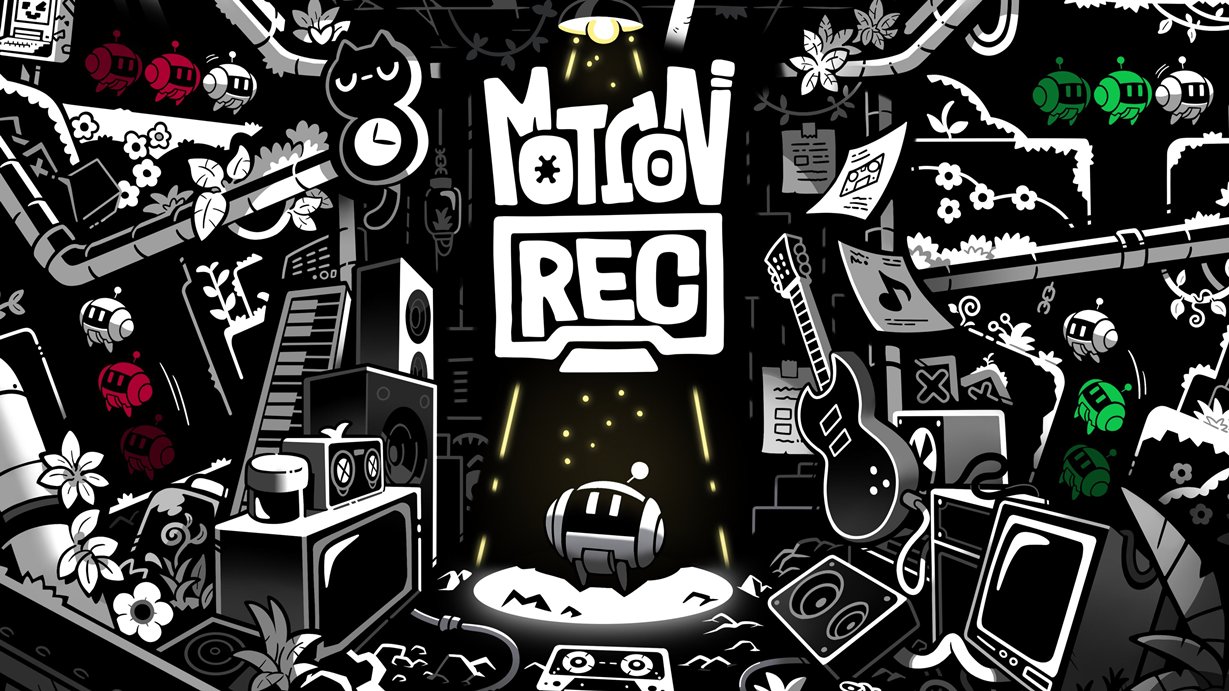
The latest Famitsu data drop for April 4, 2026, highlights a lean, mechanically focused release in MotionRec, which is currently outperforming several high-budget titles in critical reception. While the industry remains obsessed with bloated asset libraries, this release prioritizes a deterministic state-recording loop over graphical fidelity.
The Tech TL;DR:
- Deterministic State Playback: MotionRec implements a “recording puzzle action” system allowing users to capture and replicate movement trajectories to solve spatial bottlenecks.
- Extreme Asset Efficiency: The build maintains a remarkably small footprint of 214 MB across both Nintendo Switch and Nintendo Switch 2 platforms.
- Cross-Gen Parity: Official documentation confirms consistent game behavior on Nintendo Switch 2, suggesting a stable architectural port without reliance on platform-specific hardware acceleration for its core logic.
From a systems engineering perspective, the “recording puzzle action” mechanic is essentially a serialization problem. The game must capture a stream of input vectors—walking, jumping, and interacting with stage gimmicks—and store them in a buffer that can be played back with frame-perfect accuracy. This requires a deterministic physics engine; if the playback deviates by even a single pixel due to floating-point errors or variable frame rates, the puzzle solution collapses. For developers, this is a classic challenge in maintaining state synchronization, similar to the rollback networking seen in high-end fighting games.
The Performance Matrix: Famitsu Critical Benchmarks
The critical reception for the week of April 4 reflects a preference for tight mechanical loops over sprawling open worlds. MotionRec leads the pack, followed closely by Marathon. The disparity in scores suggests that the “recording” mechanic provides a more cohesive user experience than the more traditional structures of GreedFall 2 or MLB The Show 26.
| Title | Editor 1 | Editor 2 | Editor 3 | Editor 4 | Total (/40) |
|---|---|---|---|---|---|
| MotionRec | 8 | 8 | 9 | 8 | 33 |
| Marathon | 8 | 8 | 8 | 8 | 32 |
| Screamer | 8 | 8 | 8 | 7 | 31 |
| Aureole: Wings of Hope | 7 | 7 | 7 | 8 | 29 |
| MLB The Show 26 | 7 | 8 | 7 | 7 | 29 |
| GreedFall 2: The Dying World | 7 | 7 | 7 | 7 | 28 |
The Tech Stack & Alternatives Matrix
Looking at the development pedigree, MotionRec is developed by HANDSUM and published by PLAYISM. The decision to target both the Nintendo Switch and PS5 via download on April 2, 2026, indicates a highly portable codebase. The 214 MB file size is the most telling metric here. In an era where “AAA” titles often exceed 100 GB, a sub-300 MB build suggests an aggressive use of pixel art and a refusal to rely on uncompressed textures or redundant middleware.
Compared to other puzzle-platformers that utilize similar “ghost” or “time-loop” mechanics, MotionRec focuses on the trajectory of movement rather than just time-reversal. While competitors often rely on complex physics simulations that can lead to “butterfly effect” glitches, MotionRec utilizes a more rigid recording system to ensure that the “recorded” version of the player behaves exactly as the “live” version did. This design choice reduces CPU overhead and ensures compatibility across different hardware tiers, including the Nintendo Switch Lite.
For studios attempting to replicate this level of efficiency, the bottleneck is rarely the code but the asset pipeline. Achieving a 214 MB footprint requires strict budget constraints on sprites and audio samples. Firms struggling with bloated build sizes often engage software optimization consultants to audit their memory allocation and strip redundant dependencies from their runtime environment.
Implementation Mandate: The Recording Logic
To implement a movement recording system like the one seen in MotionRec, a developer would typically avoid recording raw inputs (which are prone to timing drift) and instead record the resulting transform states. Below is a conceptual implementation of a state-capture system that could be used to store and playback trajectories.

// Conceptual State-Recording Logic for Puzzle Action struct PlayerState { float posX, posY; bool isJumping; int frameIndex; }; List<PlayerState> recordingBuffer = new List<PlayerState>(); bool isRecording = false; void Update() { if (isRecording) { // Capture current state every frame to ensure deterministic playback recordingBuffer.Add(new PlayerState { posX = transform.position.x, posY = transform.position.y, isJumping = rb.velocity.y > 0, frameIndex = currentFrame }); } } void Playback() { foreach (var state in recordingBuffer) { // Force the "Ghost" object to match the recorded state exactly ghostObject.position = new Vector3(state.posX, state.posY, 0); ghostObject.SetJumpState(state.isJumping); yield return new WaitForFixedUpdate(); } } This approach ensures that the playback is a literal mirror of the recording, bypassing the demand for the physics engine to “re-calculate” the jump every time, which is critical for the “recording puzzle action” genre. Developers can find more robust patterns for this type of state synchronization on Stack Overflow or by reviewing state machine implementations on GitHub.
The Deployment Bottleneck: Cross-Platform Parity
The announcement that MotionRec is “Supported” on Nintendo Switch 2 with “consistent game behavior” is a significant nod to the stability of the HANDSUM engine. Maintaining parity between a legacy handheld and a next-gen console usually involves managing different API calls and memory bandwidths. When a game’s behavior is identical across platforms, it indicates that the logic is decoupled from the hardware’s clock speed—likely using a fixed timestep for all physics calculations.
This level of cross-platform stability is a primary requirement for modern publishing. Many indie developers find the porting process to be a significant IT bottleneck, often requiring the intervention of specialized game development agencies to ensure that the game doesn’t suffer from frame-rate-dependent physics on lower-end hardware. The fact that MotionRec launched simultaneously on Switch and PS5 suggests a mature CI/CD pipeline that handles multi-platform builds with minimal friction.
MotionRec is a case study in the “less is more” philosophy. By stripping away the fluff and focusing on a single, well-executed mechanical loop, HANDSUM has delivered a product that resonates more with critics than several larger, more expensive productions. As the industry moves toward increasingly complex AI-driven environments, there remains a critical market for deterministic, lean, and highly optimized puzzle experiences.
Disclaimer: The technical analyses and security protocols detailed in this article are for informational purposes only. Always consult with certified IT and cybersecurity professionals before altering enterprise networks or handling sensitive data.