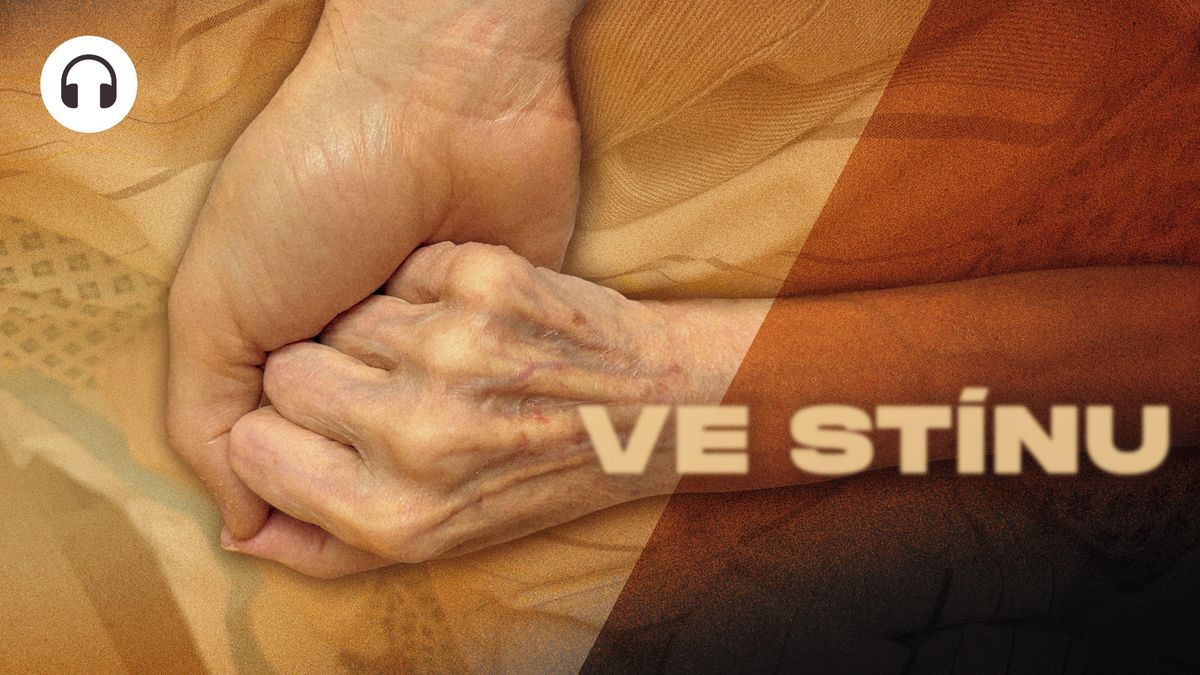
Family Criticizes Hospital After Dementia Patient Dies Alone Post Visiting Hours
Jaroslava Čechtická died alone at Prague’s Nemocnice svaté Alžběta Na Slupi on November 22 last year, just hours after visiting hours concluded and family members were forced to leave her bedside, Seznam Zprávy reported.
The 10-year battle with Parkinson’s disease and advanced dementia ended behind a privacy screen in a shared hospital room where a television played loudly. Her daughter, Eva Čechtická, and son, Jan Čechtický, had spent years caring for her at home before a hip fracture led to her final hospital admission.
“We couldn’t even walk past that place, the story still comes back to us,” Eva Čechtická told Seznam Zprávy, describing the lingering trauma from the care her mother received.
The family had tried to secure a transfer to a private facility and later to Hospice Štrasburk, but those efforts stalled amid administrative and medical disagreements. Jan Čechtický said that visiting restrictions kept them away during her final moments.
“We suspected the end was near. Fortunately, a large part of the family gathered in the hospital that day. But at half past five visiting hours ended and we had to leave. Mum died a few hours later. Alone,” Jan Čechtický told Seznam Zprávy.
Ten Years of Home Care Met Institutional Limits
Jaroslava Čechtická suffered from Parkinson’s disease for roughly a decade, spending her final years bedridden and relying entirely on her family for feeding, medication management, and daily comfort.
Her relatives quickly realized the facility lacked the specialized environment needed for a patient experiencing severe dementia. Her bed was separated from two other recovering patients by a privacy screen, and loud television noise added to her distress.
“Everything probably went according to the rules, but that only confirmed to me how little our healthcare system is prepared for patients with dementia,” Jan Čechtický told Seznam Zprávy.
Jan Čechtický offered to visit during the morning hours to help feed his mother and ensure she took her medication without spitting out pills. The hospital denied these requests, citing strict adherence to visiting hours.
“We saw how her condition was deteriorating, she was wasting away, she wasn’t eating. I offered to the personnel that I would come for her in the morning and help with feeding, make sure she didn’t spit out her pills and so on. She was in a really advanced stage of dementia, she was often aggressive toward the nurses, she was afraid of them, they didn’t have it easy at all. That’s why I offered help. But visits at times other than those set were not allowed to us,” Jan Čechtický said to Seznam Zprávy.
Hospital Defends Treatment Decisions
Nemocnice svaté Alžběta rejected claims of wrongdoing, stating that the patient’s deteriorating condition was a standard physiological reaction to a major operation and subsequent complications. Hospital leadership maintained that continuing curative treatment rather than transferring her to a hospice was the correct clinical path.
“A patient is transferred to palliative care when curative treatment no longer works. When the patient does not respond to anything we administer with some improvement in condition, then we move on to symptomatic treatment,” Ivana Doležalová, deputy for medical and preventive care at Nemocnice svaté Alžběta, told Seznam Zprávy.
Doležalová defended the hospital’s visiting rules against criticism from the family. She explained that accommodating unrestricted visits for 120 patients would overwhelm available staffing and physical space.
“I understand that everyone wants to protect their loved one, but if two relatives came for each of the 120 patients, we could just send the staff home. There would be no room left in the corridors or in the rooms,” Doležalová told Seznam Zprávy.
The hospital also declined to issue a palliative care confirmation required for admission to Hospice Štrasburk, arguing that her estimated life expectancy exceeded 30 days based on medical evaluations.
Legal Realities of Hospitalized Patients
Reflecting on the ordeal, Jan Čechtický acknowledged that the family failed to secure legal guardianship over their mother before her health crisis worsened. This omission stripped them of decision-making authority regarding her placement and treatment environment.
“Mum was really a golden person and we somehow couldn’t imagine that we would resort to that. But in the end we lost legal control over her, which we hadn’t realized in advance,” Jan Čechtický told Seznam Zprávy.
Mario Švehelka, an attorney specializing in health law, explained how guardianship alters negotiations between families and medical institutions.
“If the family had learned about the plan to transfer her to the post-acute care ward and someone had been appointed as a guardian at that moment, he could have declared disagreement with that transfer in advance and could have prevented it. It is always easier to prevent something, because that requires consent, than to subsequently force some kind of sort of care,” Švehelka told Seznam Zprávy.
Švehelka added that granting power of attorney to a trusted relative ahead of time helps families manage sudden medical emergencies, though medical teams retain primary authority over clinical assessments.
Systemic Shortages in Dementia Care
Gerontologist Iva Holmerová highlighted the broader infrastructure challenges facing families caring for elderly relatives with neurodegenerative conditions. Specialized beds for patients with advanced dementia and sudden injuries remain scarce across the Czech healthcare system.
“It is a big problem to get a place for a patient with a neurodegenerative disease who has also developed dementia. Specialized facilities of this type are really missing,” Holmerová told Seznam Zprávy.
Holmerová said that caring for patients with severe cognitive decline demands intensive financial and personnel resources, as routine tasks take significantly more time than standard inpatient care. She emphasized that medical facilities could improve patient outcomes by treating long-term caregivers as clinical experts who understand the unique behavioral cues of their relatives.
Eva Čechtická reflected on her family’s first encounter with the institutional healthcare framework:
“Thank God neither I nor anyone in my family was sick. Only for the first time with mum in the terminal stage did we get into the system. I felt that we were alone in this, that we were not getting support, information. And from the hospitalization itself I was in shock. I didn’t care if the hospital was old or new, it lacked a hint of warmth, empathy. In this respect, I went through a big disillusionment,” Eva Čechtická told Seznam Zprávy.