Fake News Quadruples in Makerfield Facebook Groups, SMF Report Finds
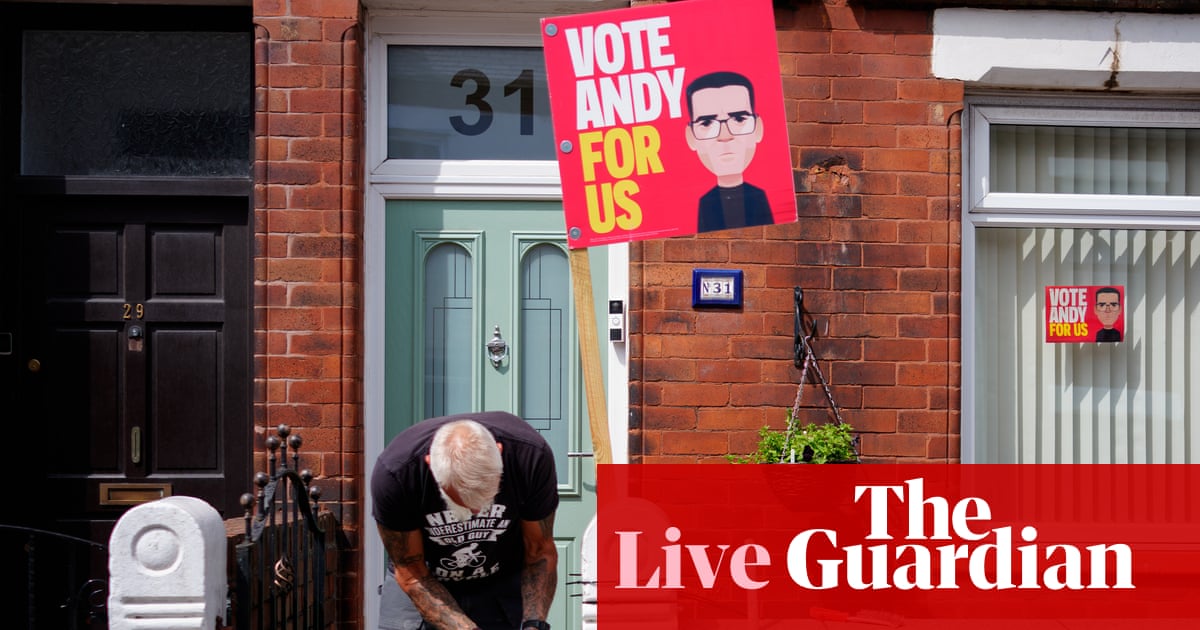
A Social Market Foundation report released June 16, 2026, reveals that misinformation in Makerfield’s local Facebook groups quadrupled during the by-election campaign, rising from 4% to 16% of all news shared. The surge specifically targets Labour candidate Andy Burnham, highlighting a growing crisis in digital political discourse and electoral integrity.
The Mechanics of Digital Disinformation in Makerfield
The study analyzed 1,800 posts across four prominent Facebook groups serving a combined membership of 66,000 residents. The data indicates that nearly one in every six news-related posts is demonstrably false. This trend suggests that local social media ecosystems—often shielded from the content moderation oversight applied to national news outlets—have become primary theaters for political manipulation.
The shift is not merely a quantitative increase in activity; it represents a qualitative change in how constituents access information. Prior to the announcement of the by-election, the groups functioned largely as community noticeboards. By June 2026, those same spaces transformed into polarized battlegrounds. The targeting of Andy Burnham is consistent with broader patterns of “astroturfing,” where coordinated accounts mimic organic community concern to sway undecided voters.
Why Localized Misinformation Threatens Democratic Stability
The impact of this trend extends far beyond the Makerfield by-election results. When local information channels become saturated with synthetic or false narratives, the basic function of representative government—the informed consent of the governed—begins to fracture. Local municipal elections rely on the assumption that voters can access reliable, verifiable data regarding local infrastructure, tax policy, and public services.

According to the UK Electoral Commission, the rise of digital campaigning has consistently outpaced current regulatory frameworks. While national political spending is subject to strict disclosure requirements, the “dark” nature of private Facebook groups makes it difficult for authorities to track the source of funding for coordinated misinformation campaigns.
“The integrity of local discourse is the bedrock of national democracy. When the digital town square is systematically poisoned, it is not just the candidate who suffers, but the community’s ability to hold their representatives accountable for the next four years,” says Dr. Helena Thorne, a researcher specializing in digital political communications.
The Economic and Social Cost of Digital Contention
The consequences of this misinformation are felt in the physical world. When false claims circulate regarding the allocation of municipal budgets or the status of local infrastructure projects, public trust in administrative bodies evaporates. This creates a vacuum that often necessitates costly public relations interventions or, in extreme cases, protracted legal battles to correct the public record.
For businesses and civic organizations, the environment becomes increasingly volatile. Organizations attempting to navigate local planning permissions or public-private partnerships often find their reputation tied to the shifting sands of online sentiment. In this climate, securing professional guidance is essential to mitigate long-term damage.
Entities currently facing public scrutiny or operating within highly visible public sectors are increasingly turning to specialized crisis management firms to monitor digital sentiment and ensure that accurate, verified information reaches the public. Similarly, when misinformation crosses the line into defamation or violates local electoral transparency laws, legal counsel specializing in digital rights becomes the primary line of defense for both candidates and civic leaders.
The Regulatory Gap and Future Implications
Governmental bodies are struggling to keep pace. The Ofcom regulatory framework for online safety is primarily focused on platform-level responsibility, yet the “micro-targeting” of local Facebook groups often bypasses these high-level filters. The lack of granular, localized oversight means that misinformation in Makerfield can persist long after the by-election has concluded, leaving a lasting impact on community cohesion.

For those involved in regional governance, the current situation serves as a warning. Relying on organic reach in social media environments is no longer a viable strategy for transparent communication. Instead, institutional actors are moving toward information verification services that offer real-time monitoring and rapid rebuttal strategies to prevent the normalization of false narratives.
Moving Forward: The Need for Digital Literacy
The Social Market Foundation’s findings underscore that the problem is not a lack of information, but an abundance of unverified, hostile content. As the electorate becomes increasingly fragmented, the role of local government in providing a “single source of truth” via official channels becomes paramount. However, until such time as legislation catches up with the speed of social media, the burden of verification falls on the individual user and the organizations that support them.
The Makerfield case is a microcosm of a global phenomenon. As we look toward future election cycles, the ability to distinguish between organic community frustration and manufactured outrage will determine the health of our local institutions. The question remains whether the current digital infrastructure can be reformed, or if the era of decentralized, hyper-local misinformation is the new baseline for political life.
The integrity of your community’s future depends on the information you choose to trust today. For those navigating the complexities of public reputation and digital safety, connecting with vetted professional experts is no longer an optional luxury—it is a critical necessity for maintaining the stability of our democratic process.