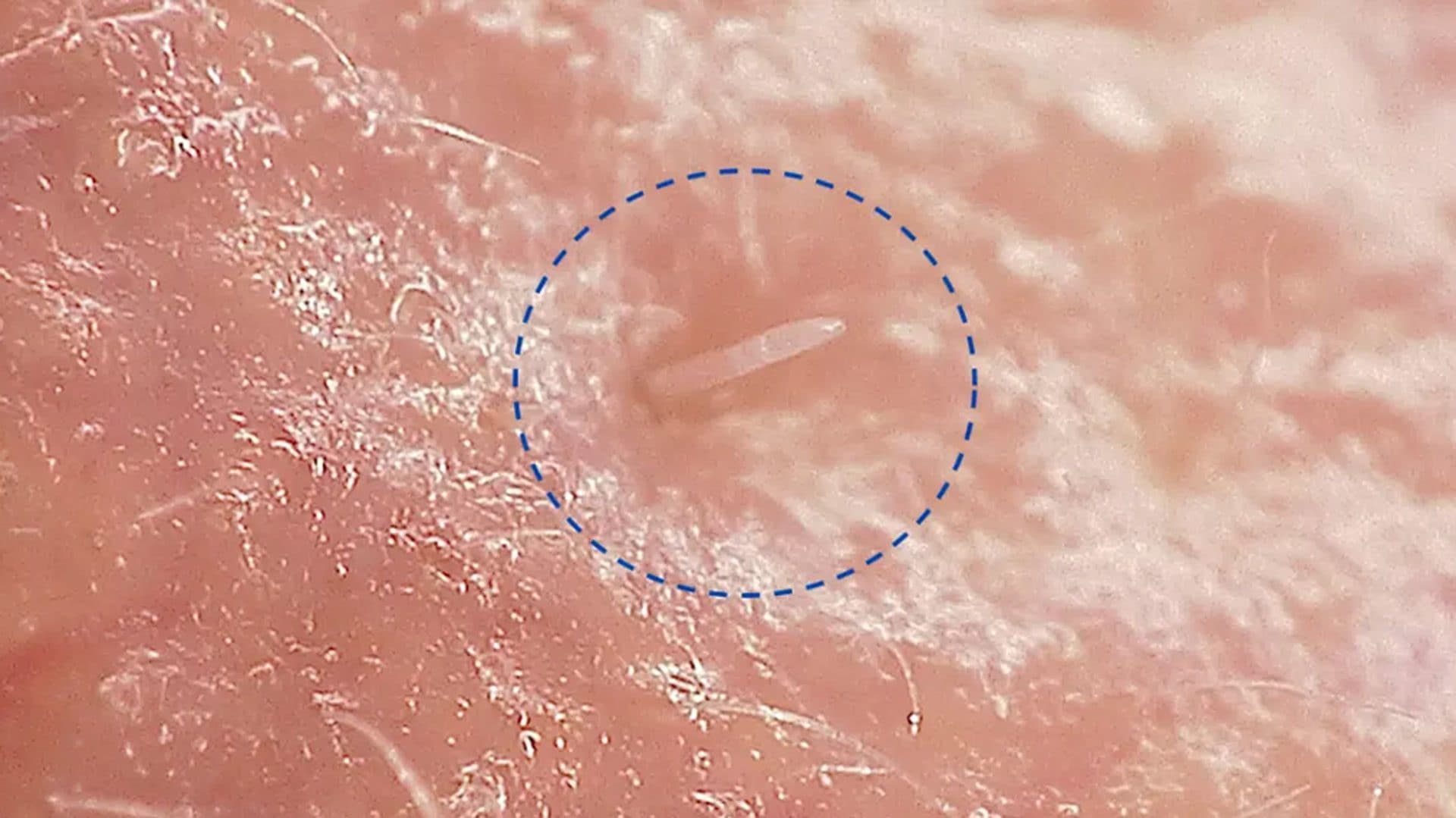
Face Mites Are Merging With Human Skin: DNA Evidence From Demodex Folliculorum
Genetic analysis of Demodex folliculorum, the microscopic mite inhabiting human facial follicles, indicates that these organisms are undergoing a process of genomic integration with human hosts, according to research highlighted by Fanpage. This biological convergence suggests a highly specialized evolutionary adaptation where the mite’s DNA increasingly aligns with the human biological environment to ensure survival.
- Genomic Convergence: Demodex folliculorum is evolving to blend its genetic signatures with human skin cells.
- Symbiotic Adaptation: The mites have lost several metabolic functions, relying entirely on the human host for nutrients.
- Clinical Relevance: While typically commensal, overproliferation can trigger inflammatory responses like rosacea.
The presence of Demodex mites on human skin is a global biological constant, yet the depth of their integration reveals a complex pathogenesis. These mites do not possess an anus, meaning they accumulate waste throughout their brief life cycle. When they die, this accumulated waste is released into the follicle, which can trigger an immune response in susceptible individuals. This mechanism is often linked to the development of blepharitis and various forms of dermatitis.
Current research into the DNA of Demodex folliculorum, often supported by university-led genomic studies and public health grants, shows a significant reduction in the mite’s own genome. By shedding genes that are redundant due to the stability of the human skin environment, the mite has become an obligate parasite. This genomic streamlining is a hallmark of extreme specialization, mirroring patterns seen in other highly adapted parasites.
How does the genetic fusion of Demodex affect skin health?
The “fusion” described in recent genomic findings is not a literal merging of species into a hybrid, but rather a convergence of biological signatures. According to data available via PubMed, the mites’ ability to evade the human immune system is tied to their ability to mimic host proteins. This molecular mimicry prevents the body from recognizing the mite as a foreign invader, allowing them to inhabit the sebaceous glands undetected.
For most adults, this relationship is commensal, meaning it is neutral. However, when the population of mites exceeds the skin’s regulatory threshold, the resulting morbidity manifests as follicular inflammation. Patients experiencing chronic redness, papules, or persistent itching should avoid self-treating with over-the-counter creams, as incorrect applications can exacerbate the skin barrier’s dysfunction. It is highly recommended to consult with [Board-Certified Dermatologists] to undergo a standardized skin scraping and microscopic evaluation to determine mite density.
What is the clinical link between mite density and rosacea?
The correlation between Demodex proliferation and inflammatory skin conditions is a subject of ongoing clinical debate. Some researchers argue that the mites are the primary drivers of rosacea, while others suggest they are opportunistic colonizers of already damaged skin. The standard of care typically involves the use of isoniazide or ivermectin-based topicals to reduce the mite population to baseline levels.

The biological mechanism involves the mite’s interaction with the Toll-like receptor 2 (TLR2) pathway. When mite density increases, the skin’s innate immune system triggers a pro-inflammatory cytokine response. This leads to the vasodilation and erythema characteristic of rosacea. Because these conditions often overlap with other autoimmune or endocrine disorders, a multidisciplinary approach to diagnosis is essential. Patients are encouraged to visit [Specialized Diagnostic Centers] for comprehensive inflammatory marker screening.
“The evolutionary trajectory of Demodex folliculorum represents one of the most intimate relationships between a parasite and its host, where the boundary between ‘self’ and ‘other’ becomes genetically blurred.”
Why does this research matter for future dermatology?
Understanding the genomic integration of these mites allows scientists to develop more targeted therapies. Rather than using broad-spectrum antiparasitics that can irritate the skin, future treatments may target the specific proteins the mites use to mimic human DNA. This would effectively “unmask” the mites to the immune system, allowing the body to clear the infestation naturally without the need for harsh chemical interventions.
This shift toward precision medicine is mirroring trends in other fields of immunology. As the industry moves away from generic treatments, the role of diagnostic precision becomes paramount. Healthcare providers are increasingly relying on [Clinical Pathology Labs] to provide high-resolution genomic sequencing of skin flora to tailor treatment plans to the individual’s specific microbiome.

The trajectory of Demodex research suggests that we are moving toward a deeper understanding of the human holobiont—the collection of all organisms living in and on the human body. As we uncover more about how these organisms influence our health, the focus will shift from eradication to equilibrium. Finding the balance between a healthy microbiome and a pathological infestation requires expert guidance. To ensure a diagnosis based on the latest peer-reviewed evidence, individuals should seek out vetted professionals through our directory of licensed healthcare providers.
Disclaimer: The information provided in this article is for educational and scientific communication purposes only and does not constitute medical advice. Always consult with a qualified healthcare provider regarding any medical condition, diagnosis, or treatment plan.