
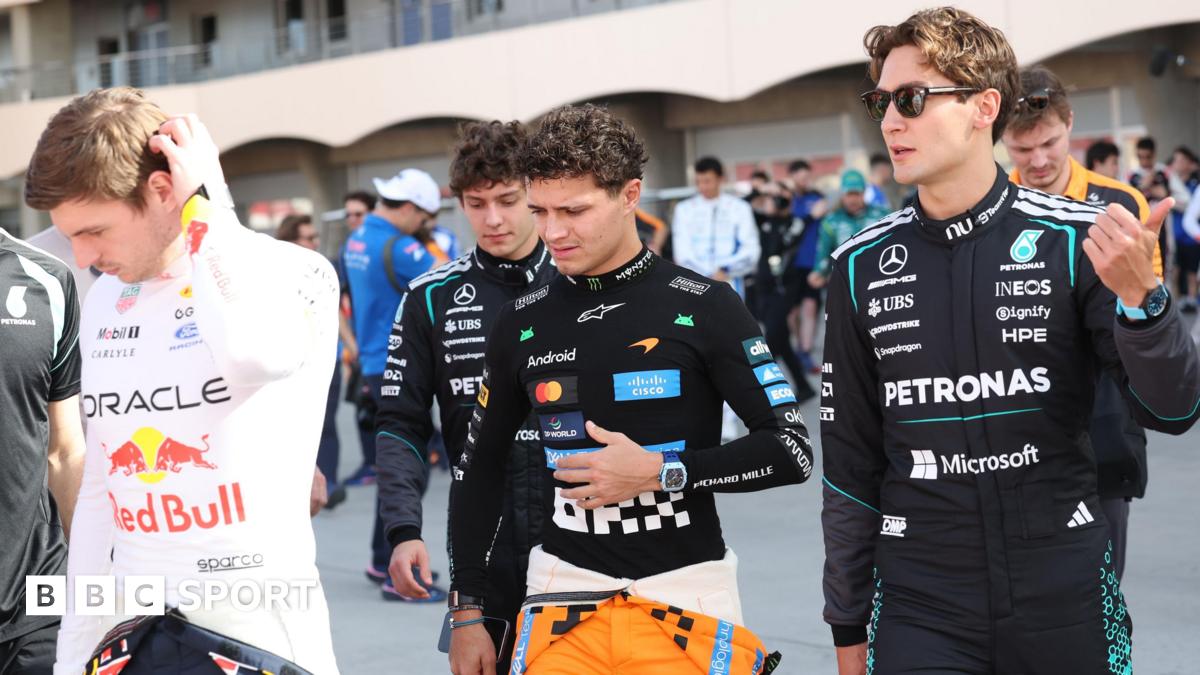
Formula 1 teams are engaged in ongoing discussions with the FIA and F1 governing bodies regarding potential adjustments to the sport’s new engine regulations, as concerns mount that the current formula necessitates excessive energy management during races. The debate centers on whether the emphasis on energy recovery and deployment is detracting from the core driving experience.
Currently, the regulations permit a maximum energy recovery rate of 250kw via a process referred to as ‘super clip’ – a term some within the sport believe is unnecessarily complex for public consumption. However, the engines are technically capable of recovering 350kw when a driver lifts off the throttle. A key question being debated is whether drivers should be permitted to utilize the higher recovery rate even when maintaining full throttle.
Further proposals include reducing the electrical output of the power unit, currently capped at 350kw (470bhp), to either 300kw (402bhp) or 250kw (335bhp). The rationale behind this is to allow for a more sustained application of power, creating a more intuitive driving experience. Some teams are likewise exploring the possibility of increasing the amount of fuel permitted for use and rebalancing the ratio between the internal combustion engine (ICE) and electrical components, potentially shifting to a 65:35 or 70:30 split.
However, these more substantial changes face opposition, with concerns that they would necessitate wholesale redesigns of the engine and related car components, including gear ratios. Opponents also question whether such alterations would achieve the desired effect of improving the driving experience. Adrian Newey, a prominent figure in F1 engineering, reportedly informed rivals that Honda believes achieving a lower energy recovery limit would be challenging, according to F1 Oversteer.
The introduction of a new ‘overtake’ button, designed to replace the Drag Reduction System (DRS), has also become a point of contention. Unlike DRS, which directly increased speed, the ‘overtake’ mode simply provides drivers with access to electrical energy for a longer duration. This has led to expectations that overtaking maneuvers will be more difficult under the new regulations.
One potential solution being considered is to reduce the electrical output to 300kw, reserving the remaining 50kw specifically for use with the ‘overtake’ mode. The need for extensive energy management also varies significantly between circuits. Bahrain, with its numerous braking zones, requires less energy-saving techniques. However, circuits like Albert Park (Melbourne), Saudi Arabia, Austria, Silverstone, Monza, Azerbaijan, and Las Vegas – characterized by long straights and limited braking opportunities – demand more aggressive ‘lift and coast’ and ‘super clip’ strategies.
McLaren team principal Andrea Stella acknowledged the challenges, stating that drivers may still need to employ unconventional driving techniques. “Definitely there could still be cases in which the driver needs to approach driving in what is not a common way,” Stella said. He also indicated that adjustments to the electrical engine deployment strategy could mitigate the need for these specialized maneuvers, adding, “There are things that can be done in the future, but I reckon we should monitor a little bit more in some other circuits before deciding what to do.”
Red Bull Racing is preparing for the 2026 season with a new engine developed in partnership with Ford, aiming to build on their recent successes. The team is actively involved in the discussions surrounding the energy management regulations, seeking to optimize performance within the evolving framework. The FIA and F1 are continuing to evaluate the feedback from teams and are expected to consider potential adjustments to the regulations as the 2026 season approaches.
