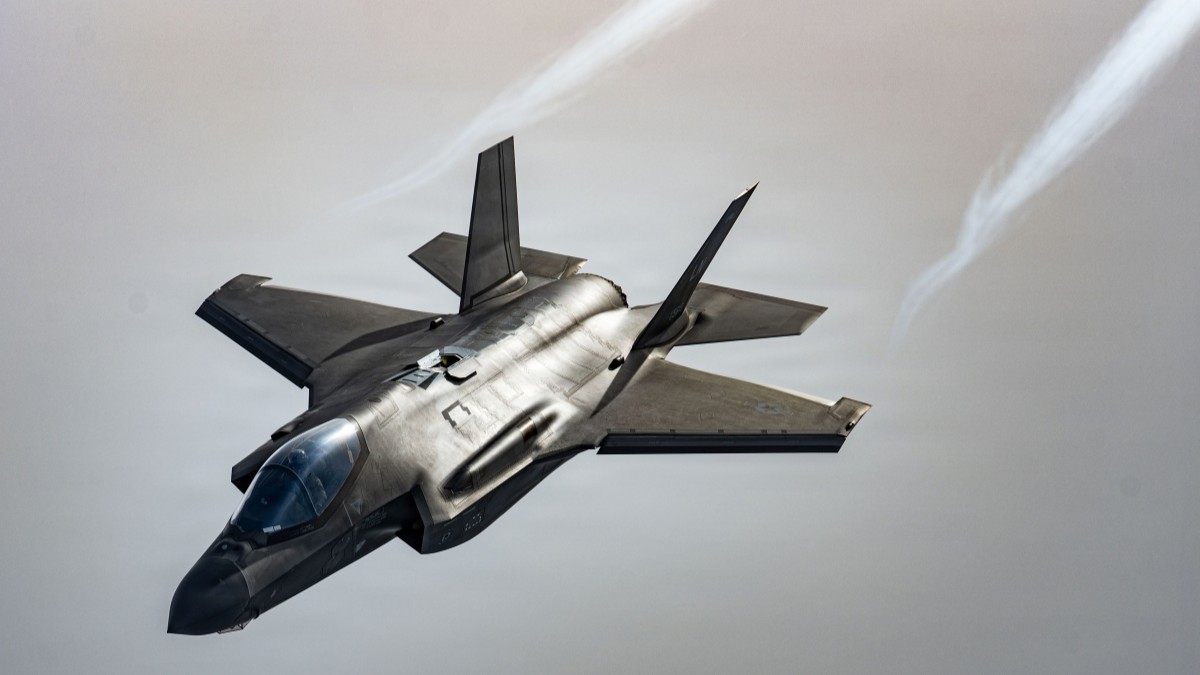
F-35: A Masterpiece Built for the Wrong War
The F-35 Joint Strike Fighter, envisioned as a technological marvel for 21st-century air dominance, has grow a fiscal and strategic burden as modern warfare shifts toward low-cost drones, electronic warfare, and asymmetric threats—leaving the U.S. With an overpriced fleet ill-suited for today’s conflicts while straining defense budgets and diverting resources from more adaptable military solutions.
A Masterpiece Mismatched to the Battlefield
Lockheed Martin’s F-35 Lightning II program, with a projected lifetime cost exceeding $2 trillion, represents the most expensive weapons system in human history. Yet as conflicts in Ukraine and the Red Sea demonstrate, the future of air combat lies not in stealthy fifth-generation fighters but in swarms of inexpensive drones, networked electronic warfare, and precision-guided munitions launched from sea, and land. The F-35, designed to penetrate sophisticated integrated air defense systems against near-peer adversaries like China or Russia, finds itself increasingly irrelevant in wars where adversaries rely on commercial drones, satellite imagery, and cyber disruption rather than radar-guided missiles and fighter intercepts.
This mismatch is not merely theoretical. In Ukraine, both sides have lost dozens of fighter jets to ground-based air defense, forcing a shift to low-altitude drone operations for reconnaissance and strike missions. The U.S. Navy’s recent engagements in the Red Sea against Houthi drones and missiles have relied on ship-based interceptors and electronic warfare—not carrier-launched F-35s—to defend commercial shipping. These realities expose a growing disconnect between the platform the Pentagon is buying and the threats it is actually facing.
The Cost of Perfection in an Age of Austerity
The F-35 program’s financial toll extends far beyond acquisition costs. Operating each aircraft costs approximately $36,000 per flight hour—nearly triple that of an F-16—and maintenance requires specialized facilities and trained personnel unavailable at most forward-deployed locations. By 2026, the U.S. Plans to have fielded over 2,500 F-35s across the Air Force, Navy, and Marine Corps, locking in decades of sustainment costs that compete with funding for unmanned systems, cyber defenses, and long-range precision munitions.
This opportunity cost is felt acutely in communities surrounding military bases. In towns like Burlington, Vermont—home to the 158th Fighter Wing—and Tucson, Arizona, where Davis-Monthan Air Force Base hosts F-35 training squadrons, local economies have become dependent on defense spending. Yet as maintenance delays and parts shortages plague the fleet, these communities face economic instability when flight hours are cut or deployments delayed. Municipal leaders report strain on local infrastructure, from increased traffic congestion during surge operations to pressure on housing markets from transient military personnel.
“We welcome the jobs and investment the F-35 brings, but when training flights are grounded for months due to software glitches or parts shortages, it ripples through our economy—hotels see fewer visitors, restaurants lose lunch crowds, and our schools deal with sudden drops in enrollment when families get reassigned.”
Similar concerns echo in naval communities. In Hampton Roads, Virginia—the world’s largest concentration of military infrastructure—shipyards and suppliers face pressure to adapt to a shifting naval aviation footprint. While the F-35C variant is destined for carrier decks, the Navy’s recent emphasis on distributed maritime operations and unmanned surface vessels suggests a future where carrier air wings may rely less on manned strike fighters and more on drone refuelers, electronic attack platforms, and autonomous reconnaissance systems.
Geo-Strategic Drift: Preparing for Yesterday’s War
The strategic rationale for the F-35 was forged in the early 2000s, predicated on defeating advanced Russian and Chinese air defenses in a high-intensity, short-duration conflict. But today’s great-power competition is characterized by protracted gray-zone aggression, economic coercion, and hybrid tactics—areas where stealth fighters offer limited utility. China’s anti-access/area-denial (A2/AD) strategy, for instance, relies less on defeating intruding aircraft and more on denying access through missile barrages, cyber attacks on logistics networks, and maritime militia harassment—none of which are meaningfully countered by a stealth fighter that costs $100 million per copy.
Meanwhile, the industrial base sustaining the F-35 program creates geographic dependencies that limit agility. Final assembly occurs primarily in Fort Worth, Texas, and Cameri, Italy, with subcontractors spread across 45 states and dozens of countries. This sprawling network, while politically beneficial, introduces fragility: a single point of failure in the supply chain—such as a delay in specialized radar-absorbent materials from a Japanese supplier—can ground squadrons globally.
“The F-35 isn’t just an airplane; it’s a jobs program wrapped in a weapons system. But when our national security strategy demands agility and cost-imposition on adversaries, we can’t afford to tie up 20% of the defense budget in a platform that takes 18 months to surge to combat readiness.”
The Directory Bridge: Where Adaptability Meets Accountability
The problem created by the F-35’s strategic mismatch is not just military—it’s economic and institutional. Communities tied to legacy defense infrastructure face uncertainty as procurement priorities shift. Contractors specializing in fighter jet maintenance may find their skills less transferable to emerging domains like drone swarm integration or AI-driven logistics. This transition demands new forms of expertise—ones that bridge traditional aerospace engineering with software development, electronic warfare, and rapid prototyping.
For municipalities grappling with base realignment pressures or workforce retraining needs, turning to verified economic development consultants can support assess regional vulnerabilities and identify growth sectors beyond defense dependency. Likewise, law firms specializing in government contracts and procurement law are essential for navigating the complex web of liability, performance penalties, and offset agreements that accompany major defense programs—ensuring that taxpayer interests are protected when systems underperform or schedules slip.
Most critically, as the Pentagon explores alternatives—such as the Next Generation Air Dominance (NGAD) program and collaborative combat aircraft (CCA)—businesses engaged in defense innovation and dual-use technology development will be at the forefront of building the adaptive, networked force structure that modern conflict requires. These are the entities that can help transform the lessons of the F-35 experience into a more resilient, responsive national security posture.
The F-35 will remain a technical achievement—a masterpiece of aerospace engineering—but its legacy will be defined not by how well it performed in combat, but by how honestly we confront the opportunity cost of preparing for wars that never came while neglecting the ones that did. As defense planners recalibrate for an era of diffuse threats and tightening budgets, the true measure of wisdom will lie in our ability to pivot from perfection to practicality. For those navigating this transition—whether in uniform, in city hall, or on the factory floor—the World Today News Directory stands ready to connect you with the vetted professionals and institutions equipped to guide this evolution with clarity and integrity.