
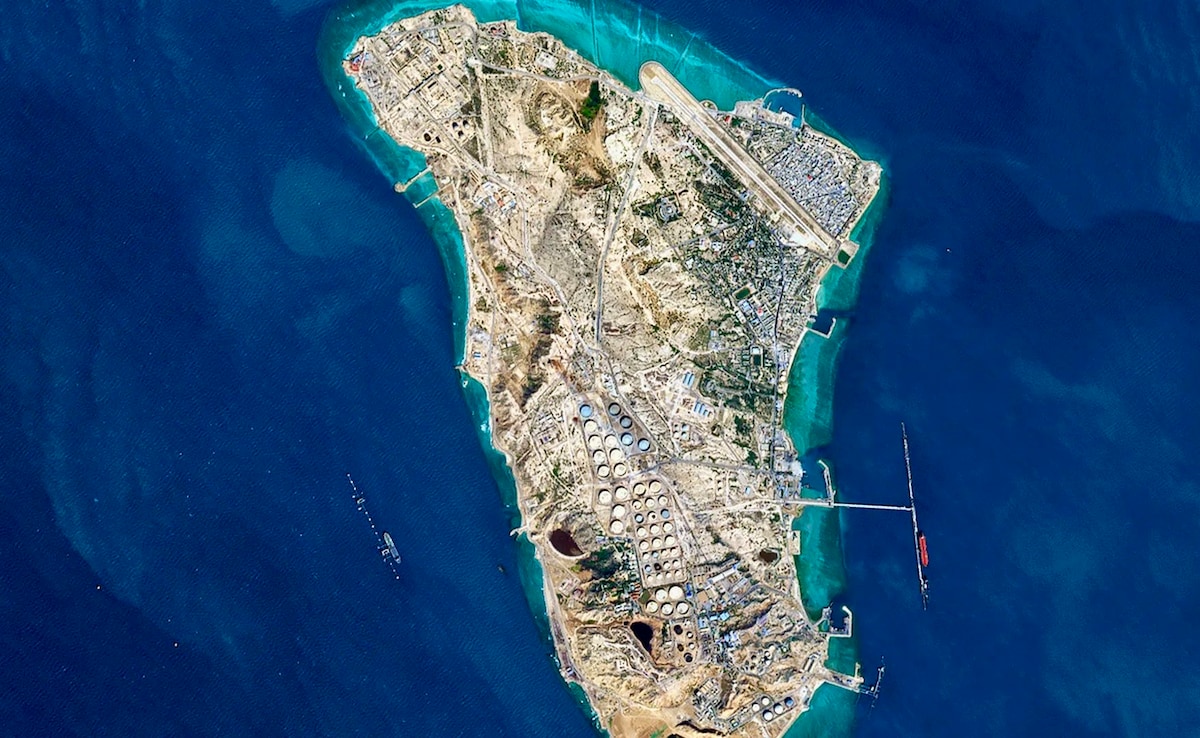
Explosions Hit Strategic Kharg Island and Bridge in Central Iran
Reports confirm explosions have struck the strategic Kharg Island oil terminal and a critical bridge in central Iran on April 7, 2026. These targeted strikes disrupt Iran’s primary crude oil export hub and internal logistics, escalating regional tensions and threatening global energy stability amid ongoing geopolitical friction between Tehran, Washington, and Israel.
This isn’t just another skirmish in a long-running shadow war. It is a calculated strike at the jugular of the Iranian economy. Kharg Island is the crown jewel of Iran’s petroleum infrastructure; when it goes dark, the treasury feels it instantly. The simultaneous hit on a central bridge suggests a sophisticated intelligence operation designed to paralyze the movement of military assets and commercial goods across the plateau.
The immediate fallout is a spike in volatility. Markets hate uncertainty, and the Persian Gulf is the world’s most sensitive geopolitical tripwire.
The Strategic Calculus of Kharg Island
To understand why Kharg Island matters, one must understand the geography of Iranian oil. Unlike other terminals, Kharg is the primary exit point for the vast majority of Iran’s crude exports. By compromising this facility, an adversary doesn’t just destroy hardware—they choke the state’s ability to fund its internal security apparatus and foreign proxies.
Historically, the tension in the Strait of Hormuz has been a game of brinkmanship. However, the 2026 strikes indicate a shift from deterrence to active degradation. The precision of the bridge hit in central Iran further implies that the attackers have high-fidelity mapping of internal logistics, likely targeting the transit corridors that connect Tehran to the southern ports.
“We are seeing a transition from strategic patience to strategic attrition. The goal is no longer to warn the regime, but to systematically dismantle the infrastructure that sustains its regional ambitions,” says Dr. Arash Vahidi, a senior analyst on Middle Eastern security.
The economic ripple effect is immediate. As insurance premiums for tankers in the Gulf soar, shipping companies are forced to seek alternative routes or pay exorbitant “war risk” premiums. For businesses operating in the region, this creates a logistical nightmare. Companies are now scrambling to uncover international trade attorneys who specialize in force majeure clauses to navigate the legal fallout of disrupted contracts.
Infrastructure Fragility and the Logistics Gap
The destruction of a central bridge creates a “bottleneck effect.” In Iran, where the mountainous terrain limits viable transit routes, the loss of a single major artery can delay the movement of fuel, food, and medical supplies by days. This creates localized economic depressions in the provinces surrounding the blast site.
The systemic risk extends beyond the immediate blast radius. When critical infrastructure fails, the secondary effect is often a surge in unregulated “grey market” logistics. This instability makes it nearly impossible for legitimate firms to maintain supply chains. Those caught in the crossfire are increasingly relying on specialized freight forwarders and risk-management consultants to secure their assets and redirect cargo through safer, albeit more expensive, corridors.
| Impact Area | Immediate Effect | Long-term Economic Risk |
|---|---|---|
| Energy Export | Reduced crude throughput at Kharg | Permanent loss of market share to OPEC rivals |
| Internal Transit | Bridge collapse in Central Iran | Increased cost of domestic goods and inflation |
| Maritime Security | Increased insurance premiums | Shift in global shipping lanes away from Hormuz |
The geopolitical tension is further exacerbated by the current administration’s approach in Washington. The intersection of AP News reporting on diplomatic pressures and the reality of kinetic strikes suggests a fragmented strategy. While diplomatic channels remain open, the physical infrastructure is being dismantled.
The Legal and Humanitarian Dimension
Under international law, strikes on critical civilian infrastructure—even those with dual military utilize—are subject to intense scrutiny. The targeting of a bridge, which serves as a lifeline for civilian populations, raises questions regarding the proportionality of the attack. Legal experts argue that such strikes may violate established norms of engagement if the military advantage does not outweigh the civilian hardship.

“The targeting of transit infrastructure in central Iran isn’t just a military move; it’s a psychological operation. By cutting the arteries of the country, you signal to the population that the state can no longer protect its most basic utilities,” notes Elena Rossi, a specialist in international humanitarian law.
For the expatriate community and international businesses still operating within Iran, the situation is precarious. The risk of escalation means that emergency evacuation plans are no longer theoretical. Many are now consulting crisis management firms to establish secure extraction protocols and asset protection strategies before the window of opportunity closes.
The macro-economic impact is clear: the cost of doing business in the Middle East just went up. From the U.S. Department of State travel advisories to the fluctuating price of Brent crude, the world is watching a fragile equilibrium collapse in real-time.
The Path Forward: Resilience or Rupture
Whether these strikes are the prelude to a wider conflict or a standalone “message” remains to be seen. However, the vulnerability of Kharg Island proves that the “fortress” mentality of the region is an illusion. In the age of precision munitions and cyber-integrated warfare, there is no such thing as a secure perimeter.
The real tragedy lies in the gap between the high-level geopolitical chess game and the ground-level reality. While generals discuss “strategic degradation,” the local merchant in central Iran simply cannot get his goods to market because a bridge no longer exists. The economic scarring of such events lasts far longer than the smoke from the explosions.
As the situation evolves, the need for verified, professional guidance becomes paramount. Whether it is navigating the complexities of international sanctions or securing disrupted supply chains, the chaos of war demands the precision of experts. Those seeking to mitigate risk in this volatile climate should consult the World Today News Directory to connect with vetted legal, logistics, and security professionals capable of operating in high-risk environments.
The bridge may be gone, but the path to stability requires more than just reconstruction—it requires a fundamental shift in how these powers perceive the cost of escalation. Until then, the world waits for the next blast.