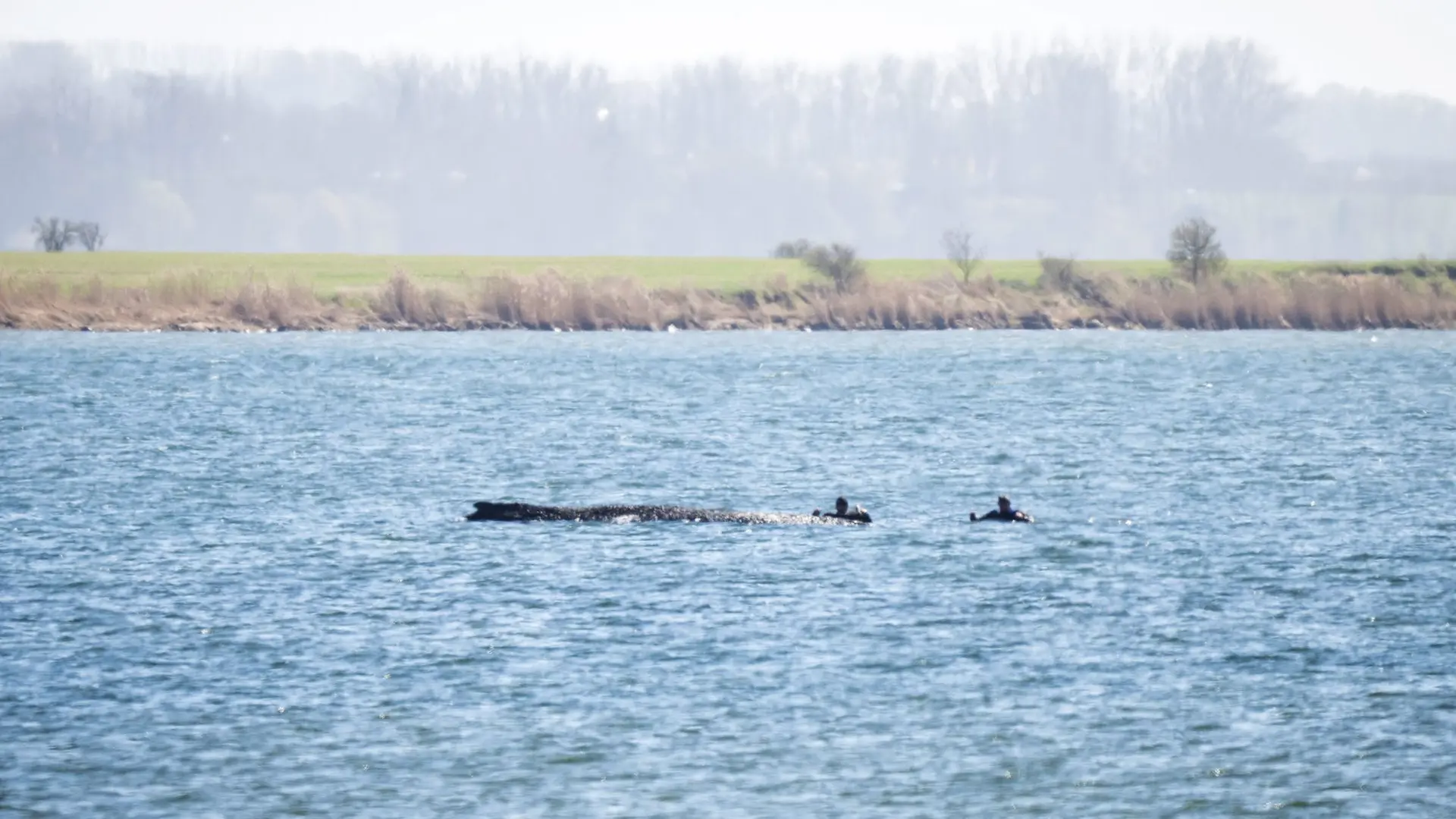
Experts Rule Rescue Impossible for Stranded Whale in Baltic Sea
Experts have officially ceased rescue efforts for “Timmy,” a humpback whale stranded near Poel island in the Baltic Sea. Marine biologists and authorities confirm the animal’s condition is terminal, marking a somber finish to a weeks-long struggle that sparked international attention and intense debate over rescue ethics.
The tragedy unfolding in the Wismar Bay is more than a biological failure; it is a collision between the cold reality of marine science and the fervent hope of a digital audience. For weeks, the world watched as a misplaced giant fought for breath in shallow waters, while a divide grew between the officials managing the crisis and the public figures claiming they could perform a miracle. Now, the silence from the experts is deafening, and the prognosis is final.
This event exposes a critical gap in how we handle marine emergencies. When a creature of this magnitude strands, the logistical and emotional pressure on local municipalities is immense. From managing crowds of protesters to the eventual biological hazard of a decomposing carcass, the burden falls on regional infrastructure that is rarely equipped for such a spectacle. In these moments, local governments often find themselves scrambling to secure specialized environmental consultants to mitigate the ecological fallout and manage the legal complexities of wildlife intervention.
The Scientific Verdict: When Hope Becomes Harm
The decision to stop active rescue measures was not made lightly, but it was made decisively. By early April, the consensus among the scientific community was clear: any further attempt to move or “save” the whale would likely only accelerate its suffering. The animal, identified as a humpback whale, had spent weeks wandering the Baltic, a sea far too shallow and restrictive for its needs.
“We firmly assume that the animal will die there,” stated Burkard Baschek, Scientific Director of the German Ocean Museum, during a press briefing on April 1.
The physiological decline of the whale has been documented with heartbreaking precision. In the final stages, the animal’s breathing pattern—the primary indicator of its vitality—began to slip. Within a 24-hour window, the frequency of its breaths slowed from once every four minutes to once every five. In the world of marine biology, this is the sound of a system shutting down.
For the residents of the nearby village of Kirchdorf on Poel island, this scientific conclusion was unacceptable. Demonstrations erupted, with crowds demanding that the authorities “not give up.” The emotional weight of the situation created a volatile atmosphere where the desire to do something overrode the scientific evidence that nothing more could be done. This tension highlights the desperate need for specialized legal advisors who can navigate the intersection of animal welfare laws and municipal liability during high-profile wildlife crises.
The “Whale Whisperer” and the Digital Divide
Central to the drama was Robert Marc Lehmann, a marine biologist and YouTuber known to millions as the “Whale Whisperer.” Lehmann’s involvement added a layer of celebrity to the tragedy, transforming a biological emergency into a viral event. Early in the crisis, Lehmann was seen in a diving suit, physically touching the whale, attempting to calm the animal and encourage it to swim toward deeper water.
However, the relationship between Lehmann and the official rescue teams soured. After being excluded from later stages of the operation, Lehmann became a vocal critic of the authorities. This public spat played out across Instagram and YouTube, creating a narrative where the “lone expert” was fighting a stagnant bureaucracy. The public, fueled by Lehmann’s platform, began to view the official cessation of rescue efforts as a failure of will rather than a scientific necessity.
In a strange turn of events, as the whale’s condition became critical, Lehmann vanished from the digital sphere. His Instagram account was deactivated, leaving followers to find a blank page. A brief statement from his organization, “Mission Erde,” claimed he had intentionally deactivated the account to focus on a “mission” that required his full attention. While some speculated this mission was a secret attempt to save Timmy, Lehmann himself had previously admitted the grim reality: the chances of survival had plummeted to nearly zero.
The Ghost Net: A Symptom of a Larger Crisis
One of the most contentious points of the rescue was the presence of a “ghost net”—a discarded fishing net—in the whale’s mouth. For many, this was the “smoking gun,” the singular cause of the whale’s distress. Lehmann had pushed for the removal of the net, arguing it was the primary obstacle to the animal’s survival.
Yet, the scientific community remained cautious. While the net was undoubtedly a stressor, the whale’s overall health had deteriorated to a point where removing the debris might have caused more trauma than relief. The ghost net is not an isolated incident but a symptom of a systemic failure in maritime waste management. The Baltic Sea is riddled with these abandoned nets, which continue to kill marine life long after the fishermen have gone.
The tragedy of Timmy serves as a stark reminder of the environmental degradation of the Baltic Sea ecosystem. The struggle to balance commercial fishing interests with marine conservation often leads to these “worst-case scenarios.” When these incidents occur, the subsequent investigations often require specialized veterinary pathology services to perform necropsies that can hold polluters accountable.
The Final Journey to Stralsund
As of April 7, 2026, the whale remains in the Kirchsee near Poel, drifting toward an inevitable end. There is no official protocol for the death of a whale; there is only the preparation for what comes after. A survey boat has already been deployed by the environmental protection agency of Mecklenburg-Vorpommern to map the surrounding seabed, ensuring that the recovery of the massive carcass can be handled without further disrupting the local environment.
Once the animal passes, it will be transported to the German Ocean Museum in Stralsund. There, a comprehensive autopsy will be conducted. This final examination is the only way to determine if the ghost net was the primary cause of death or if the whale was already suffering from an underlying illness or disorientation that led it into the shallow waters of the Wismar Bay.
The saga of Timmy the whale reveals a uncomfortable truth about our relationship with nature in the age of social media. We want the cinematic ending—the rescue, the triumphant return to the deep, the hero in the diving suit. But nature does not follow a script. Sometimes, the most humane act is to stop fighting and allow the end to come with dignity, free from the noise of cameras and the pressure of public expectation.
As the Baltic continues to struggle with pollution and climate shifts, the need for verified, professional intervention becomes paramount. Whether it is managing an ecological disaster or navigating the legal aftermath of environmental negligence, the difference between a managed crisis and a public tragedy lies in the expertise of the professionals involved. For those seeking the highest standard of environmental and legal guidance in the wake of such events, the World Today News Directory remains the definitive resource for connecting with vetted specialists equipped to handle the complexities of our changing world.