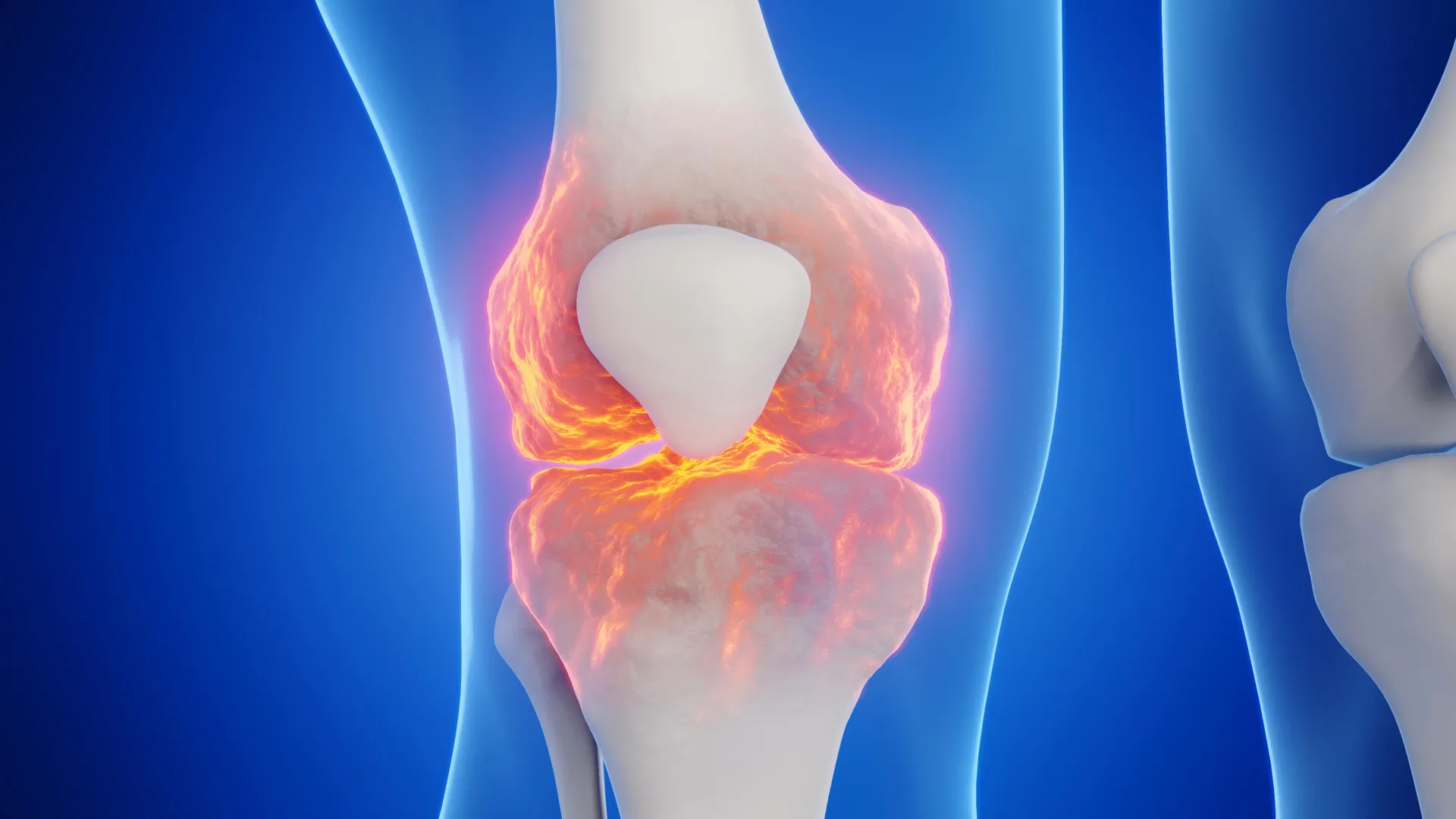
Experimental Drug Retatrutide Cuts Knee Osteoarthritis Pain by Half in NEJM Studies
An experimental injectable drug called retatrutide helped overweight adults with knee osteoarthritis cut their joint pain in half while losing up to a quarter of their body weight in two clinical trials published on Nov. 8 in the New England Journal of Medicine.
- Patients on the highest dose of retatrutide lost roughly 25% of their body weight across two phase 3 trials involving more than 1,000 total participants.
- Roughly two-thirds of participants treated with the drug reported at least a 50% reduction in knee pain, compared to 38% of patients given a placebo.
- Trial participants also demonstrated measurable decreases in blood pressure, circulating blood lipids, and systemic inflammation markers.
Painful knee osteoarthritis affects approximately 5% of Americans, totaling around 15 million people, according to data outlined by ScienceDaily. Standard medical care typically involves physical therapy, topical treatments, oral nonsteroidal anti-inflammatory drugs, opioid medications, or short-acting corticosteroid injections.
Physicians have long relied on weight management to relieve joint stress, as prior research indicates that shedding 5% to 10% of body weight via diet and exercise improves symptoms. However, achieving larger weight reductions through lifestyle modifications alone remains difficult for patients whose joint pain restricts mobility.
Developed by Eli Lilly, retatrutide is administered as a once-weekly injection. Unlike existing GLP-1 receptor agonists such as semaglutide and tirzepatide, which target one or two hormone pathways, retatrutide activates receptors for three distinct naturally occurring hormones.
“The findings are really saying for people who are overweight and have OA, if you lose a significant amount of weight with this treatment, there is a good chance that you’re going to get a meaningful reduction in your knee pain,” said Dr. Thomas Schnitzer, corresponding author and professor of physical medicine and rehabilitation, anesthesiology and medicine at the Northwestern University Feinberg School of Medicine.
“A major factor is that you’re loading your knees less and therefore, there’s less pain and it allows you to increase your function,” Schnitzer told ScienceDaily.

Philip Conaghan, study co-author and professor of musculoskeletal medicine at the University of Leeds, presented findings from the TRIUMPH-4 trial on Nov. 8 at the American College of Rheumatology annual meeting in Orlando, Florida. Data from the second trial, TRIUMPH-1-OA, were scheduled for presentation during a concurrent poster session on the same day.
Despite the trial outcomes, Schnitzer emphasized that lifestyle modifications should remain the primary intervention for individuals with osteoarthritis and excess weight. Sustainable dietary changes and physical activity avoid medication costs and mitigate side effects such as gastrointestinal distress and lean muscle loss.
“Participants had remarkable responses,” Schnitzer said, noting that several individuals shed 100 pounds or more during the research period.
Eli Lilly, founded in 1876 in Indianapolis by a Union army veteran and pharmaceutical chemist, was the first company to mass-produce both the polio vaccine and insulin. It later pioneered human insulin using recombinant DNA and brought the first GLP-1 receptor agonist to market in 2005. The company reached a $1 trillion market capitalization in November 2025, the first health-care company worldwide to do so.
Disclaimer: The information provided in this article is for educational and scientific communication purposes only and does not constitute medical advice. Always consult with a qualified healthcare provider regarding any medical condition, diagnosis, or treatment plan.