
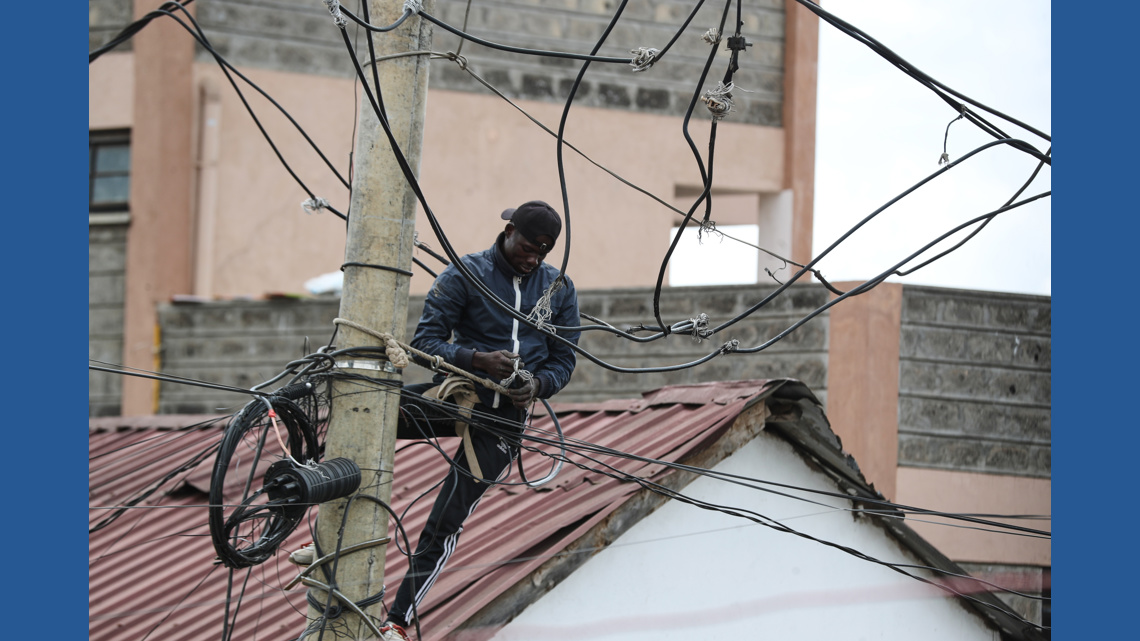
Expanding Electricity Access Transforms Lives and Livelihoods Across Africa
On April 2, 2026, the European Investment Bank (EIB) and the Rockefeller Foundation committed over $1.16 billion to sub-Saharan energy infrastructure, directly supporting the World Bank’s Mission 300 initiative. This capital injection targets 300 million new connections by 2030, shifting the sector from aid-dependent models to investable, decentralized mini-grid assets that promise high-yield returns for institutional investors.
The narrative of African electrification has long been dominated by humanitarian metrics—lives saved, lamps replaced. That changes today. With the European Investment Bank pledging $1.15 billion in March and the Rockefeller Foundation adding $10 million in catalytic capital, the conversation has pivoted to fiscal viability. This is no longer just about lighting a home in Mathare; it is about securing the grid infrastructure required to power the continent’s next decade of GDP growth.
For the C-suite and institutional investors watching emerging markets, the signal is clear: the risk premium on African renewable energy is compressing. The “last mile” is no longer a charity case; it is a massive, untapped utility market. However, deploying capital at this scale introduces complex friction points. As governments in Malawi, Liberia, and Nigeria rush to sign national energy compacts, the demand for specialized cross-border project finance legal counsel is surging. These deals require navigating volatile local currency regimes and complex public-private partnership (PPP) structures that generalist firms often mishandle.
The Capital Stack: Blended Finance as the New Standard
The funding architecture announced this quarter relies heavily on blended finance—using public or philanthropic capital to de-risk private investment. Nadia Calviño, President of the EIB, framed the $1.15 billion pledge not as a grant, but as a commitment to “cleaner, more affordable, and reliable energy.” In financial terms, this translates to credit enhancement. By taking the first loss or providing guarantees, these institutions allow commercial lenders to enter markets they previously deemed too volatile.
William Asiko, senior vice president at the Rockefeller Foundation, noted that African governments are now “committing to national energy compacts.” This policy stability is the prerequisite for institutional capital. Without it, the cost of equity remains prohibitive. With it, we spot the emergence of bankable projects in off-grid solar and mini-grids. The Rockefeller’s $10 million injection is specifically designed to support government reforms, effectively subsidizing the regulatory overhead that often stalls deployment.
“Energy access is key to unlocking human potential and economic development. Scaling access will require sustained financing and stronger implementation capacity.” — Andrew Herscowitz, CEO, Mission 300 Accelerator
Yet, capital is only half the equation. The physical deployment of these funds faces a logistical bottleneck. Moving solar panels, batteries, and inverters into rural Kenya or remote Nigeria requires a robust supply chain. Here, the market gap widens. Developers are scrambling to partner with specialized logistics providers capable of handling “last-mile” distribution in infrastructure-poor regions. A delay in customs clearance or a failure in local transport can erode project margins before a single kilowatt is generated.
Three Structural Shifts in the Energy Market
The influx of funding under the Mission 300 initiative is not merely increasing volume; it is altering the fundamental mechanics of the African energy sector. Based on the latest deployment data from the World Bank and African Development Bank, we are witnessing three distinct macroeconomic shifts:
- Decentralization of Grid Assets: The traditional model of massive, centralized hydro or thermal plants is being supplanted by community-level mini-grids. In regions like western Kenya, where national grids are unreliable, these independent systems offer higher reliability and faster ROI. This fragmentation requires new asset management strategies.
- Currency Hedging Mechanisms: With initiatives in Côte d’Ivoire and Senegal utilizing local currency financing, the exposure to FX volatility is being mitigated. This protects revenue streams for operators who collect tariffs in local shillings or nairas but service debt in dollars.
- From Capex to Opex Models: The shift toward “pay-as-you-travel” solar and mini-grid subscriptions is transforming energy from a capital expenditure into an operational utility expense for finish-users. This recurring revenue model is highly attractive to private equity firms seeking stable cash flows.
The Fiscal Reality of Connection
The economics of connection are improving, but the baseline remains steep. In Kenya, the Last Mile Connectivity Project has driven rural access from 7% in 2010 to 68% in 2023. A critical component of this success was the subsidization of the connection fee. For households like that of Agnes Mbesa in Nairobi, the standard $115 fee was covered by funders. For the private sector, this subsidy model is a double-edged sword: it accelerates adoption but creates dependency on donor cycles.
Samuel Oketch, a fisherman in Sori, represents the commercial upside of this access. By powering a freezer, he moved from selling perishable goods at low margins to storing inventory and negotiating better prices. This is the micro-economic engine that drives the macro numbers. When 300 million people gain this level of productivity, the aggregate demand for commercial banking, insurance, and digital services explodes.
However, scaling this from a pilot to a continent-wide standard requires more than just wires and panels. It demands rigorous due diligence. As the Mission 300 Accelerator pushes for “better-aligned support,” the role of energy sector consultants becomes paramount. These firms are tasked with validating the technical feasibility of mini-grids and ensuring that the projected EBITDA margins hold up against the reality of African operational environments.
The window for early-mover advantage in African electrification is narrowing. The $1.15 billion EIB pledge is a floor, not a ceiling. As the fiscal quarters progress through 2026, expect to see a flurry of M&A activity as larger utilities seek to acquire successful mini-grid operators to meet their own ESG mandates. The problem is no longer finding the money; it is finding the operational capacity to spend it wisely. For investors and service providers ready to navigate this complexity, the yield potential is substantial.