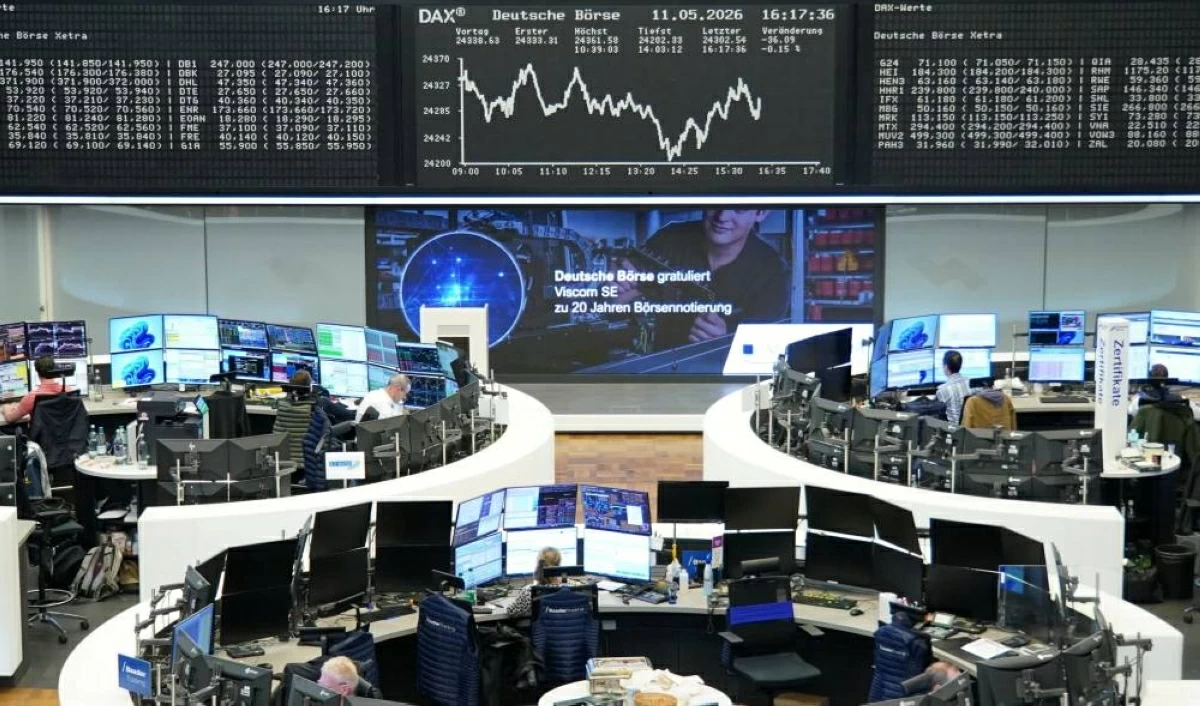
European Stocks Dip Amid Rising US-Iran Tensions
European equities retreated on Tuesday, May 12, 2026, as a fragile U.S.-Israeli ceasefire with Iran stalled, sparking fears of a prolonged stalemate. The decline, led by the financial sector, was compounded by rising oil prices, a surging U.S. Dollar, and acute political instability within the United Kingdom’s leadership.
This convergence of geopolitical friction and political volatility creates a high-risk environment for multinational corporations, specifically regarding currency exposure and energy procurement. When the Strait of Hormuz becomes a focal point of economic warfare, the resulting price shocks demand more than just reactive budgeting. Firms are increasingly turning to risk management consulting to implement sophisticated hedging strategies that protect margins from overnight commodity spikes.
The ‘No War No Peace’ Deadlock
The mood across the FTSE 100, CAC 40, and DAX turned decisively negative as the U.S.-Israeli ceasefire with Iran approached its second month with negligible progress toward a permanent peace treaty. The fragility of the truce was underscored by President Trump, who characterized the regional agreement as being on “life support.”
Tensions escalated further following renewed U.S. Military strikes, prompting Iran’s parliamentary speaker to signal that the country is prepared for a “well-deserved” riposte. This cycle of strike-and-response has pushed investors into a defensive posture, triggering a flight to safe-haven assets. Jefferies noted that the market is currently trapped in a “No War No Peace” scenario, where the absence of active total war is not enough to restore risk appetite because the ceasefire remains precarious.
The financial sector bore the brunt of the sell-off. Banks are particularly sensitive to the “stalemate” narrative, as prolonged instability in the Middle East typically correlates with increased credit risk and volatility in global capital flows. With the pan-European Stoxx 600 index sliding, the market is now pivotally focused on upcoming U.S. Consumer price data, which will likely dictate the next move for central bank interest rate trajectories.
Energy Chokepoints and Currency Contagion
The prevailing investor thesis has shifted toward the belief that the Strait of Hormuz will remain closed until the economic costs become untenable. This expectation has provided a floor for oil prices, which rose alongside the U.S. Dollar. For European industrials, this creates a double-edged sword: rising input costs for energy combined with a stronger dollar that increases the cost of dollar-denominated imports.

The volatility isn’t limited to commodities. Sterling has plummeted to a near two-week low against the euro and weakened against the dollar. This currency slide is less about Middle Eastern oil and more about a crisis of governance in London. Prime Minister Keir Starmer is currently fighting to avert a leadership challenge within the Labour Party, creating a vacuum of political certainty that markets despise.
“What matters most for the pound are the potential views of a successor,” Commerzbank stated, highlighting that the market is already pricing in the possibility of a post-Starmer administration.
For corporations operating across the UK-EU corridor, this instability necessitates immediate legal and strategic audits. The uncertainty surrounding UK leadership often leads to sudden shifts in regulatory outlooks, forcing enterprises to engage corporate law firms to ensure compliance and protect cross-border assets during leadership transitions.
Macro Analysis: Three Vectors of Industry Shift
The current stalemate is not a temporary dip; It’s a structural shift in how the market prices geopolitical risk. The “No War No Peace” environment alters the operational calculus for three primary reasons:
- The Permanent Risk Premium: Markets are no longer treating the Middle East tension as a “black swan” event but as a baseline cost of doing business. This forces a permanent increase in the risk premium for any equity with exposure to the region or energy-intensive supply chains.
- Safe-Haven Dominance: The rise of the dollar and the fall of Bitcoin indicate a retreat from speculative assets. Liquidity is concentrating in traditional safe havens, which puts immense pressure on emerging market currencies and European equities that lack strong defensive moats.
- Supply Chain Regionalization: The threat of a closed Strait of Hormuz is accelerating the move toward “friend-shoring.” Companies are bypassing traditional transit chokepoints by investing in supply chain logistics providers that can offer diversified, non-linear routing for critical raw materials.
The broader European economic outlook remains tethered to the European Central Bank’s ability to manage inflation while growth stagnates under the weight of these external shocks. If the U.S. Consumer price data reveals a stubborn inflationary trend, the ECB may be forced to maintain restrictive rates even as the European economy weakens, further compressing corporate earnings.
The current market trajectory suggests that the “fragile” nature of the ceasefire is the new status quo. Investors are no longer betting on a swift resolution; they are betting on endurance. As the financial sector continues to lead the decline, the divide between companies with robust risk-mitigation frameworks and those operating on “hope” as a strategy will widen.
Navigating this volatility requires more than just market data—it requires a vetted network of professional partners. Whether it is securing your supply chain or hedging your currency exposure, the World Today News Directory provides the definitive gateway to the B2B firms capable of stabilizing your enterprise in an unstable world.