
Japanese Innovation: Electric Vehicles Now Charging On the Move
TOKYO – A groundbreaking growth in electric vehicle (EV) technology is emerging from Japan, allowing cars to charge wirelessly while driving, eliminating the need for stationary charging stops. This innovation, revealed by scientist V. Skrickij, utilizes a system where charging elements are embedded in roadways, transferring power to EVs through their tires.
The implications of this technology are substantial, perhaps resolving range anxiety – a major barrier to EV adoption – and reshaping the future of transportation. While currently limited to demonstration projects in Japan, the technology addresses concerns about charging infrastructure limitations and consumer habits, particularly in regions like europe and Lithuania where longer commutes and a preference for diesel vehicles persist. Skrickij noted that over 120 EV manufacturers currently exist, driving down prices and making EVs increasingly competitive with internal combustion engine vehicles.
Skrickij highlighted the parallels to wireless phone charging, explaining that the system functions similarly, transferring energy without physical contact. “The Japanese are even adapting electric vehicles to logistics – they charge while driving down the road: elements are installed on the road and the vehicle charges through the tires while moving. Just like your phone can be charged wirelessly,” he stated.
Despite challenges to widespread EV adoption, such as European lobbying efforts to extend the production of combustion engine vehicles beyond 2035, advancements in battery technology are also contributing to the shift. Skrickij pointed out that 95% of battery materials are now recyclable, addressing previous environmental concerns. Moreover, fast-charging capabilities are improving, with new-generation EVs capable of reaching 80% charge in as little as 15 minutes.
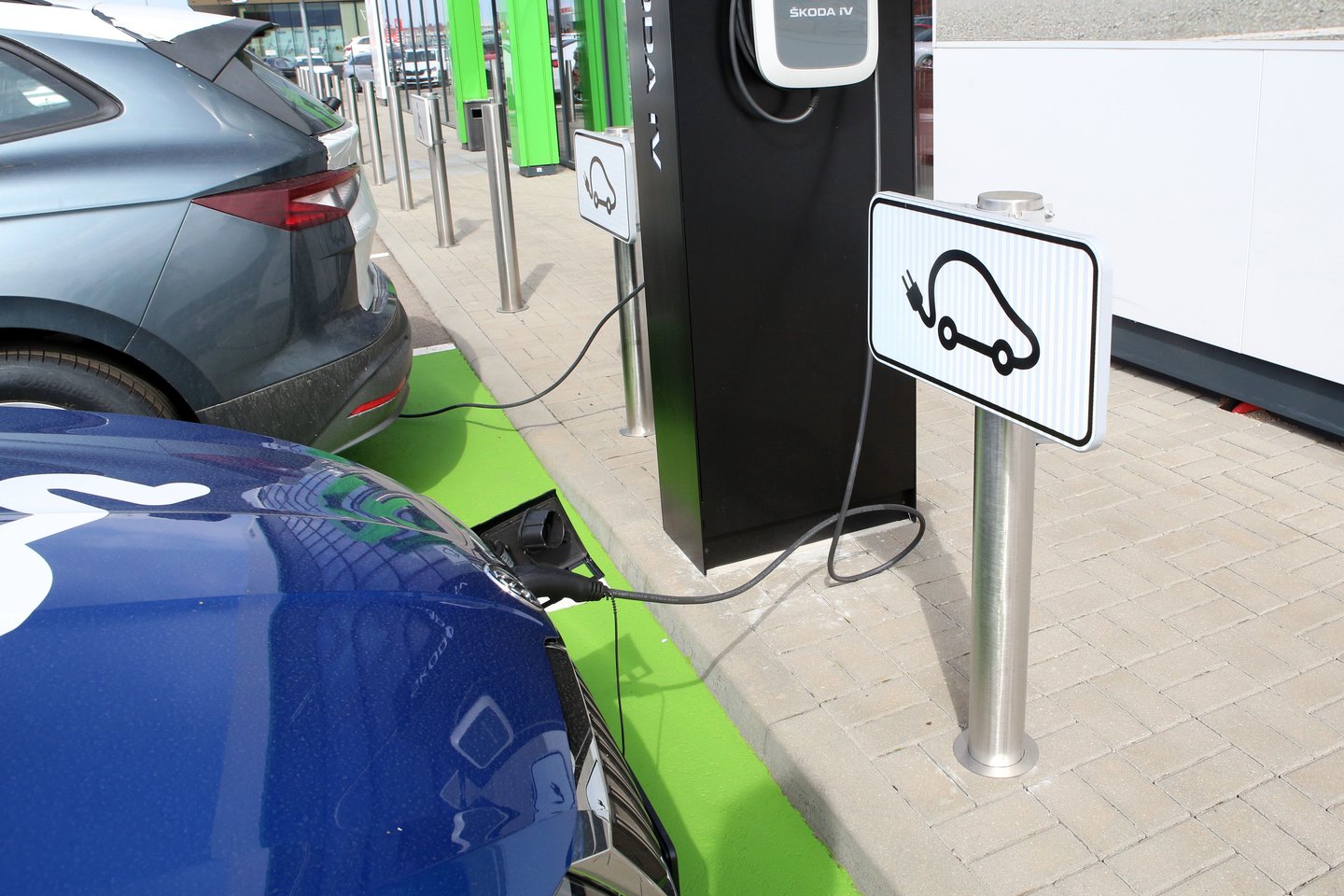
Currently, Lithuania’s charging infrastructure is underutilized, with more charging stations available than EVs on the road. the cost of driving an EV is also substantially lower than diesel alternatives, estimated at up to €1 per 100km with a home solar panel system, or up to €3 per 100km when charging from a standard outlet – 3-4 times cheaper than diesel fuel.
