EU Sanctions 10 Russian Officials Over Crackdown on Yabloko Party
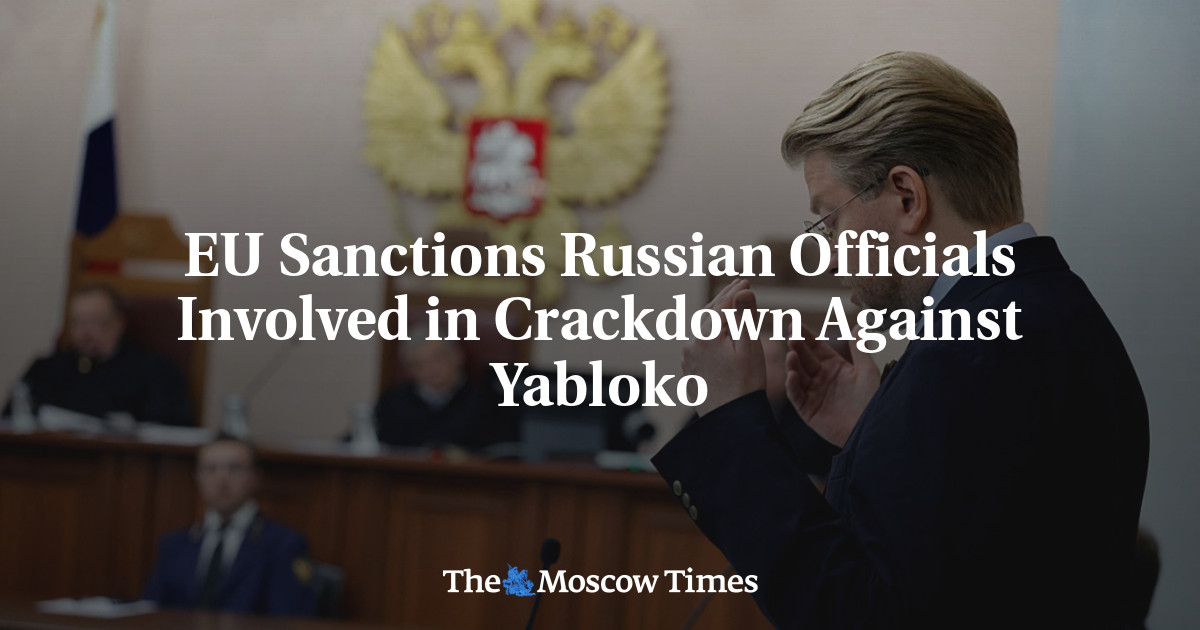
The European Union imposed sanctions on 10 Russian officials on Monday, September 28, 2026, following the exclusion of the liberal Yabloko party from parliamentary elections. The measures, which include asset freezes and travel bans, target judges and prosecutors accused of undermining the rule of law and repressing democratic opposition in Russia.
The EU Council’s decision targets a specific chain of legal and administrative actions used to dismantle Yabloko’s presence in the 2026 State Duma elections. According to the EU, these officials supported the repression of the democratic opposition and seriously undermined democracy. Yabloko, recognized as Russia’s oldest liberal party, was the sole registered political entity campaigning for peace during this election cycle.
The crackdown manifested in multiple layers. While the party was struck from the federal ballot, its candidates in single-member constituencies faced police detentions and disqualifications. The party was also barred from nearly every regional assembly race across the country.
Only one region provided a breach in this blockade: northwestern Novgorod, where Yabloko successfully passed the 5% electoral threshold to secure seats in the regional legislature.

Judicial Sanctions for Ballot Exclusion
A significant portion of the sanctions targets the Russian judiciary. One Supreme Court judge was sanctioned for a ruling issued last month that barred Yabloko’s federal party list from the ballot. The court cited alleged violations involving copyright rules, campaign materials distributed via restricted foreign platforms, and foreign funding.
Two additional judges were sanctioned for upholding that specific ruling. The EU also targeted a prosecutor and an official from the Central Election Commission for their roles in the court proceedings against the party.
Criminal Prosecution of Party Leadership
Beyond the electoral barriers, the EU sanctioned four officials—two judges and two state prosecutors—for the imprisonment of senior Yabloko members. Among those jailed is Lev Shlosberg, the former head of the party’s Pskov regional branch.
The sanctions also extend to a judge who fined Yabloko Chairman Nikolai Rybakov. The fine was issued after Rybakov shared a photograph of the late Kremlin critic Alexei Navalny.
Broader EU Actions and Russian Media Repression
The crackdown on Yabloko occurred alongside other EU restrictive measures. On the same Monday, the EU sanctioned 27 additional individuals and organizations. These entities are accused of involvement in the indoctrination and forced deportation of children from Ukraine.
The Moscow Times reported that the Russian Prosecutor General’s Office has designated the outlet as an “undesirable” organization. This designation criminalizes the publication’s work and exposes its staff to prosecution, following a previous label of “foreign agent.” The Russian authorities claim the outlet’s reporting discredits the decisions of the Russian leadership.