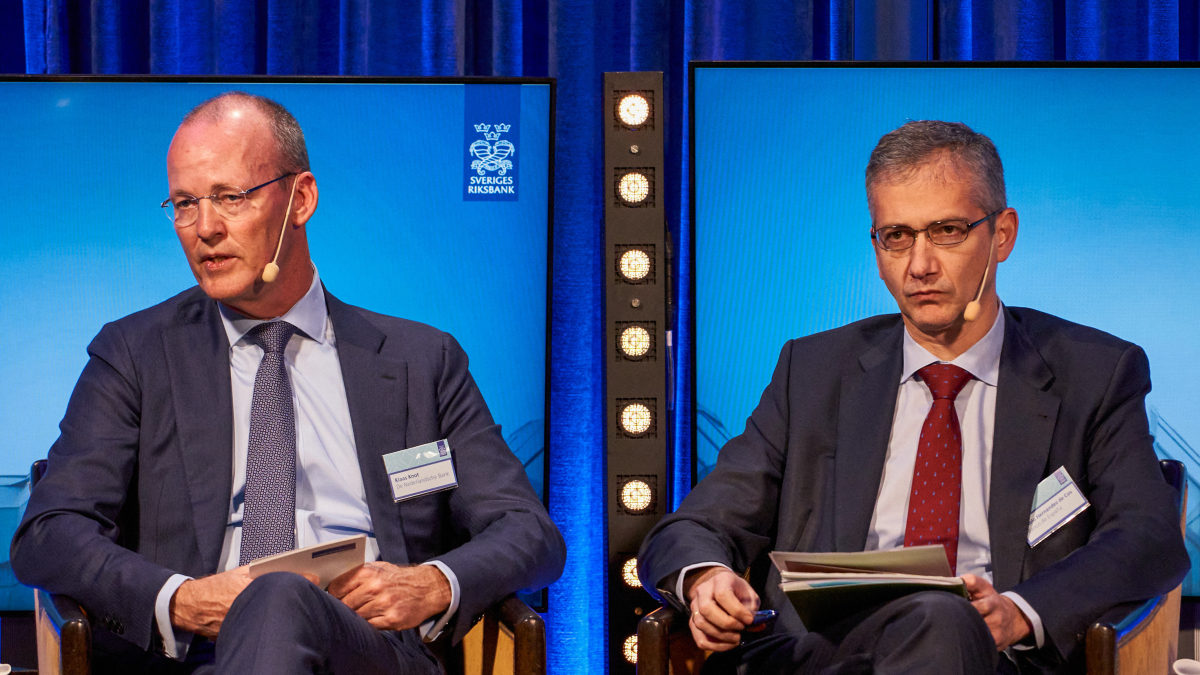
EU Leaders Meet on De Cos Candidacy and Budget Talks
European Union leaders converge Thursday on an extraordinary summit poised for confrontation.
“The Hague views the candidacy as leverage to claim the European Stability Mechanism managing director post when Pierre Gramegna steps down in November 2027,” according to eleconomista.es.
Franco-German Leadership Package Faces Resistance
France and Germany have bundled three top EU economic vacancies into a single negotiation. Paris nominated former OECD chief economist Laurence Boone for the market operations seat vacated by Isabel Schnabel in January, according to Expansion. Berlin put forward Princeton economist Markus Brunnermeier to succeed Philip Lane as chief economist on June 1, 2027, Expansion.com reported, according to Eleconomista.
Both capitals conditioned their support on a joint vote for De Cos. “Diplomatic sources told eleconomista.es that the Netherlands lost Berlin’s backing and refuses to withdraw Knot.” This refusal caused the Eurogroup to fail in issuing a clean recommendation for De Cos on Wednesday.

2028 Budget Deal Remains Elusive
The summit was originally called to unblock the 2028-2034 multi-annual financial framework. Council President Antonio Costa’s compromise proposal cuts the Commission’s €1.58 trillion envelope by 10%. It slashes the Competitiveness, Innovation and Security fund to €437 billion from €522 billion while leaving the Common Agricultural Policy untouched at €261 billion, eleconomista.es reported. Cohesion funding falls modestly to €402 billion. The Global Europe external action instrument drops 21% to €150.1 billion.
Northern members Germany, the Netherlands and Sweden reject the plan. “Germany, the Netherlands and Sweden say the total remains too high and want competitiveness and defense prioritized.” Poland, Hungary, the Czech Republic and Slovakia also oppose the proposal. “France has expressed reservations.” Diplomatic sources told eleconomista.es an agreement this week is unlikely.
Ukraine Loan Tied to Budget Progress
Chancellor Friedrich Merz has tied German approval of a €45 billion EU loan to Kyiv to progress on the budget. This linkage is a strategic move to sidestep vetoes from Budapest, Bratislava, Prague and Sofia, eleconomista.es reported. The loan is part of a €70 billion package with international partners.
Costa’s financing plan to fund the budget includes five new EU own resources yielding €60 billion annually. These notably include a levy on large digital services, alongside expanded carbon pricing and proposed taxes on electronic waste and tobacco.
ECB Appointment Timeline Set Despite Stalemate
The ECB Governing Council must then issue a non-objection opinion; leaders are expected to formalize the appointment at the December 17 European Council summit, with De Cos taking office in February when Christine Lagarde steps down early.