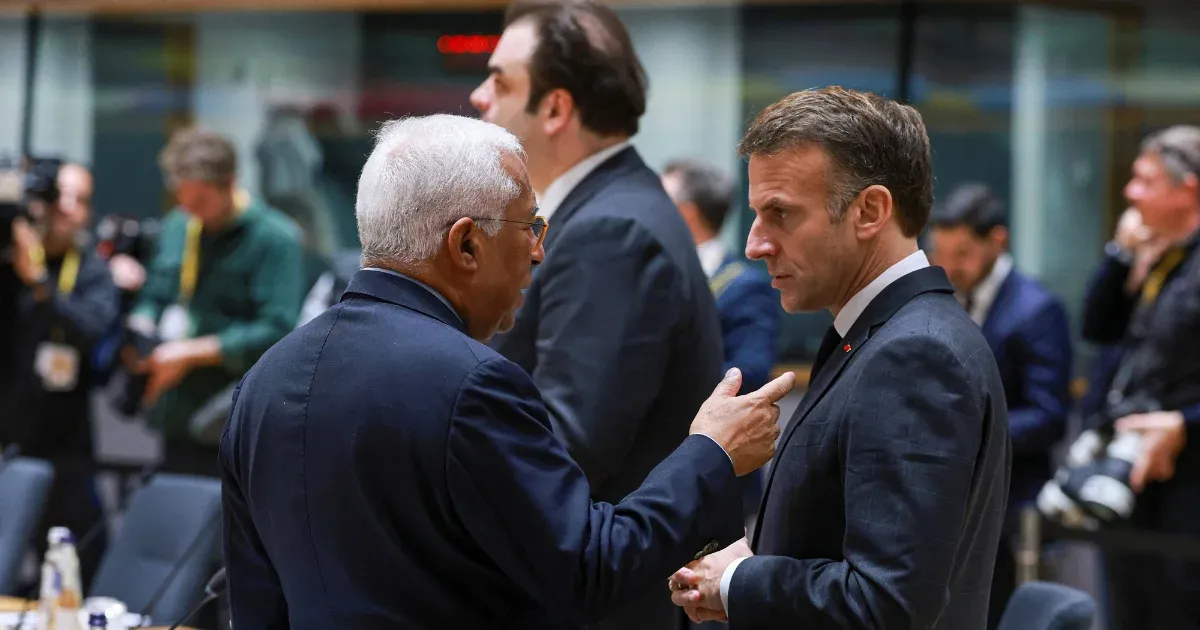
EU Leaders Deadlock on Budget, Ukraine Loan; Talks Continue in December
EU leaders ended an emergency summit in Brussels on Thursday without agreement on the bloc’s next seven-year budget or a 45 billion euro loan for Ukraine, pushing both decisions to a second summit scheduled for Dec. 17.
European Council António Costa called the extraordinary meeting to prepare a deal on the next seven-year budget based on his own proposal, which would trim the envelope by roughly ten percent to about 1,582 billion euros at 2025 prices, according to Esti Hírlap.
Instead, the 27 leaders exposed a familiar divide: net contributors want a smaller budget focused on competitiveness, while cohesion countries — including Hungary — defend agricultural and regional funding. Costa outlined three priorities on arrival: the budget’s total size, the distribution of funds across priorities, and a balanced system of new EU own resources.
French President Emmanuel Macron warned the EU risked a “strategic mistake” by sidelining the Draghi competitiveness report’s recommendations. He refused to let talks drag into 2027, when a French presidential election would remove him from the table. “It is not democratically acceptable for me that the budget stretches into next year,” Macron said. He also referenced Marine Le Pen, the National Rally presidential candidate, saying, “The strange kind of arrogance is to think that she already governs.”
Swedish Prime Minister Ulf Kristersson summed up the mood: “Once again nothing really happened today.” Danish Prime Minister Mette Frederiksen walked out of the afternoon’s small-group talks, saying they made no sense, according to telex.
Greek Prime Minister Kiriakos Mitsotakis criticised the cohesion bloc, warning that excessive budget spending would leave no room to implement Mario Draghi’s competitiveness proposals. Andrej Plenković cautioned that elections next year — in France, Italy and Poland — could paralyse the process if talks drag on.
On Ukraine, the divide was equally stark. The European Commission proposed a 45 billion euro loan for 2027 — 25 billion for military aid, 20 billion for budget support — backed by joint EU borrowing. The loan would cover two-thirds of Ukraine’s estimated 70 billion euro financing gap for 2027. Annual interest costs of 2–2.5 billion euros would fall on member states. Ukraine would repay principal only if Russia pays war reparations; otherwise the loan would be extended. Costa acknowledged the impasse at midnight.
“I understand that compromises are needed,” he said, but urged leaders to stick to agreed goals. Commission President Ursula von der Leyen said that ministers had already cut two previous proposals significantly.
“There is a link between the support given to Ukraine and the European Union budget; these are closely intertwined,” Friedrich Merz said in Brussels on Thursday. “You know my position: we must ensure that Ukraine receives sufficient support in the coming years, both militarily and humanitarianly.”
Bulgaria will join the EU’s 45 billion euro loan programme for Ukraine but will support only its non-military component, Prime Minister Rumen Radev announced on Thursday before the Brussels summit. Sofia had previously opposed the entire loan programme. Radev said Bulgaria would focus on supporting the approximately 300,000-strong Bulgarian community living in Ukraine. The change follows a Commission decision allowing member states to separate the military and non-military components, enabling countries that oppose arms deliveries to participate in the financial assistance.
Luxembourg Luc Frieden also stressed the two matters are not directly linked, since Ukraine needs money now while the budget covers seven years from 2028. Slovak Prime Minister Robert Fico confirmed Slovakia will not contribute to financing Ukrainian military expenditure.
Fico recalled that Slovak agriculture relies significantly on large enterprises, so the country would be adversely affected if the EU capped direct payments per beneficiary at 300,000 euros. More than 30 billion euros of Hungarian contributions are at stake in Brussels, with Germany threatening a veto over the new Ukraine loan.
As prime minister of Portugal from 2015 to 2024, Costa built a reputation for fiscal discipline and coalition management that he now brings to brokering compromise among the 27 leaders. His plan centers on three priorities: the budget’s total size, the distribution of funds across policy areas, and a balanced system of new EU own resources to reduce reliance on national contributions.
Costa’s experience steering Portugal through EU budget cycles and his tenure as mayor of Lisbon from 2007 to 2015 inform his push for a competitiveness-focused framework aligned with the Draghi report.

The only formal decision Thursday was the nomination of Pablo Hernández de Cos as the next European Central Bank president, a choice prepared in advance. Leaders will reconvene Dec. 17–18, with some delegations booking hotels through Dec. 20.
Dutch Prime Minister Rob Jetten said some leaders received new homework to be solved by December. Greek Kiriákosz Micotákisz said a December agreement is politically essential because elections in the first half of 2027 could make compromise even harder.