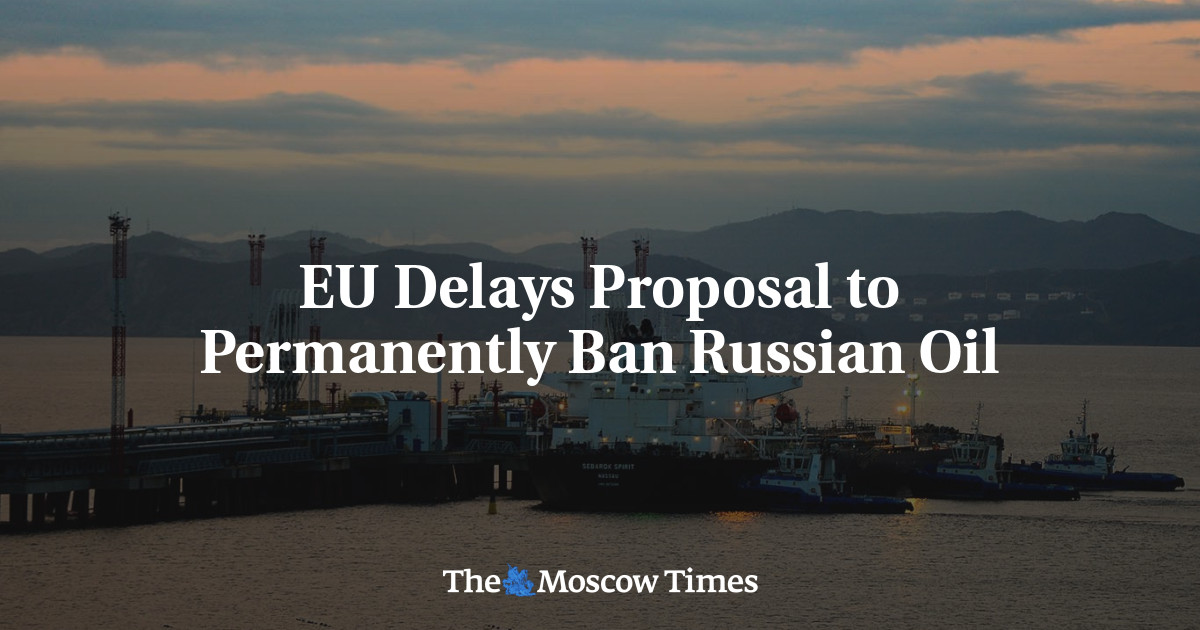
EU Delays Russian Oil Ban Amid Middle East War & Price Spikes
EU Delays Permanent Ban on Russian Oil Amid Middle East Conflict and Price Volatility
The European Union has postponed a vote on legislation to permanently ban imports of Russian oil, a move prompted by escalating energy prices and supply disruptions linked to the ongoing conflict in the Middle East. The proposal, initially slated for unveiling on April 15, has been removed from the European Commission’s REPowerEU roadmap calendar, according to officials.
EU Commission energy spokeswoman Anna-Kaisa Itkonen confirmed the delay on Tuesday, stating that a new date for the proposal’s presentation has not yet been determined. However, she emphasized that Brussels remains “committed to making this proposal,” despite the postponement.
The decision comes as the war in the Middle East continues to roil global energy markets, pushing the price of Brent crude above $100 per barrel. The disruption of tanker traffic through the Strait of Hormuz has significantly contributed to the price surge, creating a volatile market environment. The International Energy Agency has described the situation as the largest-ever disruption to global energy supplies.
Adding to the complexity, Russian President Vladimir Putin has offered to resume long-term oil and gas supplies to European buyers, capitalizing on the rising prices and potential shortages. This offer comes after the United States and Israel began strikes on Iran in late February, further exacerbating the energy crisis.
European Commission President Ursula von der Leyen has cautioned against abandoning the EU’s strategy of reducing Russia’s energy revenues, arguing that doing so would be a “strategic blunder.” This strategy is intended to limit Russia’s ability to finance its war in Ukraine.
The EU initially banned maritime imports of Russian crude oil in 2022 following Russia’s full-scale invasion of Ukraine. However, exemptions were granted to Hungary and Slovakia, which continue to receive oil via the Druzhba pipeline. Deliveries through this pipeline have been effectively halted since January due to damage sustained to the infrastructure in Ukraine.
The EU has also agreed to ban Russian liquefied natural gas by the end of 2026 and pipeline gas by the fall of 2027. These measures, combined with the proposed permanent ban on crude oil imports, represent a comprehensive effort to diminish Europe’s reliance on Russian energy sources.
The postponement of the oil ban proposal highlights the delicate balance the EU faces in navigating the energy crisis, balancing its commitment to Ukraine with the need to secure affordable and reliable energy supplies for its member states. The Commission has not indicated when the proposal might be reintroduced, leaving the future of a permanent ban on Russian oil imports uncertain.