
Esto Es Fútbol: My PS2 World Cup Nightmare & Why Sony’s FIFA Rival Still Matters
For many years, a World Cup campaign remained unfinished business with Esto es Fútbol 2003. The player repeatedly chose Spain, convinced they could alter history, finally winning the tournament and escaping the quarter-final nightmare against South Korea. It was one of the first games acquired for the PlayStation 2, and at eight years old, concerns about licensing, development studios, or console wars were irrelevant; scoring goals with Raúl was the only objective.
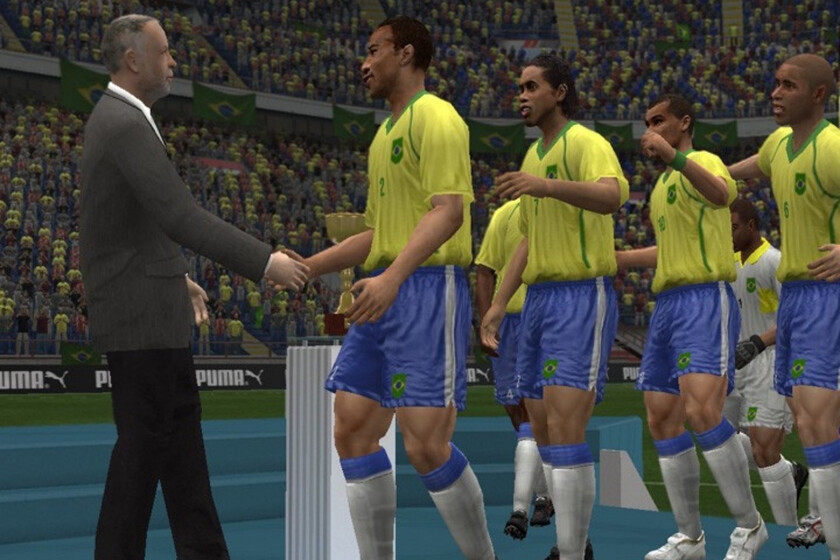
The World Cup felt close, but never materialized until reaching the final against a Brazil team featuring Ronaldo, Rivaldo, Roberto Carlos, Ronaldinho, Cafú, and Lúcio – a true dream team. More than 20 years later, the memory remains vivid: Brazil scored, then Spain, then Brazil, then Spain, until the score reached 4-4 and went to extra time. Though barely ten years old, a strategic pause was necessary. A quick shower, a refuel with a ketchup and cheese sandwich (a childhood preference, and a simple meal for his mother), and a return to the controller to attempt a first-ever World Cup victory. The game ended in a 5-5 draw, then 6-6, before Ronaldo scored the winning goal at 7-6. The dream ended there. Two decades later, the inability to win that virtual World Cup explains a reluctance to view Esto es Fútbol as simply “the bad FIFA or PES from Sony.”
Esto es Fútbol never achieved the status of a genre benchmark, instead becoming a curious and notable anomaly. Those familiar with its development and evolution acknowledge it never truly competed with the industry giants, remaining a step behind. Sony attempted to challenge FIFA and Pro Evolution Soccer (PES) with its own franchise, a title that secured a permanent place on retail shelves.
The game offered something PES and FIFA did not: the ability to feign penalties and deliver forceful chest-high challenges. The attempt wasn’t entirely unsuccessful, but it didn’t reach the heights of a championship-winning goal. The relationship with the series was described as “strange,” and perhaps that’s why it’s remembered so fondly. Even as a dedicated player of Pro Evolution Soccer, starting with the second installment and logging countless hours with the sixth, there was always time for a few matches of Esto es Fútbol.
Possessing editions from 2003, 2004, and 2005, the player recalls the Spanish national team covers, Fernando Torres, and the league crests after finally securing licensing. There was never a sense that one game was definitively “better” than the others, but rather three titles offering similar experiences with subtle differences. These differences, both between the Esto es Fútbol titles and compared to PES or FIFA, were what prompted repeated returns.
A trip to Alcampo with his father to view the 2004 edition, positioned on a shelf too high to reach, became a memorable event. His father promised to buy it if he could retrieve it himself, knowing he would regardless. Asking a passing woman for assistance, the father later admitted he would have reached it himself but enjoyed watching his son’s ingenuity. The memories extend beyond the menus, covers, and gameplay; they encompass the entire experience.
Esto es Fútbol was significant, though not groundbreaking, for what happened when the controller was in hand. It wasn’t superior to PES or comparable to FIFA, defined by its carefree, playful, and somewhat mischievous nature. While PES began building its reputation as a serious, precise, and almost sacred football simulation, Sony pursued a different path. This appealed to the player.
The game allowed for faked penalties, aggressive tackles reminiscent of Nigel de Jong’s infamous World Cup final challenge, repetitive use of the same three skills moves, and commentary from Carlos Martínez (and later, Maldini). It offered a recognizable, if not refined, gameplay experience. It was a franchise with personality, a quality as valuable as excellence in football titles. It possessed a virtue appreciated in retrospect: it was endearing.
It wasn’t a game to boast about, but one that dominated afternoons with friends due to its distinctiveness. With friends, a mode allowing the creation of a school team to compete against First Division and European competition teams was particularly popular. Success was elusive, but the lack of depth compared to PES or visual appeal compared to FIFA was unimportant.
The game’s downfall began with the passage of time. As PES refined its formula and FIFA continued to grow as the official showcase of the sport, Esto es Fútbol found itself in no man’s land. It lacked the polish to challenge Konami, the presentation, licensing, or commercial muscle of EA Sports. It remained likeable, recognizable, and endearing, but the genre progressed, and Sony never evolved its formula.
The arrival of the PlayStation Portable (PSP) and the introduction of World Tour Soccer as the successor to Esto es Fútbol signaled the end of the line. The name change and attempt to retain the franchise alive did not mask a lack of real evolution. The series is remembered as Sony’s attempt to compete with the giants of football gaming, a venture that lasted for a few years but never came close to victory. However, it did achieve something more difficult to measure: a place in the memories of those who played it.