ESA ExoMars Rover Tested in Spain Ahead of Mission to Search for Ancient Life on Mars
Engineers are preparing for a milestone space mission as a rover prototype undergoes rigorous trials in the Tabernas desert in southern Spain. The European Space Agency (ESA) is readying the Rosalind Franklin rover for a 140-million-mile journey to the Red Planet to search for ancient signs of life and study the planet’s geochemical environment.
Operational Summary for the ExoMars Deployment
- Payload & Destination: The Rosalind Franklin rover targets Oxia Planum on Mars, a region featuring layered clay sediments indicating past water activity.
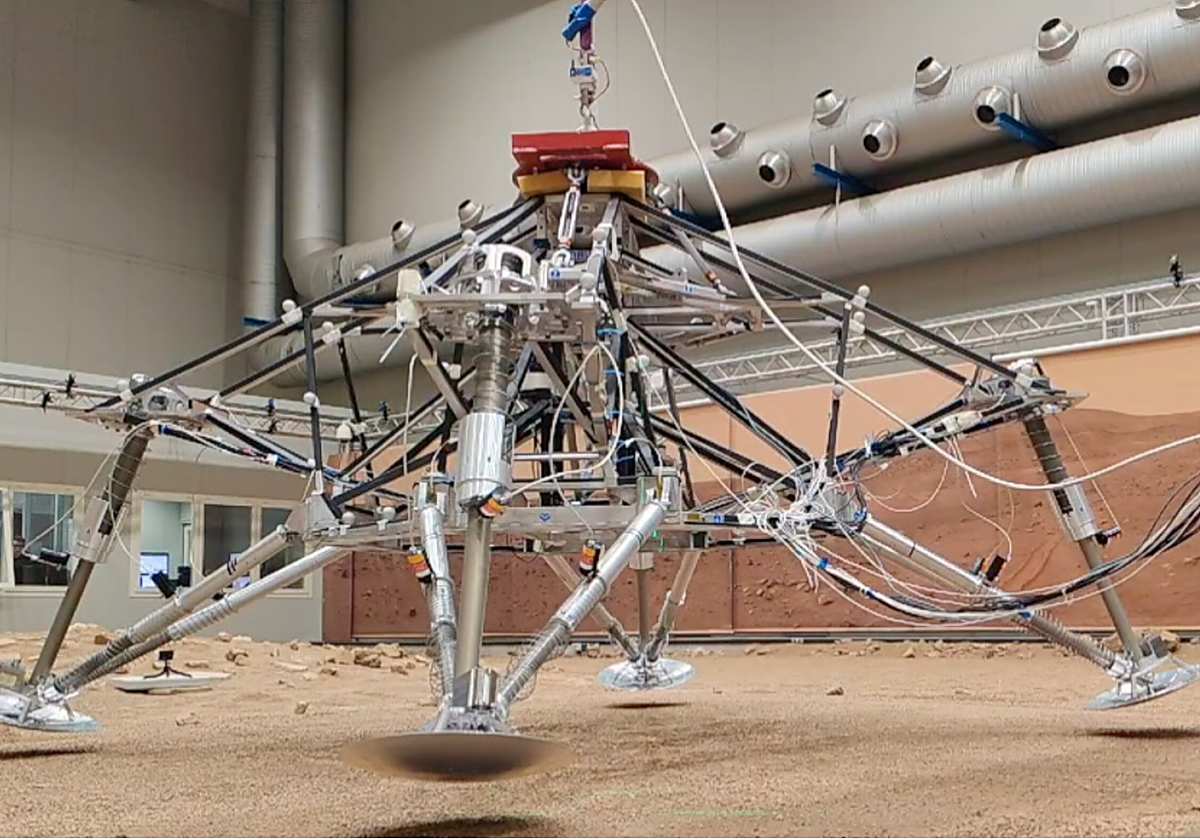
- Engineering Modifications: Following the end of ESA-Roscosmos cooperation, European industry redesigned descent and landing components—including a four-leg landing system built by Spanish group Sener—maintaining a 2028 launch timeline.
- Testing Protocols: Field engineers in Spain remotely operate the ‘Charlie’ test vehicle from Turin to validate autonomous navigation and sub-surface drilling up to two meters deep.
Testing the Charlie Test Vehicle in the Tabernas Desert
The province of Almeria plays a central role in qualification testing for the ExoMars descent platform. Spanish group Sener completed the final stages of qualification for the landing gear, which consists of four folded legs designed to deploy automatically using non-explosive actuators shortly before touching down. During recent desert evaluations in the Tabernas landscape, operators in Turin directed the ‘Charlie’ test vehicle remotely. Teams validated autonomous navigation capabilities and simulated surface science routines while erasing previous vehicle tracks to prevent artificial navigation references. Professor Susanne Schwenzer, a planetary mineralogist at the Open University and field geologist for the ExoMars tests, noted the striking visual and geological similarity between the Spanish testing grounds and the Martian target terrain at Oxia Planum.
Airbus and Sener Engineer Replacement Mission Systems
The mission timeline shifted following geopolitical changes and pandemic delays. After cooperation between the ESA and Roscosmos concluded, European aerospace firms engineered replacement systems within a strict timeframe. Airbus built the flight rover in Stevenage, integrating advanced autonomous navigation systems and specialized analytical instruments. Among these is WISDOM, a ground-penetrating radar designed to scan subsurface layers. Sener’s landing gear mechanisms underwent rigorous drop-test campaigns, confirming deployment in under a second. The hardware must subsequently supply electrical power to the vehicle after touchdown while withstanding extreme surface conditions. Sener previously provided antenna-pointing mechanisms for NASA’s Curiosity and Perseverance rovers.
Drilling Deep Beneath the Martian Surface
The rover’s primary scientific directive involves searching for preserved biosignatures protected from harsh ionizing radiation on the Martian exterior. The system carries a drill capable of penetrating up to two meters beneath the surface. Retrieved core samples will undergo onboard analysis to evaluate mineral composition and past habitability. Because communication signals between ESA command centers and Mars experience a one-way light-time delay of at least 20 minutes, autonomous obstacle avoidance and hazard detection algorithms are critical for mission success. Ground teams rely entirely on pre-programmed behavioral sequences and iterative emulations tested on Earth before transmitting instructions across interplanetary distances.

Disclaimer: The technical analyses and security protocols detailed in this article are for informational purposes only. Always consult with certified IT and cybersecurity professionals before altering enterprise networks or handling sensitive data.