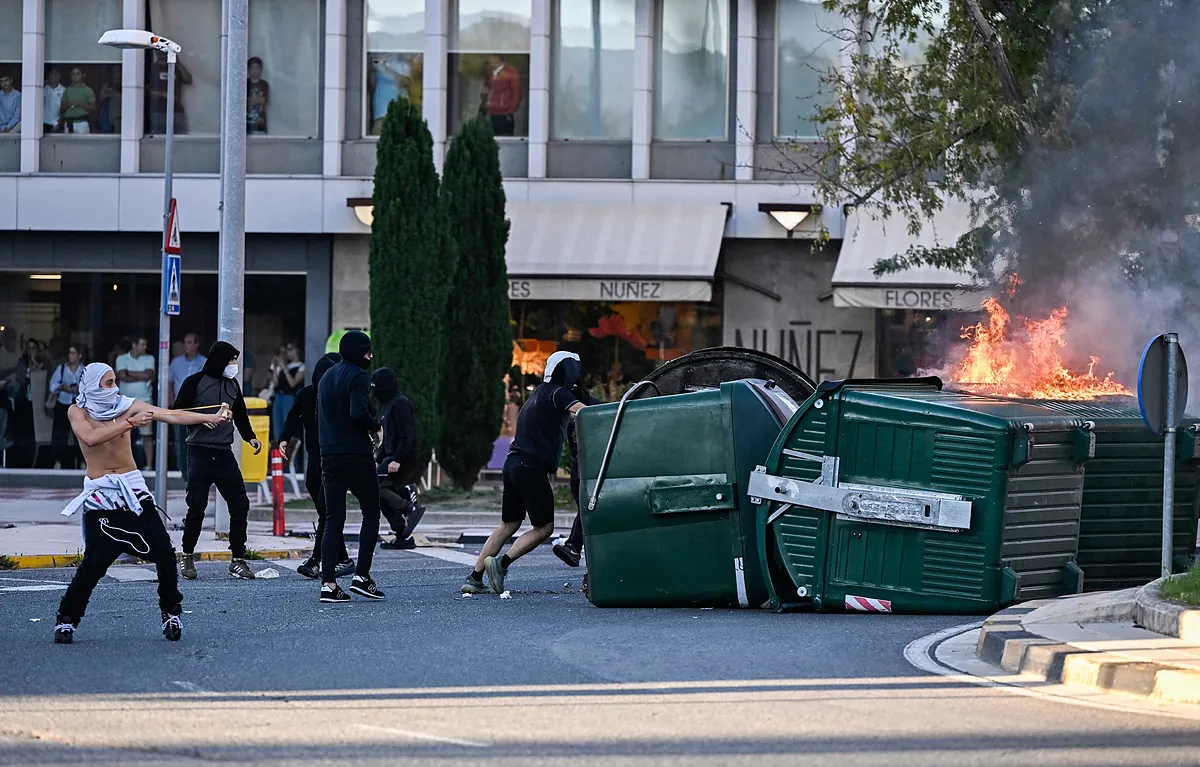
Ertzaintza withheld data on security forces from other police units
The Central Intelligence Office of the Ertzaintza withheld information seized from members of Jardun and an Irish dissident during a September 26 traffic stop in Escoriaza, Guipúzcoa. The withheld files included personal data belonging to National Police officers, Civil Guards, and Ertzaintza members.
The Traffic Stop in Escoriaza and Seized Electronic Data
Aratz Bilbao, 34, Malen Grünig, 20, and Naoise Conron, a sympathizer of the Irish party Saoradh, were traveling together in a vehicle on the night of September 26 when officers identified and photographed them during a traffic stop. During the retention, the Basque police accessed an electronic agenda containing sensitive details about security forces stationed in the Basque Country.
The vehicle occupants also carried information concerning the potential location of a zulo in a mountainous area in which arms and explosives would be kept. The Central Intelligence Office, based in Erandio, Vizcaya, held this intelligence since September 26 while attempting to tighten security measures for its own personnel.
Detention at Irun Station and Court Transfer
Investigators kept their findings completely shielded until Saturday, when Bilbao and Grünig walked into the Irun police station accompanied by a lawyer. Both suspects remain in the Irun holding cells.

The Ertzaintza must organize their transfer to the Audiencia National for a judicial appearance before a judge. French authorities had already detected periodic travel by Conron to the Basque Country due to the location of the couple from Jardun with police records alongside a member of the IRA dissident party.
Political Friction Over Police Competencies
The handling of the case unfolds amid ongoing political controversy regarding security competencies in the region. In July, the National Police arrested two Jardun members who assaulted a supporter of La Roja in Bilbao.
Security Councillor Bingen Zupiria and PNV President Aitor Esteban denounced those arrests as an invasion of jurisdiction. Esteban publicly argued that state security forces stationed in the Basque Country should be deployed to Ceuta because the Ertzaintza operates as the integral police force for the region.
Government Delegate Marisol Garmendia defended the presence of nearly 3,000 state security personnel and rejected divisions between security forces. Meanwhile, the Ertzaintza’s Central Intelligence Office has held data on Jardun’s operations since 2025, recovered from the computer of a 20-year-old militant linked to incidents on October 12 in Vitoria.
Investigation into Basque Radical Groups and Irish Dissidents
State security forces are now examining structural ties between Basque radicals and Saoradh, a far-left party linked to the New IRA. This dynamic mirrors historical alliances between ETA and the Irish terrorist gang and between Herri Batasuna and Gerry Adams’ Sinn Fein.
Since ETA announced the end of its terrorist activity on October 20, 2011, authorities have recorded street sabotage against buses in 2014, attacks against political headquarters, such as the one suffered by the Basque PP in 2025, and targeting of politicians and police officers. Investigators must now specify the terrorism charges facing the detained individuals.