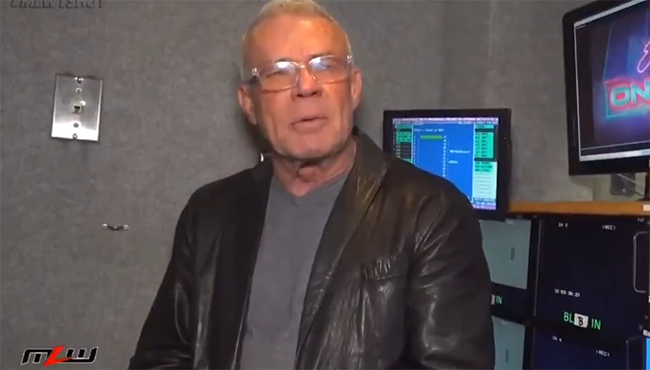
Eric Bischoff Warns WWE Over Audience Apathy and Market Saturation
Eric Bischoff warned on a recent episode of 83 Weeks that World Wrestling Entertainment faces a growing audience apathy problem due to market saturation. Discussing international premium live events and corporate strategy, Bischoff analyzed the tension between maximizing short-term revenue and maintaining long-term fan emotional attachment.
Weighing International Sponsorship Dollars Against Fan Engagement
While acknowledging that TKO executives carry a fiduciary responsibility by law to maximize profit for shareholders, Bischoff questioned the long-term mathematical value proposition.
“I just don’t think the math maths, as they say today, long term. Short term, I guess. But it’s a value proposition. ‘Okay, we’re not going to be able to sell as much in sponsorships, but we get a better-quality product that reinforces the audience’s love for the brand.’ Don’t underestimate that. It’s a very valuable asset,” Bischoff stated on 83 Weeks, with a tip of the hat to 411mania.com for the transcription, adding, Not to interrupt you, Conrad, but by law they have to do it.
He further noted, ‘Yes, I’m not making as much money as I possibly could, but here’s what I’m getting in return.’ At least it needs to be discussed and analyzed, versus a straight math formula that says if I do them in the United States, I’m going to make a lot more money.
Bischoff argued that WWE should consider the risk of slowly losing brand emotional attachment if management is overly willing to sacrifice audience engagement for dollars. He noted that fan energy captured at international events often serves to inspire domestic crowds who witness the atmosphere and seek to imitate it.

Bischoff Notes Drop in Crowd Fervor
Examining live crowds from a peripheral fan perspective, Bischoff pointed out a noticeable drop in crowd fervor compared to the past. Rather than a complete lack of interest, he described a general apathy, noting, I’m probably as peripheral a fan as you could possibly be and still call yourself a fan.
Observing that he evaluates crowds by sizing up attendance demographics, building energy, and overall atmosphere, he admitted, I’m not feeling it.
Comparing the ecosystem’s various promotions, he noted that while self-funded operations like Court Bauer’s MLW answer only to their own bankers, publicly held companies like WWE face pressure to produce content, remarking that that’s the connection to your audience that’s very, very valuable, and you can lose it if you over-dilute the market with your product and you’re willing to sacrifice audience engagement for dollars.
Invoking Jim Cornette’s line about seven-foot giants, Bischoff suggested that when every promotion offers endless content, the unique impact of each individual show diminishes.
Musical Performances Could Draw Casual Viewers
Expanding on the necessity of structural adaptation, Bischoff discussed WrestleVotes and Fightful Select coverage of TKO exploring halftime-style musical performances for WWE events. Bischoff asserted that introducing musical acts could draw casual viewers who might initially attend for an artist and subsequently return for the wrestling, recalling how people with little initial interest in wrestling attended WCW events during his executive tenure and later returned seeking more tickets.
Bischoff emphasized that companies cannot rely on outdated formulas because cultural entertainment habits shift over time. As he put it, You can’t keep approaching wrestling the same way and expecting a different outcome because the audience is changing, not just where they watch it, but just culturally what entertains people or creates heat is different today than it was five years ago, 10 years ago.
Maintaining a connection with modern audiences requires fundamental adjustments to storytelling, creative execution, and wrestling rather than simply changing distribution channels.