
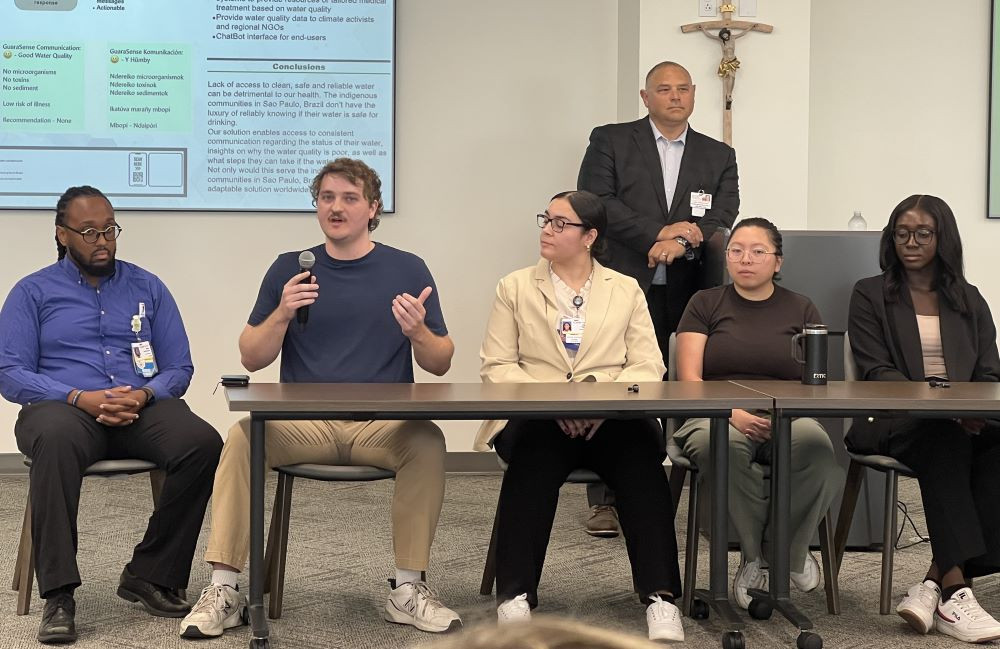
OSF HealthCare & U of I’s EquiMED Program: Training Doctors Through Community-Based Solutions
A collaborative program between OSF HealthCare and the University of Illinois is preparing future physicians to address healthcare challenges with a focus on community engagement and lasting solutions. The EquiMED program immerses medical students in real-world scenarios, emphasizing the importance of listening to and co-designing solutions with the communities they serve.
The program sends fourth-year medical students to vulnerable communities – both domestically and internationally – to identify and tackle pressing health issues. Rather than imposing pre-conceived solutions, students are tasked with understanding local needs and working with stakeholders to develop feasible and lasting improvements.
One example highlighted the development of a potential health education game for a community served by OSF. Recognizing that a traditional approach might not resonate, the team consulted with local shamans and other key community members to determine the most effective method. The resulting idea – a game – was developed in collaboration with a local healer, Sonja Christina, and community leadership, including her son jefferson. The next phase involves creating a prototype and returning to the community for feedback and refinement.
This emphasis on collaborative design is a core tenet of the EquiMED experience. As one student, Izquierdo, explained, the program taught her the value of “continuing the conversation” and building trust to create solutions that communities will actually utilize. She is working with a team at Illinois State University, a partner of OSF HealthCare, to leverage expertise in game theory and development.
Another student, Ben Mendez, is applying this approach to address a lack of safe drinking water in a region outside of São Paulo, Brazil. Instead of attempting a large-scale infrastructure overhaul, Mendez is developing a water quality monitoring system using sensors and alerts. This system would allow local organizations to proactively address contamination issues and provide safe drinking water when needed – a practical and sustainable solution within existing constraints.
mendez anticipates applying this pragmatic approach throughout his medical career, understanding the need to balance patient care with financial realities.
Dr. Vozenilek, involved with the program, stresses the importance of developing “soft skills” like listening and collaboration alongside medical knowledge. She highlights that the “co-design” approach – truly understanding patient needs and designing solutions with them – is valuable not onyl for complex technological treatments but also for everyday health practices.
Looking ahead, collaborative partners are exploring ways to align equimed efforts with national health priorities, such as the Food as Medicine initiative, and potential collaborations with agricultural programs, further demonstrating the program’s commitment to holistic and community-driven healthcare solutions.
