Engineered ‘Molecular Glue’ Stabilizes Chromosomes in Aging Eggs, Offering New IVF Hope
“It’s a very creative, well-engineered and well-thought-out approach,” said Bettina Mihalas, a reproductive biologist at the University of New South Wales in Sydney, Australia.
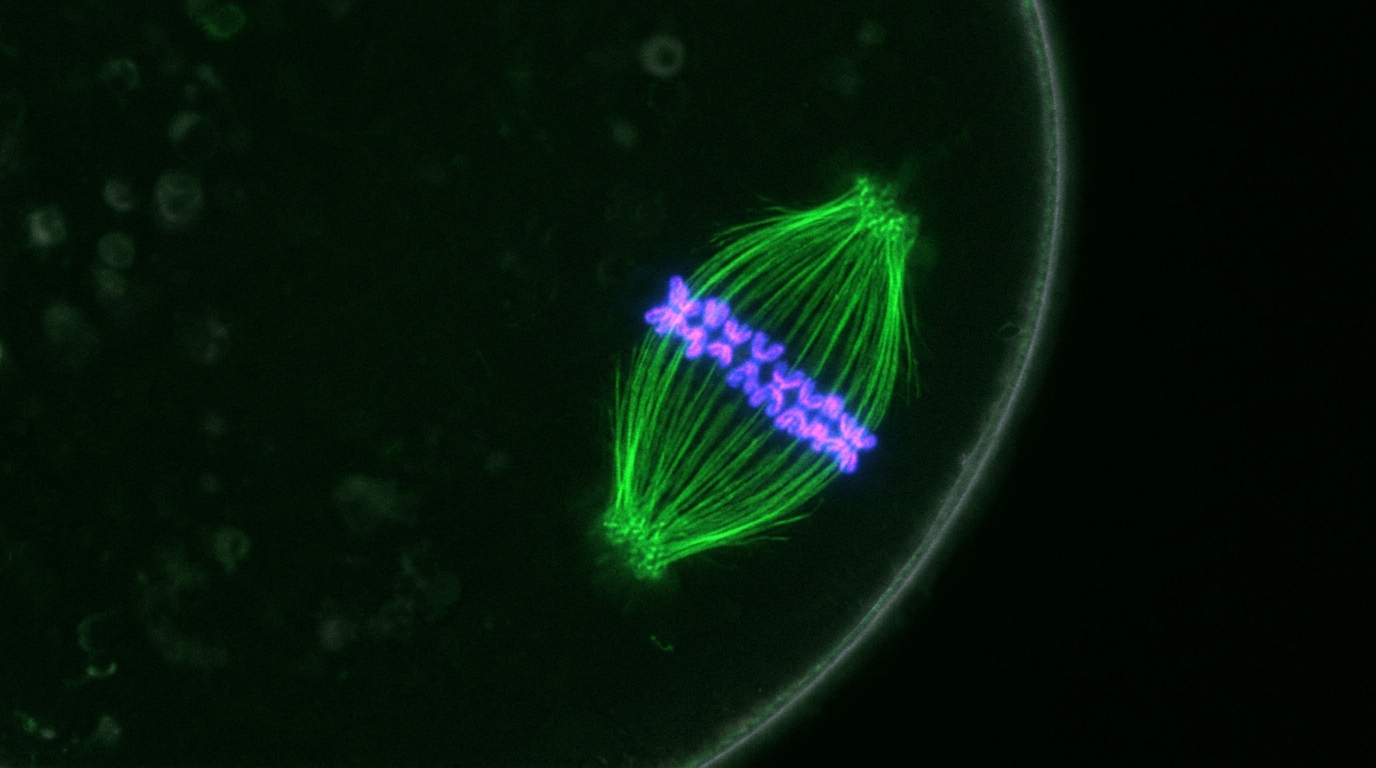
Researchers in Germany have engineered an artificial protein system that stabilizes chromosomes in aging mammalian eggs, marking a potential advance for age-related infertility and failed in vitro fertilization cycles. Scientists at the Max Planck Institute for Multidisciplinary Sciences in Göttingen published their findings on Nov. 26 in Science, demonstrating that the system can restore normal chromosome connections in older mouse eggs. Aneuploidy, caused by chromosomes failing to separate correctly, is the leading cause of age-related infertility, failed IVF cycles, and miscarriage. Studies show that 50% to 80% of embryos from women in their 40s carry these chromosomal abnormalities. The primary biological driver is the loss of cohesin, a protein complex acting as molecular glue that holds sister chromatids together. While cohesin functions for only a few hours in most cells, it must maintain bonds for decades in oocytes, which women carry from birth until fertilization triggers meiosis. To counteract this decline, Melina Schuh, a biochemist and director at the Max Planck Institute, led a team that designed a synthetic system named TALhesin. The approach uses DNA-binding proteins called TAL effectors programmed to target regions near the centromere where natural cohesin concentrates. Two distinct TAL effector proteins form a chemical bond, creating a synthetic bridge.
The team also incorporated a built-in cleavage site so natural cellular enzymes release the glue at the right time during cell division. In experiments on older mice, the TALhesin system reduced premature chromosome separation. Tests on 17-month-old mice showed the proportion of eggs without chromosome-separation errors rose from 46.7% to 74.1% following treatment, bringing success rates close to those of young mice. Untreated aged mouse eggs showed similar figures, with 46.7% avoiding premature separation compared to 74.7% in young mice. “The clinical potential depends upon regulatory aspects including safety studies for embryonic development,” said Eva Hoffman, a molecular geneticist at the University of Copenhagen.
Schuh’s lab has already adapted TALhesin to bind to human chromosomes and observed initial signs of positive effects on cohesion in donated human eggs. Commercialization efforts are already underway. Schuh co-founded Ovo Labs, a startup in Munich and London that licensed the technology.
A competing U.K. firm, U-Ploid, reported trial results last month at the American Society for Reproductive Medicine meeting using its own candidate, Lyvanta, which increased successful maturation rates in donated human eggs. “There is still work ahead, but their proof of concept was highly successful,” said Rajiv McCoy, a biologist at Johns Hopkins University.