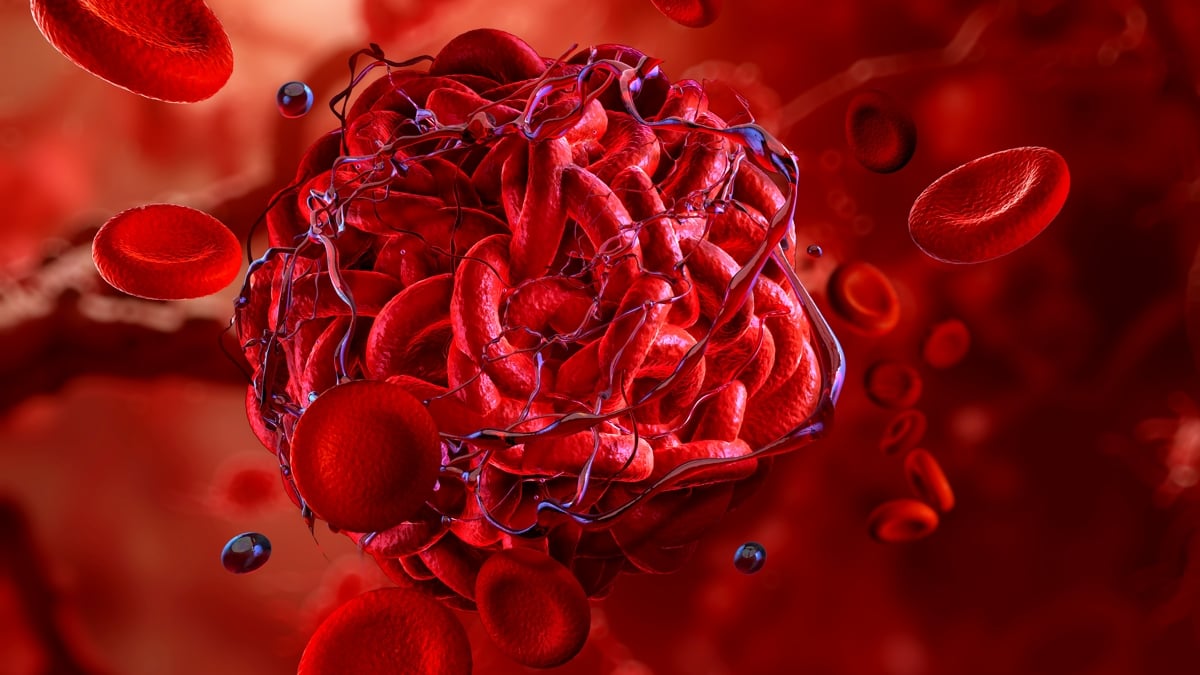
Engineered Blood Clots Stop Severe Bleeding in Seconds
Human haemostasis is, essentially, a race against a system-wide failure. When a major arterial breach occurs, the body’s native recovery protocol—natural clotting—often suffers from too much latency to prevent catastrophic volume loss. For the critical care engineer, What we have is a throughput problem: the rate of leakage exceeds the rate of the biological patch.
The Tech TL;DR:
- The Innovation: Researchers have developed engineered blood clots designed to stop severe bleeding in seconds.
- The Mechanism: A “click clotting” approach that provides rapid haemostasis and promotes tissue regeneration.
- The Deployment: Published in Nature and developed by McGill researchers, this tech aims to shift emergency care from passive pressure to active structural intervention.
The Latency Problem in Human Haemostasis
In a high-pressure hemorrhage, the biological “uptime” of a patient depends on how quickly a stable plug can be deployed at the site of the breach. Standard medical interventions—gauze, tourniquets, and traditional hemostatic agents—are largely passive. They rely on existing biological triggers or simple physical occlusion, which can fail under the high-velocity flow of an arterial burst. The result is a dangerous window of vulnerability where the “system” is crashing faster than the patch can be applied.

The latest research published in Nature shifts the paradigm from passive absorption to active engineering. By designing blood clots that can be triggered rapidly—a process referred to as “click clotting”—researchers at McGill University have created a method to stop severe bleeding in seconds. This isn’t just about plugging a hole; it’s about deploying a high-strength, engineered matrix that stabilizes the wound site and facilitates regeneration, effectively reducing the time-to-stabilization metric in emergency trauma.
The Bio-Engineering Stack: A Comparison Matrix
To understand why “click clotting” is a significant architectural shift, we have to look at the current “stack” of haemostatic options. Most current solutions are either too slow (natural clotting) or lack the structural integrity to handle high-pressure environments (standard gauze).

| Metric | Natural Coagulation | Traditional Hemostatics | Engineered “Click” Clots |
|---|---|---|---|
| Deployment Speed | High Latency (Minutes) | Moderate (Manual) | Low Latency (Seconds) |
| Structural Integrity | Variable/Fragile | Passive/External | High/Engineered |
| Recovery Goal | Basic Occlusion | Bleeding Control | Haemostasis + Regeneration |
| Failure Mode | Wash-out in high flow | Slippage/Saturation | Material Degradation |
From a systems perspective, the engineered clot acts as a rapid-response patch. While traditional methods attempt to assist the body’s existing processes, this approach bypasses the slow biological cascade entirely, implementing a pre-engineered solution that hardens almost instantly upon deployment.
Implementation Mandate: Conceptualizing the Delivery API
While the chemistry happens in the vessel, the deployment of such a material in a clinical setting would likely be integrated into a smart-delivery system. If we were to model the trigger mechanism for a “click clotting” device as an API call, the logic would prioritize immediate state change over gradual transition. The goal is a binary switch: Bleeding → Stabilized.
// Conceptual API Request for Automated Haemostatic Deployment curl -X POST https://med-device.local/api/v1/hemostasis/deploy -H "Content-Type: application/json" -d '{ "patient_id": "TRAUMA-9928", "site_location": "femoral_artery", "flow_rate": "high", "agent": "engineered_click_clot", "trigger_mechanism": "rapid_crosslink", "target_state": "stable_occlusion", "monitoring": { "pressure_sensor": true, "regeneration_track": true } }' This level of precision requires an infrastructure that can handle real-time telemetry from the wound site. As these biological “patches” move toward clinical trials, the hardware used to deliver them must be as robust as the chemistry itself. Hospitals upgrading their trauma bays to support these technologies will likely require specialized healthcare IT consultants to integrate new device telemetry into existing Electronic Health Record (EHR) systems.
The Bottlenecks: Scaling from Lab to Field
The transition from a Nature paper to a field-deployable product always hits the “production” bottleneck. For engineered clots, the primary risks are stability and biocompatibility. A clot that is too “tough” might interfere with the very regeneration We see designed to enhance, or it could trigger an immune response—the biological equivalent of a kernel panic.
the logistics of maintaining “click” reagents in a pre-hospital environment (ambulances, combat zones) introduces significant cold-chain and stability challenges. Implementing this at scale requires not just bio-chemists, but precision medical device engineers capable of designing delivery systems that can trigger the clotting reaction on demand without premature activation.
The shift toward engineered haemostasis represents a move toward “programmable medicine,” where we no longer hope the body heals correctly but instead provide the exact structural blueprint required for the job.
For those tracking the intersection of materials science and emergency medicine, the move toward active regeneration is the real win. By engineering the clot to not only stop the bleed but also provide a scaffold for new tissue, the researchers are effectively reducing the “technical debt” of the injury—minimizing long-term scarring and dysfunction.
As we move toward a future of synthetic biology, the ability to “click” a biological failure back into a functional state is a glimpse into the next generation of critical care. For enterprises providing the backend for these innovations, the focus must shift toward regulatory compliance auditors who can navigate the complex FDA/EMA pathways for engineered biomaterials.
*Disclaimer: The technical analyses and security protocols detailed in this article are for informational purposes only. Always consult with certified IT and cybersecurity professionals before altering enterprise networks or handling sensitive data.*