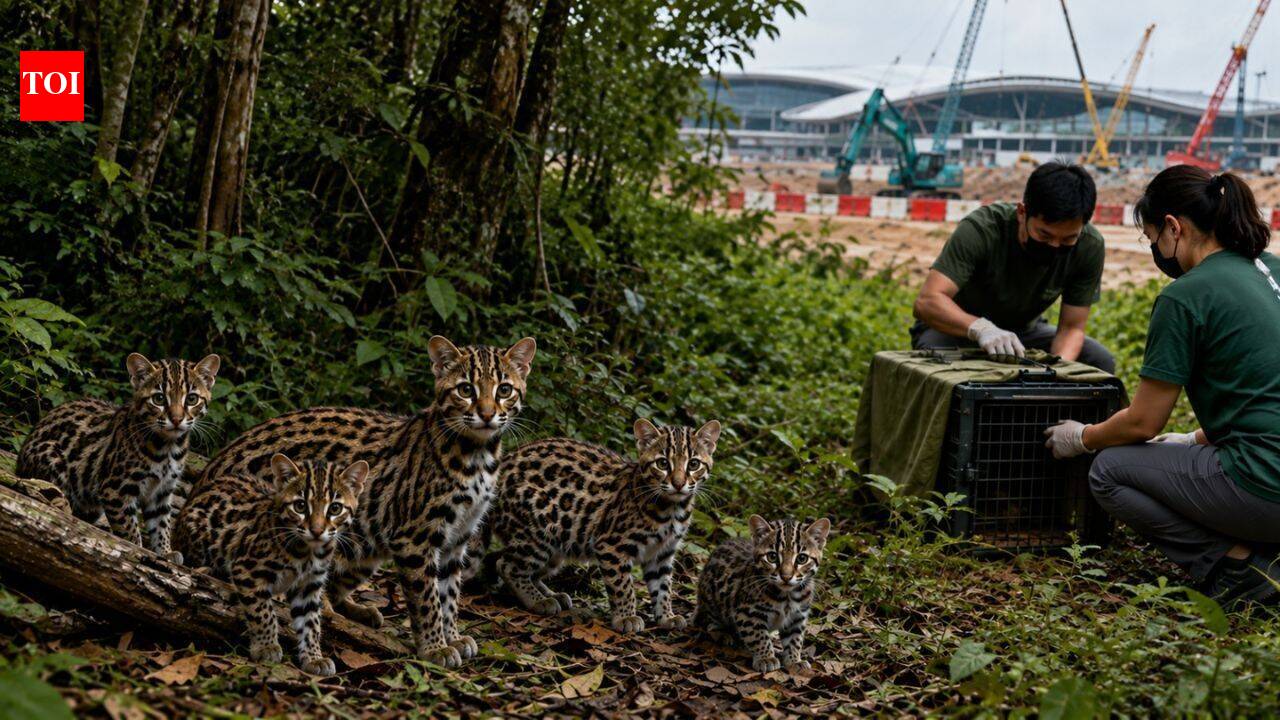
Endangered Leopard Cats in Changi to Be Relocated Due to Terminal 5 Development
As the Changi landscape transforms with the construction of Changi Airport Terminal 5, conservationists have confirmed the presence of five critically endangered mainland leopard cats living in the area’s coastal forest. The National Parks Board (NParks) and the Singapore Wildcat Action Group (Swag) announced on June 3, 2026, that these rare nocturnal predators will be relocated starting in the second half of 2026 to ensure their welfare and long-term survival amid ongoing habitat loss and heavy vehicular traffic.
The discovery of the Changi leopard cat population stems from a rapid survey launched in July 2025 by Swag and supported by NParks. Over 50 volunteers, ranging from ages 10 to 83, deployed 18 motion-sensor cameras along the coastline and collected scat samples to map the elusive animals. When the survey concluded in April, the team confirmed five individuals inhabiting the forest: two adult males, one adult female, and two juveniles, representing the first cubs spotted in more than a decade, according to Swag co-founder Vilma D’Rozario.
In this instance, the logistics require careful coordination between conservation groups, government agencies, and wildlife veterinarians.
Origins and Threats of the Changi Leopard Cat Population
Leopard cats are widely distributed globally across various Asian habitats, but they remain critically endangered within Singapore, where fewer than 50 individuals are estimated to reside. Most of the local population inhabits Pulau Tekong, Pulau Ubin, and the Western Catchment Area. According to Zhou Boyi, director of the terrestrial branch at NParks’ National Biodiversity Centre, the Changi population likely originated from individuals that swam across the sea from Pulau Tekong. The existence of the species in Changi first came to light in January 2019 after a leopard cat was killed in a traffic accident.

Mammal scientist and curator Marcus Chua from the National University of Singapore’s Lee Kong Chian Natural History Museum noted that leaving the cats in Changi is no longer viable. Even with mitigation measures, the remaining forest size and ongoing construction tied to Terminal 5 create an unsustainable environment marked by heavy vehicle traffic and severe competition for shrinking resources. Roadkill remains the primary threat to the species locally, with at least five leopard cats killed by traffic over the last 25 years as forest loss forces them to cross busy roads.
Relocation Strategy and Veterinary Protocols
To mitigate the risks of stress during recapture, transport, and environmental adaptation, NParks and Swag have designed a phased relocation plan. Trained professionals will trap the animals using research and methodologies gathered from regions like Taiwan, with a veterinarian on standby throughout the trapping period, as detailed by Zhou Boyi. Before release into undisclosed secure habitats—kept secret to deter poachers—each leopard cat will undergo a comprehensive health assessment by veterinarians from NParks and the Mandai Wildlife Group.

The chosen release sites have been selected in consultation with Swag and Marcus Chua to ensure adequate forest cover, suitable prey bases, and structural connectivity for finding mates. NParks and Swag emphasized that the relocation will proceed progressively and carefully, backed by ongoing monitoring to prioritize the animals’ welfare. Meanwhile, Vilma D’Rozario has urged the public to avoid searching for the leopard cats in Changi, advising drivers to exercise caution near forested zones to prevent further road casualties.
*Disclaimer: The views and cultural analyses presented in this article are for informational and entertainment purposes only. Information regarding legal disputes or financial data is based on available public records.*