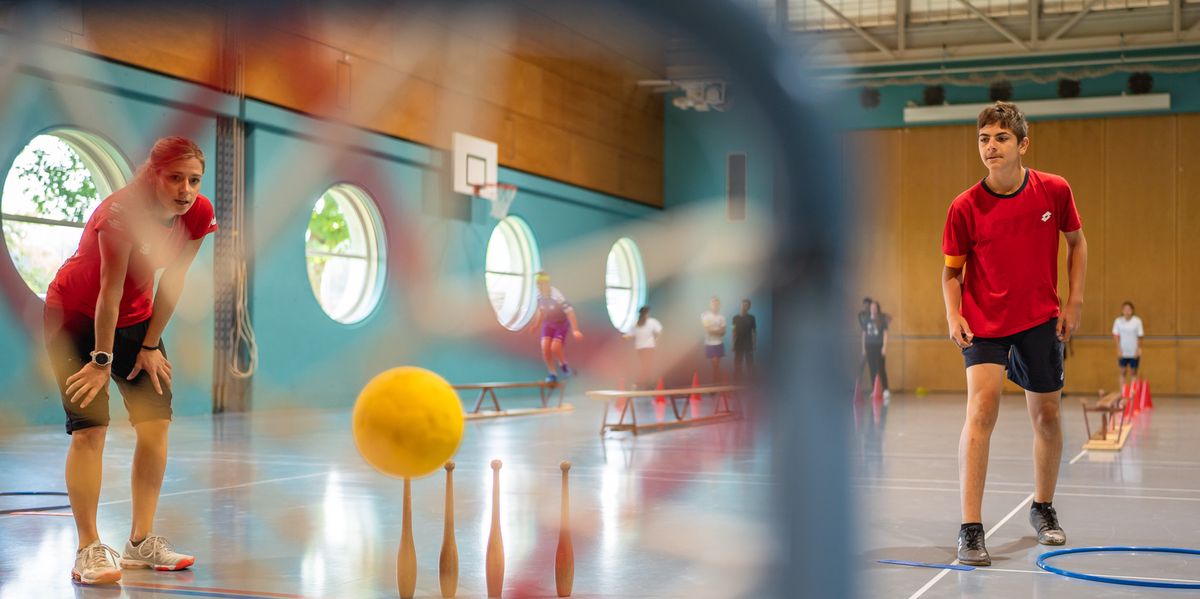
End of Mandatory School Sports? How Advocates Are Fighting Back
Switzerland’s mandatory school sports policy faces an unprecedented challenge as cantons like Geneva and Vaud push to phase out physical education classes, citing budget cuts and shifting educational priorities. The move has sparked fierce opposition from health advocates, parents, and local officials who warn of long-term public health and social equity risks. As of June 2026, at least 12 cantons are reviewing their PE requirements, with Geneva’s proposal to reduce weekly sports hours by 40% setting off alarms about childhood obesity and mental health declines.
Why this matters: The shift reflects a broader European trend where physical education is often the first casualty of austerity measures. But unlike other nations, Switzerland’s decentralized system means each canton’s decision carries unique consequences—from municipal sports infrastructure to private sector job losses in youth coaching. The stakes are higher here: Switzerland already ranks 14th globally in adult obesity rates, according to the OECD’s 2025 Health Report, and experts warn cuts could worsen disparities in rural areas where access to extracurricular sports is already limited.
What’s changing—and why Geneva’s proposal sets a precedent
Geneva’s Education Department announced in May 2026 that it would pilot a 40% reduction in mandatory PE hours across primary schools, starting in September. The plan cites a 2026 budget review that reallocates CHF 18 million from sports programs to digital literacy initiatives. Cantons like Vaud and Neuchâtel are following suit, though with less drastic cuts—typically 15–25% reductions.
This isn’t just about cutting gym class. The move forces schools to repurpose sports facilities, often leased from municipalities or private operators. In Geneva alone, public sports halls generate CHF 3.2 million annually in rental income for city coffers. With PE hours slashed, demand for after-school programs—many run by nonprofits—could surge, straining local budgets further.
“This isn’t a debate about whether kids should exercise—it’s about who will pay for it.”
—Dr. Markus Weber, Director of the Swiss Institute for Sport Science, commenting on Geneva’s proposal
Who’s resisting—and what’s at stake for Swiss families
Parents in Geneva have launched petitions demanding a referendum on the cuts, arguing that the policy disproportionately affects lower-income families who can’t afford private coaching. A 2025 Swiss Federal Statistical Office report found that children in urban cantons like Geneva and Zurich are 30% less likely to meet WHO-recommended physical activity levels than their rural counterparts.
Health advocates point to a 2024 study in The Lancet linking reduced school PE to a 12% increase in adolescent sedentary behavior within two years. In Switzerland, where childhood obesity rates rose 8% between 2020 and 2025, the cuts risk deepening inequities. “We’re not just talking about fitness—we’re talking about mental health, social skills, and even academic performance,” says Claire Dubois, president of the Swiss Association for School Sports.
“The cantons are treating PE like a discretionary expense, but it’s a public health investment. The private sector can’t fill this gap overnight.”
—Claire Dubois, Swiss Association for School Sports
How other European nations handled similar cuts—and what Switzerland can learn
Switzerland isn’t alone. In 2023, England’s Department for Education reduced mandatory PE hours by 20% due to budget constraints, leading to a 15% drop in primary school sports participation. The UK later reversed course after a 2024 parliamentary report tied the cuts to rising childhood diabetes rates.
| Country | PE Cut (%) | Resulting Health Impact | Policy Reversal? |
|---|---|---|---|
| England (2023) | 20% | 15% drop in primary school participation; 8% rise in childhood obesity | Yes (2024) |
| France (2022) | 10% | No significant change (strong extracurricular culture) | No |
| Switzerland (2026, proposed) | 15–40% | Unknown (data lagging) | Unclear |
France’s experience offers a contrast: a 10% cut in 2022 had minimal impact due to robust municipal sports programs. But Switzerland’s decentralized system means solutions won’t be uniform. Cantons like Zurich, which invests CHF 5 million annually in school sports infrastructure, may weather cuts better than Geneva, where private sector partnerships are less established.
What happens next: Legal battles, budget fights, and the private sector’s role
Geneva’s proposal faces legal hurdles. Under Switzerland’s Education Act, cantons must ensure “holistic child development,” which courts have historically interpreted to include physical activity. A 2021 ruling in the canton of Bern blocked a similar cut after parents sued, citing violations of the Convention on the Rights of the Child.
If Geneva’s pilot proceeds, private operators may rush to fill the gap—but at a cost. After-school sports programs in the city already charge families CHF 120–180 per month. With demand expected to rise, vetted sports facility managers and community sports nonprofits will face pressure to expand capacity quickly. Meanwhile, municipal budgets may struggle to maintain underused gyms, creating a ripple effect for public infrastructure contractors.
“The legal risks are high, but the political will is stronger. If Geneva proceeds, other cantons will follow—unless parents and health groups mobilize.”
—Attorney David Meier, specializing in Swiss education law
The bigger picture: How this reshapes Swiss education—and who benefits
The debate isn’t just about gym class. It’s a microcosm of Switzerland’s broader education funding crisis. With per-pupil spending lagging behind Germany and Scandinavia, cantons are forced to choose between digital skills and physical health. The private sector sees opportunity: EdTech firms are already marketing “digital PE” alternatives, though critics argue these can’t replace hands-on activity.
For families, the fallout may be uneven. Urban parents can afford private solutions, but rural communities—where municipal sports centers are often the only option—could see their children left behind. The Swiss government has yet to weigh in, but a 2026 Foreign Ministry report on child welfare ranked Switzerland’s physical education system as “vulnerable” due to its reliance on local funding.
The resistance is already organizing. In Zurich, a coalition of pediatricians, teachers, and parents has launched a campaign to mandate 150 minutes of weekly PE nationwide. Their argument? “This isn’t about ideology—it’s about the health of an entire generation,” says Dr. Weber. With cantonal elections looming in 2027, the issue may become a litmus test for education policies.
Final thought: Switzerland’s sports crisis isn’t just about cutting classes—it’s about who gets to decide what children learn, and who pays the price when the budget runs dry. For families, the answer may lie in verified after-school providers who can bridge the gap. But without systemic change, the long-term cost—measured in health, equity, and quality of life—will be far higher than any savings from the ledger.