
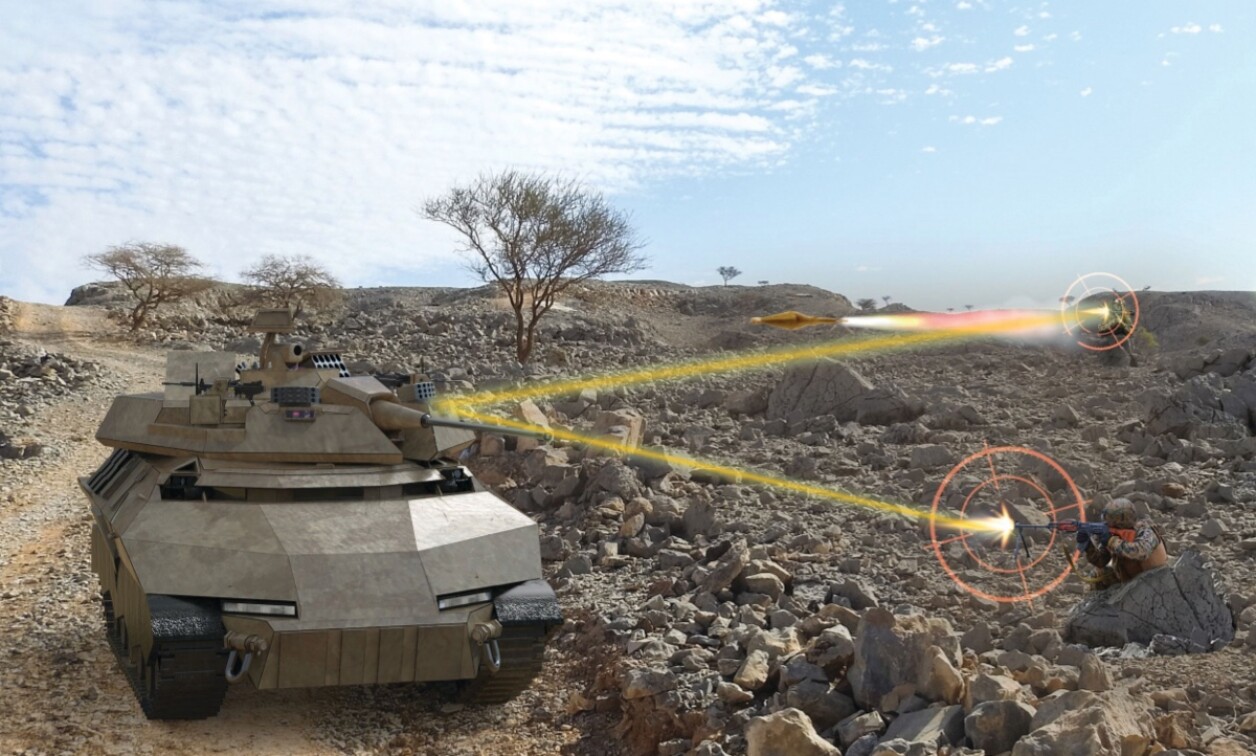
ELTA North America is now at the center of a structural shift involving advanced armored‑vehicle protection technology. The immediate implication is a reinforcement of U.S. and allied defense industrial capacity in the face of evolving kinetic threats.
The Strategic Context
Since the early 2020s,great‑power competition has intensified the demand for survivable ground platforms. The proliferation of anti‑tank guided missiles, loitering munitions, and drone swarms has driven NATO members and partner nations to prioritize active protection systems (APS) that can detect and neutralize threats in milliseconds. Concurrently,supply‑chain pressures in semiconductors and high‑performance optics have prompted defense firms to secure domestic production lines,reducing reliance on foreign sources that might potentially be vulnerable to export controls or geopolitical friction. This backdrop creates a structural environment where contracts for next‑generation processors and optical sensors become a lever for maintaining technological edge and strategic autonomy.
Core Analysis: Incentives & Constraints
Source Signals: The declaration details a $32 million series of contracts awarded to ELTA North America for co‑production of next‑generation central processing units and Othello optical sensors. These components are described as integral to battle‑proven APS,combining radar and optical inputs to provide real‑time threat detection and response for armored vehicles.
WTN Interpretation: ELTA’s move reflects several intersecting incentives. First, securing domestic contracts aligns with U.S. defense policy that emphasizes ”industrial base resilience,” allowing the firm to lock in funding while demonstrating compliance with national security procurement priorities. Second, the focus on processors and optics taps into the broader semiconductor and photonics supply‑chain realignment, where firms seek to capture high‑value defense contracts to offset civilian market volatility.Third, by co‑producing rather than sole‑sourcing, ELTA can leverage partnerships to mitigate R&D risk and accelerate time‑to‑field, a critical factor given the rapid evolution of threat sets. Constraints include budgetary caps within the Department of Defense’s acquisition programs, the need to meet stringent MIL‑SPEC standards, and potential competition from established aerospace and defense giants that may lobby for larger share of the APS market.
WTN Strategic Insight
“Investments in next‑generation APS components are less about a single platform upgrade and more about cementing a domestic supply chain that can outpace adversary innovation cycles.”
Future Outlook: Scenario Paths & Key Indicators
Baseline Path: If defense appropriations remain stable and the APS market continues its growth trajectory, ELTA’s contracts will expand into larger production runs, possibly securing follow‑on orders from U.S. Army and allied forces. This would reinforce the U.S. industrial base, sustain employment in high‑tech manufacturing hubs, and contribute to a gradual diffusion of advanced protection capability across NATO inventories.
Risk Path: Should fiscal pressures intensify-e.g., a shift in congressional priorities toward social spending-or if a major supply‑chain disruption hits semiconductor or optics manufacturers, ELTA could face delays or cost overruns.In that scenario, competitors might capture the shortfall, and allied forces could experience a lag in APS fielding, creating a temporary capability gap that adversaries could exploit.
- indicator 1: Upcoming U.S.Department of Defense budget review (Q2 2026) – any adjustments to ground‑vehicle modernization funds will directly affect APS procurement volumes.
- Indicator 2: Quarterly semiconductor fab capacity reports (Q3 2025‑Q1 2026) – trends in domestic chip production capacity will signal ELTA’s ability to meet processor demand without external bottlenecks.
