
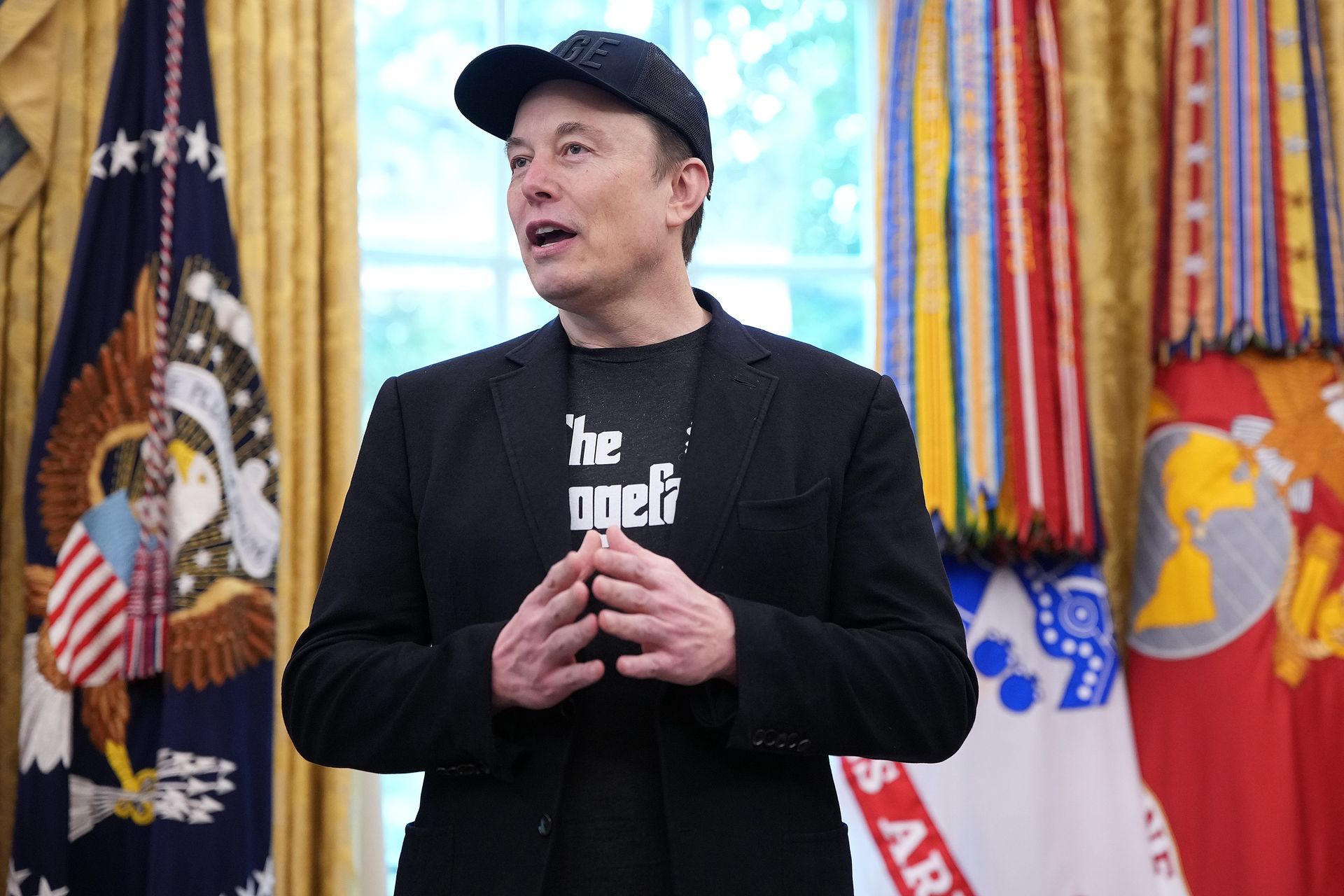
Elon Musk is now at the center of a structural shift involving ultra‑concentrated billionaire wealth tied to high‑growth technology and space commercialization. The immediate implication is heightened market sensitivity to Musk‑linked asset valuations and potential spill‑over effects on capital allocation across AI, robotics and private‑sector space finance.
The Strategic Context
Over the past decade,the global financial system has seen a convergence of three structural forces: (1) the acceleration of capital toward technology platforms that promise network effects and data‑driven AI leadership; (2) the emergence of private‑sector space enterprises as a new frontier for sovereign and commercial investment; and (3) a macro‑liquidity environment in which ultra‑high‑net‑worth individuals can leverage equity stakes to influence market sentiment and corporate governance. Musk’s portfolio sits at the nexus of these trends, with his holdings in SpaceX, tesla and the nascent xAI venture embodying the broader shift from traditional industrial assets to speculative, growth‑oriented enterprises.
Core Analysis: Incentives & Constraints
Source Signals: Musk’s net worth has surpassed $600 billion, driven primarily by a 42 % stake in SpaceX and a roughly 12 % share in Tesla.SpaceX plans an IPO next year, perhaps adding $168 billion to his wealth. Tesla’s stock has risen 13 % this year, buoyed by announcements of robot‑taxi tests that would operate without safety supervision. Musk received a $1 trillion corporate compensation package tied to AI and robotics ambitions. Contrasting views arise from investors such as Michael Burry, who labels tesla “absurdly overvalued,” citing a 3.6 % annual dilution of shareholder equity and the absence of share‑repurchase programs. Additionally, musk’s xAI startup is seeking $15 billion at a $230 billion valuation.
WTN Interpretation: The timing of SpaceX’s IPO aligns with a broader market appetite for high‑growth, capital‑intensive ventures, allowing Musk to monetize a large private equity position while signaling confidence to institutional investors. Tesla’s robot‑taxi rollout serves a dual purpose: it reinforces the company’s AI narrative,justifying the massive compensation package,and it creates a new revenue stream that can offset recent sales headwinds. Burry’s criticism highlights a structural tension between market enthusiasm for disruptive tech and traditional valuation discipline; the dilution effect underscores Musk’s reliance on equity financing to fund ambitious projects, which can erode existing shareholder value if not balanced by buybacks or earnings growth. The xAI fundraising reflects a strategic bet on AI dominance,positioning Musk to capture a share of the rapidly expanding global AI market and to influence standards and data ecosystems.Constraints include regulatory scrutiny over autonomous vehicle safety, potential market volatility around the SpaceX IPO, and the need for sustained cash flow to justify the massive compensation and fundraising activities.
WTN Strategic Insight
“when a single entrepreneur controls a portfolio that spans AI, autonomous transport and space launch, market dynamics become a proxy for geopolitical technology competition.”
Future Outlook: Scenario Paths & Key Indicators
Baseline Path: If SpaceX proceeds with its IPO on schedule, Tesla’s robot‑taxi program achieves regulatory clearance, and xAI secures its funding round, Musk’s wealth trajectory will continue upward, reinforcing investor confidence in high‑growth tech assets. Capital will flow into related sectors (AI chips,satellite broadband,autonomous logistics),and market valuations for comparable firms may remain elevated.
Risk Path: If regulatory hurdles delay robot‑taxi deployment, if the SpaceX IPO faces pricing pressure or market backlash, or if macro‑liquidity tightens, Musk’s asset base could experiance a sharp correction. Investor skepticism, amplified by voices like Burry, may trigger sell‑offs in Tesla and related tech stocks, increasing volatility across AI‑focused equities.
- Indicator 1: Declaration of pricing and subscription levels for the SpaceX IPO (expected within the next 3‑4 months).
- Indicator 2: Regulatory filings and approvals for autonomous robot‑taxi operations in key markets (e.g., U.S. state-level safety certifications, EU vehicle homologation) slated for review within the next 6 months.
