
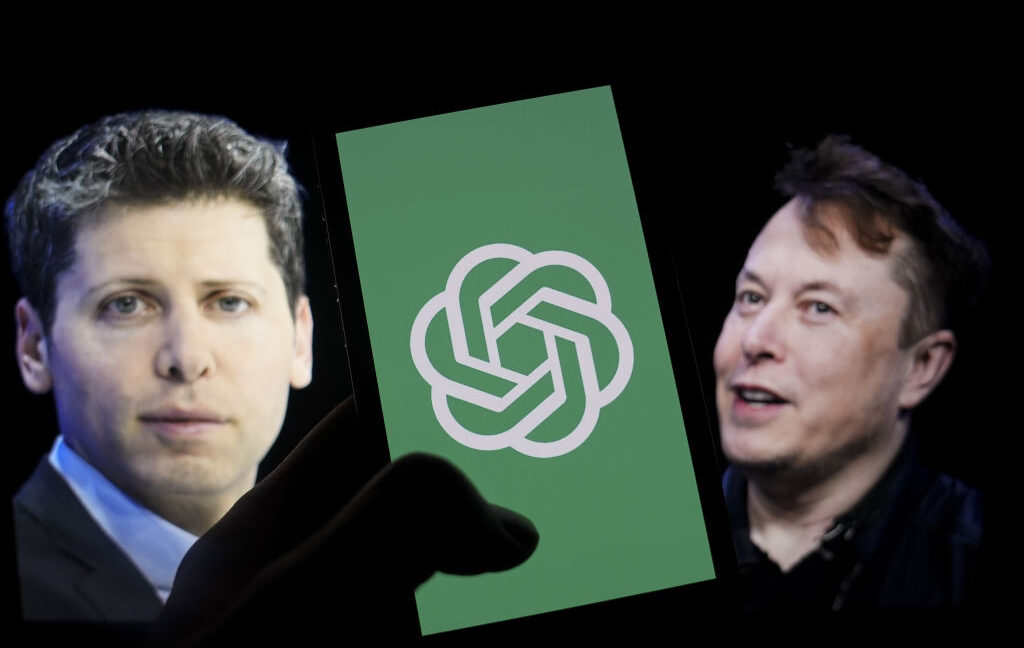
Elon Musk Accused of Inflating $134B Damages in OpenAI, Microsoft Lawsuit
Microsoft and OpenAI Dispute Damages Calculation in Elon Musk Lawsuit
The ongoing legal battle between Elon Musk and OpenAI, now involving Microsoft, has taken a new turn focusing on the calculation of damages. At the heart of the dispute lies a disagreement over how to account for the financial relationship between OpenAI’s non-profit arm and its for-profit entity, and the role Microsoft plays within that structure. Specifically, a recent filing by OpenAI and Microsoft challenges the methodology used by expert witness Dr. Emmanuel Wazzan to estimate damages allegedly owed to Musk, alleging a flawed approach that inflated the figures. This article delves into the complexities of the financial arrangements, the core of the disagreement, and the potential implications for the lawsuit’s outcome.
The Core of the Dispute: OpenAI’s Unique Structure
OpenAI began as a non-profit research company in December 2015, founded by Elon Musk, Sam Altman, and others, with the stated goal of developing artificial general intelligence (AGI) for the benefit of humanity OpenAI Charter. Though, to attract the significant investment needed to pursue its enterprising goals, OpenAI established a “capped-profit” subsidiary in 2019. this structure allows investors,like Microsoft,to profit from OpenAI’s commercial ventures,but with a cap on returns – initially set at 100x the initial investment. Any profits exceeding this cap are directed back to the non-profit OpenAI,ensuring the organization remains aligned with its original mission.
This dual structure is crucial to understanding the current legal dispute. Musk, who resigned from OpenAI’s board in 2018, alleges that OpenAI has prioritized commercialization and a close partnership with Microsoft over its original non-profit mission. He claims this constitutes a breach of fiduciary duty and seeks to compel OpenAI to operate as a truly non-profit entity.
Wazzan’s Damages Estimate and Microsoft’s Challenge
Dr.Emmanuel Wazzan, an expert witness for Musk, attempted to quantify the damages resulting from OpenAI’s alleged shift in focus. His methodology involved factoring in Microsoft’s financial gains from its investment in OpenAI,and then attempting to determine how much of those gains should be considered as effectively flowing back to the non-profit OpenAI.
According to a filing by OpenAI and Microsoft, Wazzan’s approach was fundamentally flawed. They allege he incorrectly assumed that a portion of Microsoft’s stake in the for-profit OpenAI entity should revert to the non-profit, and then arbitrarily equated that portion to the non-profit’s existing stake in the for-profit entity. This,they argue,resulted in a “double-counting” of the non-profit’s value and a significant inflation of the damages estimate The Verge.
OpenAI and Microsoft’s filing explicitly states that Wazzan “offers no rationale—contractual, governance, economic, or or else—for reallocating any portion of Microsoft’s negotiated interest to the nonprofit.” Essentially, they contend that Wazzan’s calculation lacks a sound basis and is based on speculation rather then established financial principles.
Why This Matters: The Implications for the Lawsuit
The accuracy of the damages estimate is critical to Musk’s case. If Wazzan’s methodology is deemed invalid,it could significantly weaken Musk’s claim and perhaps lead to a dismissal of the lawsuit. The court will need to determine whether Wazzan’s approach is a reasonable and reliable way to assess the financial impact of OpenAI’s alleged breach of fiduciary duty.
moreover, the dispute highlights the inherent challenges in valuing a company with OpenAI’s unique structure.Traditional valuation methods may not be directly applicable, requiring the court to consider the interplay between the non-profit and for-profit entities, and the impact of Microsoft’s investment.
Microsoft’s Deepening Involvement
Microsoft’s substantial investment in OpenAI – reportedly exceeding $13 billion Reuters – has made it a key player in the lawsuit. The company has a vested interest in defending OpenAI’s current structure, as it allows Microsoft to leverage OpenAI’s technology in its own products and services, such as Azure OpenAI Service and Copilot.
Microsoft’s active participation in challenging wazzan’s methodology demonstrates its commitment to protecting its investment and ensuring the continued success of its partnership with OpenAI. The company argues that OpenAI’s current structure is not only legally sound but also essential for driving innovation in the field of artificial intelligence.
Understanding the Financial Interplay: A Simplified Breakdown
To better understand the dispute, consider a simplified example:
* Initial Investment: The non-profit OpenAI creates a for-profit subsidiary.
* Microsoft Invests: Microsoft invests $1 billion in the for-profit entity.
* Profit Generation: The for-profit entity generates $5 billion in profit.
* **Capped