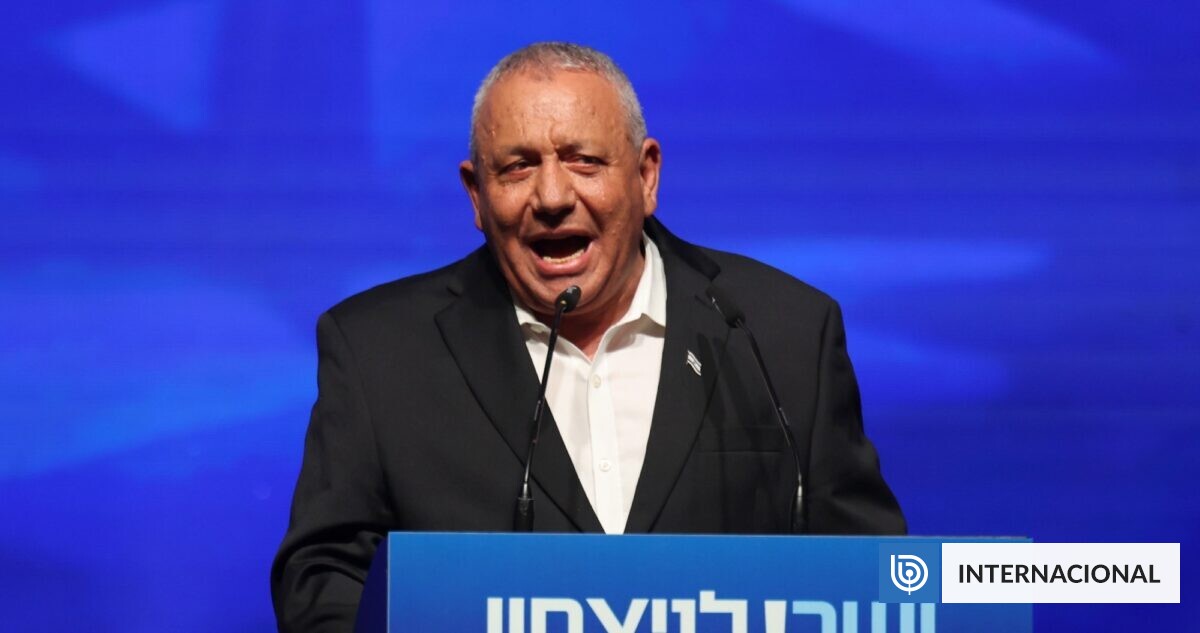
Eisenkot Pledged Eight-day Israeli Government and Kept Unity Talks Open With Netanyahu
Gadi Eisenkot pledged to form an Israeli government within eight days and kept the door open to a unity deal with Benjamin Netanyahu, despite differences between the parties, according to EL PAÍS.
- Gadi Eisenkot, leader of Yashar!, has been tasked with forming a government.
- He accused Likud of failing to present concrete proposals in talks.
- Yashar! and Los Demócratas agreed to a coalition pact.
- The coalition has 48 seats and needs 61 for a majority.
Eisenkot said in a party statement on Friday, “There are eight days left. I intend to form a government within those eight days.” He added that once the executive is formed, he will work to expand it by bringing in all who want to “return Israel to the right path, toward stability and a safe harbor.”
BioBioChile reported that Eisenkot accused the Likud of not having presented “any concrete proposal” during two weeks of negotiations between the formations, according to BioBioChile – La Red de Prensa Más Grande de Chile.
The Likud responded with a statement accusing Eisenkot of negotiating for unity while allegedly having already closed a “dangerous left-wing government” and distributing ministerial portfolios.
Eisenkot’s Coalition Options
The parties in Eisenkot’s coalition hold 48 seats in the 120-seat Knesset. The Arab parties, the Joint List and Raam, hold 19 seats. A majority requires 61 seats. Without the support of the Arab parties, as advocated by Lieberman, Eisenkot’s coalition would need to secure the 13 seats from ultra-Orthodox parties to avoid allying with the Likud.
🇮🇱 Gadi Eisenkot, tasked with forming #Israel's next government, on Sunday called for caretaker PM Benjamin Netanyahu to immediately leave his post after reports emerged alleging election interference by a Netanyahu aide. Hours after representatives for the two camps met to… pic.twitter.com/cWCGh9JRsh
Yashar! also reached an agreement with Israel Beitenu, the ultranationalist party of Avigdor Lieberman. Lieberman is a firm detractor of forming a government with the support of Arab parties. Al-Monitor reported that “Avigdor Lieberman, figura destacada de la oposición y líder de Yisrael Beiteinu, y Eisenkot mantuvieron conversaciones con legisladores del partido ultraortodoxo Judaísmo Unido de la Torá (UTJ) sobre una posible coalición”.
“Two weeks and five meetings are a sufficient period in which an agreement could have been reached, if they had wanted to,” Eisenkot lamented, according to Notimérica. “The Likud is not willing to advance on any substantive issue,” he concluded.

Netanyahu’s Position
Netanyahu continues to serve as prime minister in a caretaker capacity. He has called for a unity government, warning that “the fate of Israel is at stake,” according to Agenzia Nova. Netanyahu reiterated his call for a government of unity, stating that the country faces a “historical crossroads”. “Responsibility means unity,” he affirmed.
Eisenkot said if efforts to form a broad coalition fail, he intends to establish a national emergency government. “Each member of the Knesset will be forced to follow their conscience and decide: will a new government be formed, or are they prepared to drag the State of Israel and its citizens to another round of elections, with Netanyahu remaining as transitional prime minister?” he posted.
Itongadol reported that Eisenkot emphasized the goal is to form a government with a popular mandate, stable over time, and capable of addressing Israel’s security challenges. Eisenkot espera juramentar su gobierno el próximo miércoles, Liberman obtendría Defensa e Inmigración.
President Isaac Herzog gave Eisenkot the mandate to form a government, with a deadline of December 20, Al-Monitor reported. If no agreement is reached by December 6, the mandate can be extended for another 14 days. If Eisenkot fails, Herzog could grant the mandate to another candidate or call new elections, which would be the fifth in four years.