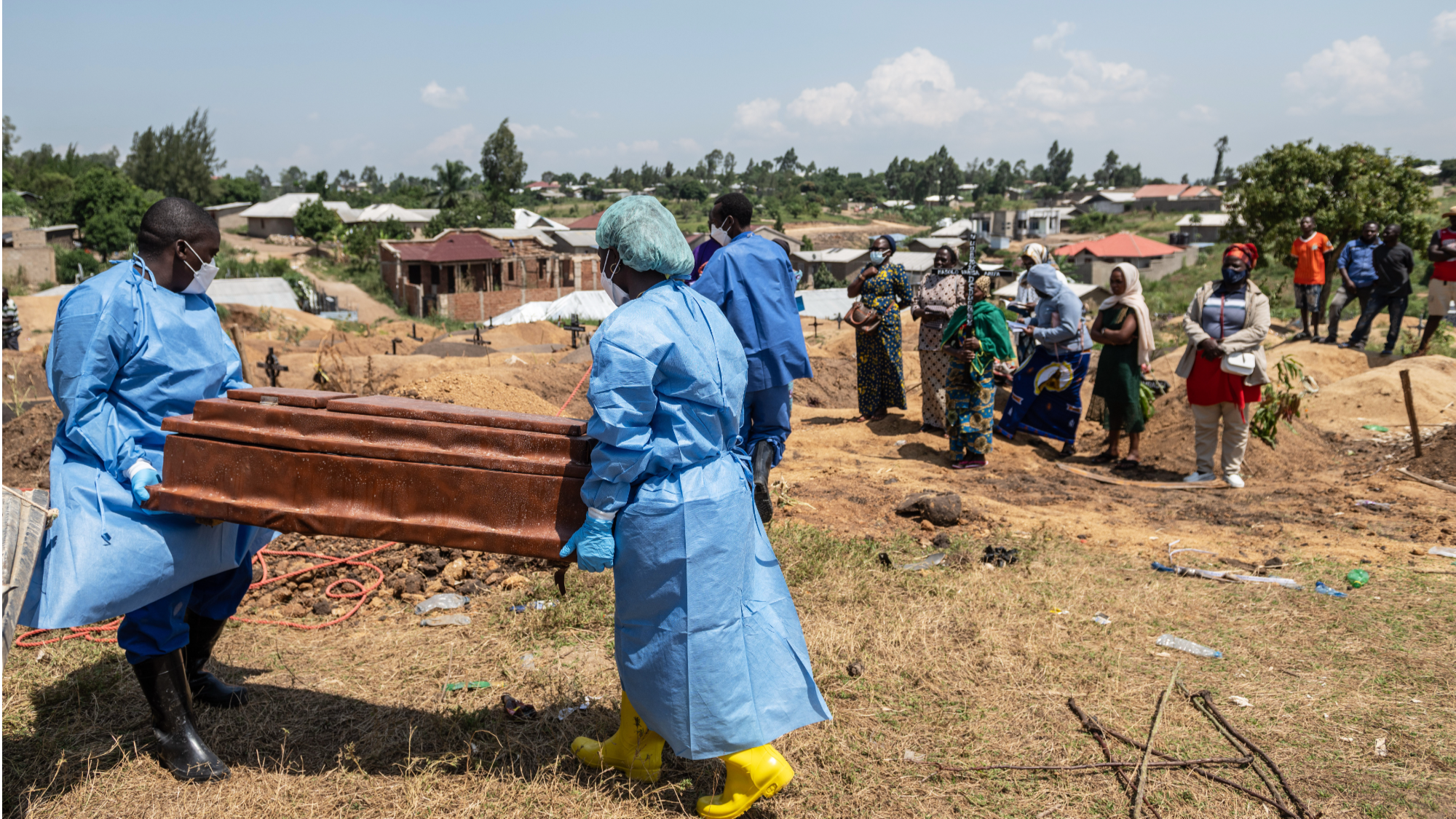
Ebola Outbreak Spreads Rapidly in Democratic Republic of Congo
The World Health Organization (WHO) has confirmed that 75 healthcare workers have contracted Ebola in the Democratic Republic of the Congo (DRC) since May 2026, marking a significant escalation in transmission rates among frontline medical personnel. This surge in clinical exposure highlights critical vulnerabilities in infection control and personal protective equipment (PPE) protocols within high-density, resource-limited healthcare environments.
Key Clinical Takeaways:
- Healthcare workers currently account for a disproportionate share of total infections, indicating a breach in standard biosafety level (BSL) protocols.
- The current outbreak involves the Bundibugyo virus, a species of the Ebolavirus genus known for its distinct pathogenesis and specific clinical presentation.
- Effective containment depends on immediate, rigorous adherence to contact tracing and the scaling of specialized isolation units for displaced populations.
Epidemiological Context and Viral Pathogenesis
The current transmission vector in the DRC has been identified as the Bundibugyo virus. According to the World Health Organization, this specific strain presents with a variable case-fatality rate, often ranging between 25% and 40% in previous documented outbreaks. Unlike the Zaire ebolavirus, the Bundibugyo species has historically shown different transmission dynamics, yet it remains a highly virulent pathogen characterized by systemic inflammatory response syndrome and multi-organ failure.

The infection of 75 medics within a four-week window suggests a failure in the mechanical barriers typically mandated in high-risk zones. Epidemiologists note that when the healthcare workforce becomes the primary demographic for infection, it signals a systemic collapse of the “triage-to-isolation” pipeline. For facilities managing high-risk infectious diseases, ensuring that all staff are utilizing appropriate Infectious Disease Diagnostic Centers is essential to prevent horizontal transmission within the hospital setting.
Infrastructure Vulnerabilities in Displaced Populations
The United Nations High Commissioner for Refugees (UNHCR) has issued warnings regarding the heightened risk posed to displaced communities residing in temporary camps near the DRC border. Overcrowding in these settlements precludes effective social distancing and limits the ability to maintain sterile environments. The confluence of malnutrition and limited access to clean water creates a perfect storm for viral propagation.
“The speed at which this virus is moving through frontline workers is a clinical red flag,” says Dr. Elena Rossi, an independent infectious disease epidemiologist. “When the responders become the patients, it indicates that the environmental controls—the very foundation of our standard of care—are being bypassed by the sheer volume of exposure and the lack of redundant safety systems.”
Clinical Triage and Operational Compliance
For healthcare administrators operating in or near the DRC, the current infection data necessitates an immediate audit of infection prevention and control (IPC) programs. The reliance on standard surgical masks and gowns is insufficient for viral hemorrhagic fevers; high-level respiratory protection and impermeable barrier clothing are mandatory. Organizations must ensure they are partnering with Medical Compliance and Safety Consulting Firms to verify that their procurement and training standards meet current international benchmarks.

Furthermore, the logistical strain on the healthcare supply chain is immense. As diagnostic demand spikes, laboratories must ensure their testing platforms—specifically RT-PCR assays—are correctly calibrated to detect the Bundibugyo strain, as diagnostic sensitivity can vary across different viral species. Any delay in testing directly correlates to increased morbidity among the staff and the patient population they serve.
Future Trajectory of Containment Efforts
Containment strategies are currently pivoting toward mass vaccination campaigns and the establishment of localized, high-containment field hospitals. Funding for these initiatives remains largely reliant on international aid, with significant support provided by the WHO and various global health partnerships. However, the efficacy of these measures depends on the stability of the local healthcare infrastructure.
Moving forward, the focus must remain on the protection of the medical workforce. Without a robust, protected, and well-equipped staff, the clinical gap will continue to widen, allowing the virus to entrench itself further into the community. Health systems are strongly encouraged to consult with Board-Certified Infectious Disease Specialists to review their current emergency preparedness protocols and ensure they are aligned with the most recent peer-reviewed epidemiological guidance.
Disclaimer: The information provided in this article is for educational and scientific communication purposes only and does not constitute medical advice. Always consult with a qualified healthcare provider regarding any medical condition, diagnosis, or treatment plan.