
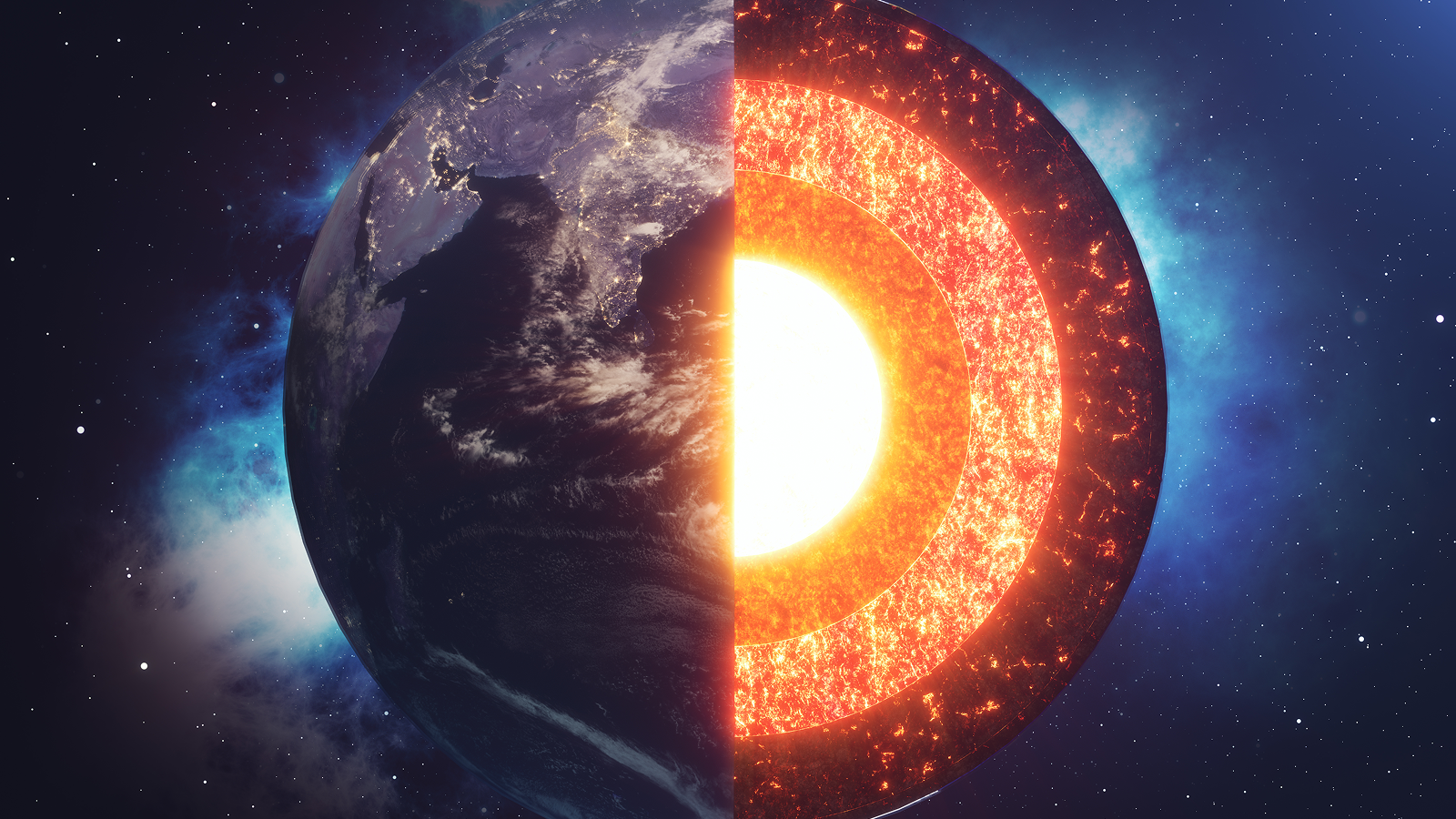
New Research Suggests Carbon Content Holds Key to Earth’s Inner Core Formation
Scientists have, for the first time, demonstrated the potential for Earth’s inner core to have frozen, linking the process directly to the amount of carbon present within it. Research indicates that if 2.4% of the core’s mass were carbon, approximately 420°C of supercooling would be required to initiate freezing. A higher carbon content of 3.8% reduces this requirement to 266°C, making the process considerably more plausible.
This discovery challenges existing models of the core’s composition, revealing that many element combinations previously considered viable by seismological data cannot account for the existence of the solid inner core. While iron and carbon alone are insufficient, the research points to the likely presence of additional elements - specifically oxygen and perhaps silicon – to explain the core’s seismic properties.
The findings represent a crucial advancement in understanding the fundamental building blocks of our planet. Determining the core’s composition is vital to unraveling how it began to solidify and how this process has influenced Earth’s evolution. This research offers new insights into the forces shaping our planet from within.
The research was originally published in The Conversation and is available here.
