Earth’s Age, Evolution & Religious Perspectives: Darwin to Islam
Scientists have refined the estimated age of Earth to 4.54 billion years, a timeframe encompassing the formation and dissolution of continents, the advance and retreat of ice ages, and the evolution of life from single-celled organisms to complex creatures like blue whales.
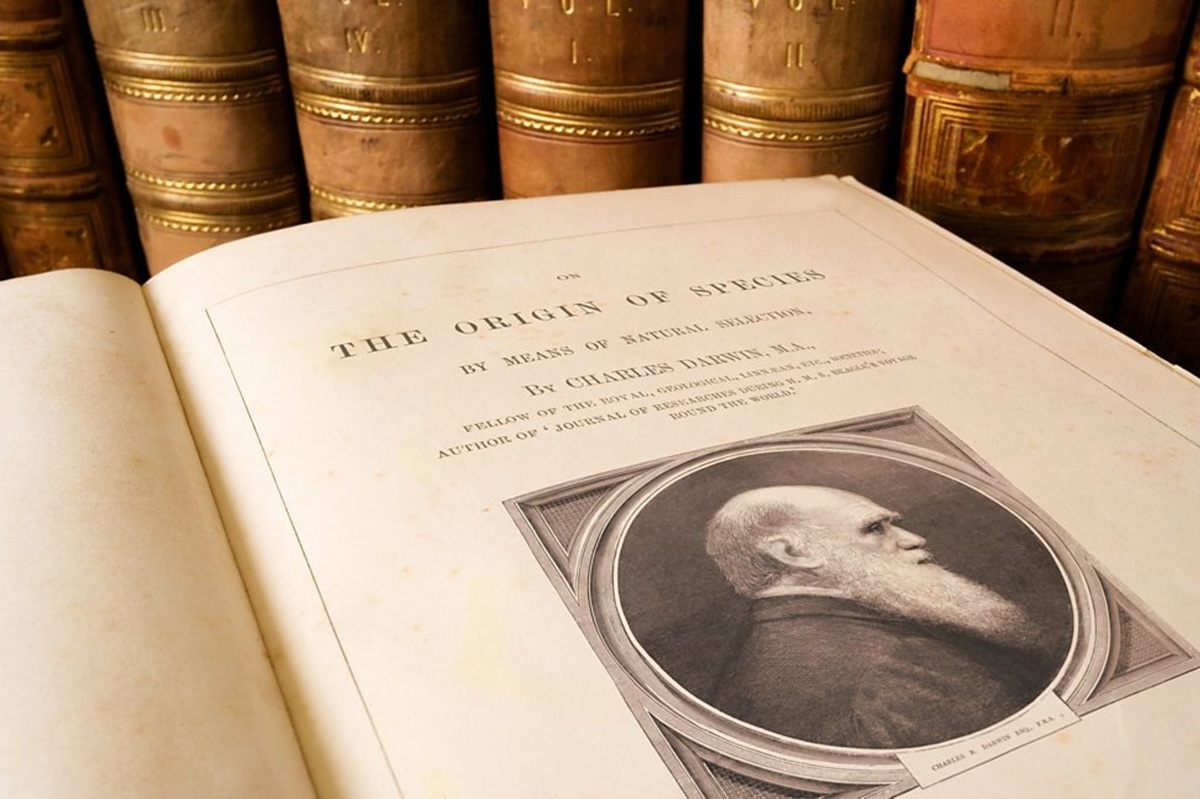
The understanding of life’s development on Earth is largely attributed to the theory of evolution by natural selection, first articulated by Charles Darwin in his 1859 publication, “On the Origin of Species.” Darwin posited that organisms evolve over generations through the inheritance of physical or behavioral traits. His observations, particularly of finch populations in the Galapagos Islands, demonstrated variations within species, and how environmental factors favored certain traits over others.
Darwin’s concept of “natural selection” emphasized that the environment, rather than human intervention, drives the selection process. This gradual process can lead to minor changes within a population over several generations, altering characteristics like color or size. Given sufficient time and accumulated changes, natural selection can result in the emergence of entirely new species – a process known as macroevolution. This long-term process is believed to have transformed dinosaurs into birds, aquatic mammals from amphibious ancestors, and primate ancestors into modern humans, chimpanzees, and gorillas.
Alongside Darwin, French biologist Jean-Baptiste Lamarck proposed a different mechanism for inheritance. Lamarck believed organisms could pass on characteristics acquired during their lifetime to their offspring. Similar to Darwin, he acknowledged adaptation to the environment. However, Lamarck argued that organisms adapted by altering their behaviors, and these acquired adaptations were then inherited.
Lamarck famously used the example of giraffes, suggesting they initially had short necks. As trees grew taller, giraffes stretched their necks to reach the leaves, and this elongated neck was gradually passed down to subsequent generations.
The theory of evolution has faced scrutiny and, at times, opposition, particularly from religious perspectives. Some interpretations of religious texts, such as the creation narrative in the Bible, are seen as conflicting with the evolutionary timeline. Some Christians believe the biblical account of creation describes a literal six-day event, rather than a process spanning millions of years.
However, many Christians reconcile their faith with evolutionary science, interpreting the “six days of creation” as representing extended periods of time. They view God as overseeing the natural processes of evolution, having designed the universe and its inherent laws. This perspective sees evolution as a manifestation of God’s plan and creative power.
Within Hinduism, views on evolution are diverse. Some adherents disagree with the theory, attributing evolution to the actions of the deity Vishnu rather than a natural process, which contradicts Hindu creation stories. Conversely, many Hindus readily accept evolution, believing Brahman created life on Earth and Vishnu sustains it. Evolution is then seen as a mechanism for sustaining life.
In Islam, some Muslims struggle with the idea of humans being subject to the same natural selection as other species, given the emphasis on humanity’s unique role and stewardship in the Quran. However, others view evolution as a means through which Allah created life, establishing an environment that fosters evolution and overseeing the natural processes by which species evolve.
Recent research, as reported by Live Science and the BBC, continues to refine our understanding of Earth’s history and the processes that have shaped life on our planet. The ongoing debate surrounding the origins of life and the mechanisms of evolution remains a central topic in scientific and philosophical discourse.