Eagles trade up to draft USC WR Makai Lemon in 2026 NFL Draft
The Phone Call That Changed the Draft
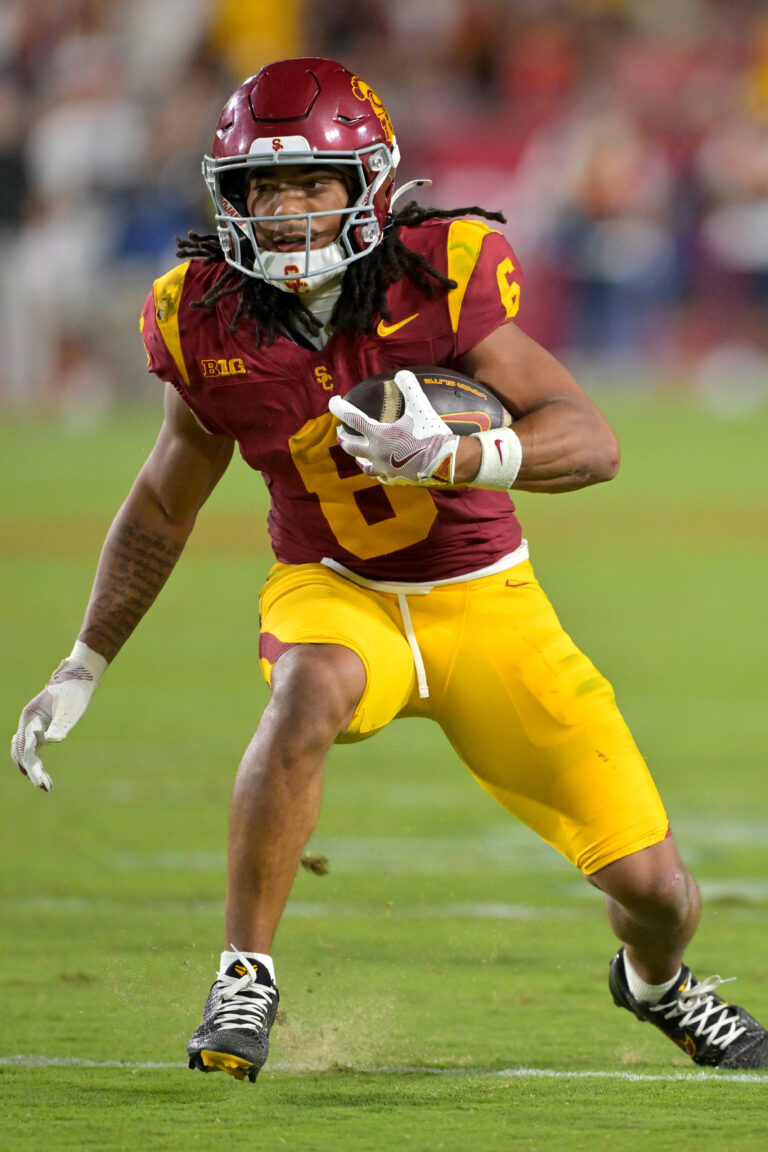
The defining moment of the Eagles’ 2026 draft unfolded away from the public stage. According to reports, a trade was finalized that allowed Philadelphia to move up to the 20th pick, leapfrogging the Steelers, who had been targeting Makai Lemon. The USC receiver had emerged as one of the draft’s most sought-after slot weapons after a 1,156-yard season in 2025, and the Eagles’ willingness to surrender two fourth-round picks to secure him underscored their commitment to adding impact talent. Footage of Lemon on the phone with Steelers officials circulated widely, capturing the moment the deal was confirmed.
The trade reflected a broader strategy. The Eagles have consistently demonstrated a willingness to act decisively when a player fits their vision, and this move was no exception. While some analysts questioned the cost, others noted that Philadelphia’s front office has a history of converting draft capital into long-term assets. The transaction also highlighted the team’s ability to capitalize on opportunities before competitors could react. As observers noted, the Eagles didn’t just acquire Lemon—they positioned themselves to maximize his potential within their system.
Positional Upgrades That Matter Now—and Later
Lemon wasn’t the only addition with the potential to make an immediate impact. In the second round, the Eagles selected Vanderbilt tight end Eli Stowers, a 6-foot-5 athlete whose size and athleticism could allow him to contribute right away. While Dallas Goedert remains a key part of the offense, Stowers offers versatility that could complement the unit, particularly in formations that require multiple tight ends. His presence also provides insurance for the future, as Goedert’s contract situation remains uncertain beyond 2026.
The third round brought Miami tackle Markel Bell, a prospect whose development could pay dividends in the coming years. Though Bell is considered raw, the Eagles have a track record of refining offensive line talent, and his selection suggests a long-term plan to address eventual needs along the front. This approach aligns with the team’s broader philosophy of balancing immediate contributions with future growth. Later-round picks, such as seventh-round defensive tackle Uar Bernard, reflect a similar strategy. Bernard, a Nigerian prospect with no college football experience, represents the kind of high-upside project the Eagles have successfully developed in the past.
The later rounds also included edge rusher Keyshawn James-Newby, whose film suggests potential that could be unlocked with the right coaching. While not every late-round pick will pan out, the Eagles’ ability to identify and develop talent in these spots has been a consistent strength. The roster is already deep enough to absorb misses, but any contributions from these selections would only enhance the team’s competitiveness.
Trading for Contenders, Not Just Players
The draft wasn’t solely about the players the Eagles selected—it was also about the ones they acquired through trades. Jonathan Greenard, a Pro Bowl-caliber pass rusher, joined the team in a deal that addressed a key need on the defensive line. His arrival provides flexibility, allowing the Eagles to rotate their defensive front and maintain pressure throughout games. This depth could prove crucial in high-leverage situations, particularly in the postseason.
For more on this story, see Patriots draft Lomu, Raridon to build roster around Maye.
The trade also brought Dontayvion Wicks, a receiver whose big-play ability adds another dimension to the offense. With DeVonta Smith and Hollywood Brown already established as primary targets, Wicks’ presence gives the Eagles multiple options to attack defenses. The addition of Lemon further strengthens the receiving corps, creating a group that can challenge opposing secondaries in various ways.
The trades demonstrated a calculated approach to roster construction. While the Eagles surrendered draft capital to move up for Lemon, they later recouped picks by trading down, a move that reflects their ability to balance short-term gains with long-term planning. This strategy contrasts with teams that prioritize accumulating picks over making targeted upgrades. The Steelers, for example, left the draft without Lemon and without the flexibility to adjust their plans, highlighting the importance of decisive action in a competitive landscape.
What the Draft Means for the Eagles’ NFC Window
The Eagles entered the 2026 draft with the goal of maintaining their edge in the NFC, and the moves they made suggest they’ve done just that. While other teams in the conference made incremental improvements, Philadelphia executed a series of transactions that addressed both immediate needs and future considerations. Lemon, Greenard, and Stowers each bring unique strengths that could elevate the team’s performance in the coming seasons.
The broader NFC landscape offers a mixed picture. The Cowboys added a linebacker in the first round but made few other notable moves, while the 49ers focused on defense without significantly upgrading their offense. The Packers continued their rebuild by selecting a quarterback, a move that may not yield immediate results. In contrast, the Eagles added multiple starters in the early rounds and bolstered their depth through trades, positioning themselves as one of the conference’s most complete teams.
The Steelers, meanwhile, remain in search of a franchise quarterback, a challenge that could limit their competitiveness in the near term. The Cowboys have struggled to break through in the postseason, and the 49ers’ window may be narrowing as key players age. The Eagles, by comparison, have assembled a roster capable of contending for multiple seasons. Lemon and Stowers provide weapons for the present, while Bell and Bernard offer potential for the future. Greenard and Wicks add depth that could prove valuable in the playoffs.
The draft reinforced the Eagles’ reputation for strategic planning. By addressing both short-term and long-term needs, the team has positioned itself to remain at the forefront of the NFC. While other teams may close the gap in the coming years, Philadelphia’s recent moves suggest they are not content to simply maintain their position—they are actively working to extend it.
What to Watch in 2026
The draft is complete, but the real work begins now. How quickly Lemon adapts to the NFL will be a key storyline, as his ability to contribute early could shape the offense’s effectiveness. Stowers’ development will also be closely watched, particularly his ability to carve out a role alongside Goedert. If he can provide a reliable target, the Eagles’ offense could become even more difficult to defend.
Bell’s progress will be another area of focus. While he may not be ready to start immediately, his development could determine how smoothly the Eagles transition along the offensive line in the coming years. The same applies to Bernard and James-Newby, whose contributions may not be immediate but could pay dividends down the road.
One unresolved question is the safety position. The Eagles still need a starter opposite C.J. Gardner-Johnson, and while trade discussions with teams like the Browns and Panthers could intensify, the front office has shown a willingness to wait for the right deal. If no trade materializes, the team may rely on a committee approach, a rare deviation from their usual precision in addressing roster needs.
The biggest challenge, however, may be integrating the new additions into Sean Mannion’s offense. The system is still evolving, and the success of this draft class will depend on how well Lemon, Stowers, and Wicks fit within it. As analysts have noted, the true measure of the draft won’t be seen until the regular season, when the pieces are put to the test.
One thing is clear: the Eagles didn’t just draft for 2026. They drafted with an eye on the next several years, reinforcing their status as a team built for sustained success. If the recent moves pay off, the rest of the NFC may find themselves playing catch-up.