
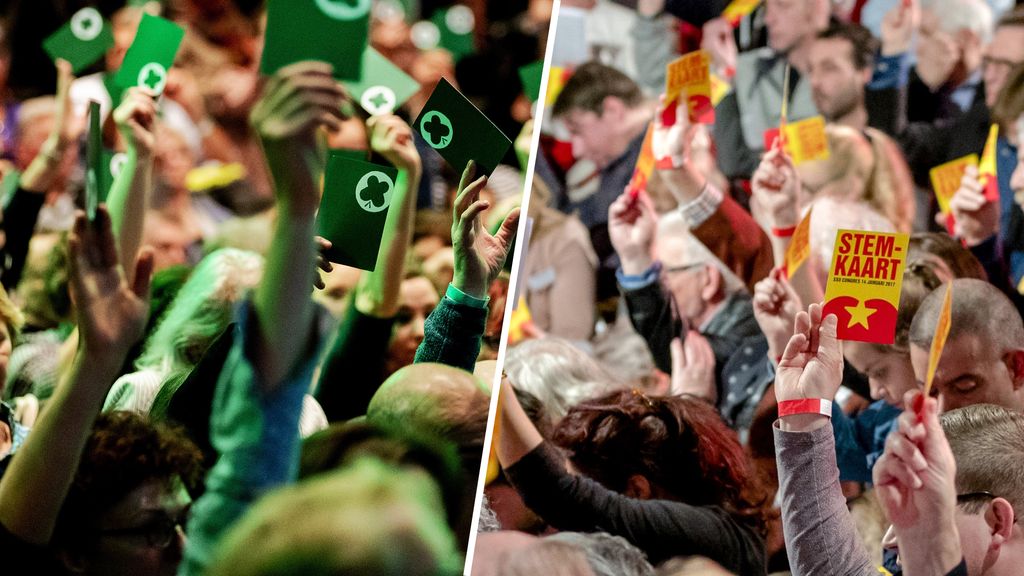
The Dutch party system is now at the center of a structural shift involving internal party democracy legislation.The immediate implication is that parties lacking member‑based decision‑making could be barred from ballot access, reshaping electoral competition.
The Strategic Context
Western liberal democracies have long balanced freedom of association with safeguards against opaque,leader‑centric parties. In the Netherlands, the rise of populist formations with highly centralized structures-most notably the Party for freedom (PVV)-has prompted calls for formal rules that require parties to admit members who can vote on manifestos and candidate lists. This proposal aligns with broader European trends where several states have codified minimum membership thresholds or internal voting rights to ensure party accountability. The move reflects a structural tension between the liberal democratic norm of open participation and the strategic desire to prevent “personalist” parties from exploiting the electoral system without internal checks.
Core Analysis: incentives & Constraints
Source Signals: The text confirms that D66, supported by GL‑PvdA and CDA, proposes a law obligating parties to admit members with voting rights on programs and candidate lists. It specifies a four‑year minimum participation requirement, equal weight for each member’s vote, and the creation of a Dutch Political parties Authority (Napp) to enforce compliance. Non‑compliant parties, such as the PVV (currently a single‑member association), could be excluded from elections. The proposal has drawn criticism from the PVV and from ministers who warn of legal overlap with existing association law and the difficulty of defining a minimum membership floor.
WTN Interpretation: The coalition of centrist and left‑leaning parties sees internal democracy as a lever to curb the electoral advantage of leader‑centric populists while reinforcing the legitimacy of the party system. by institutionalizing member voting, they aim to increase openness, reduce the risk of sudden policy swings, and align party structures with broader EU democratic standards. The PVV’s opposition frames the measure as state overreach,leveraging its narrative of “freedom from government control” to mobilize its base. ministers caution that adding layers of regulation may create enforcement gaps (“dead letters”) and could clash with existing corporate‑style association statutes,limiting the law’s practical impact. The upcoming Council of State advisory review will be a key constraint, as judicial scrutiny may narrow the scope of permissible mandates.
WTN Strategic Insight
“Embedding member‑based decision‑making into party law is a structural hedge against the rise of leader‑centric populism, turning internal party governance into a front‑line of democratic resilience.”
Future Outlook: Scenario Paths & Key Indicators
baseline Path: If the legislative proposal passes with modest thresholds and the Napp is operational by mid‑2026, established parties will adapt their internal statutes, and the PVV will either broaden its membership or face exclusion from the 2026 parliamentary ballot. The electoral field will see increased competition from new parties that meet the democratic criteria,reinforcing a multi‑party system.
Risk Path: If judicial review trims the law’s scope or if political resistance stalls implementation, the PVV and similar leader‑centric parties retain their current structure, preserving their electoral advantage. in that case, the push for internal democracy may fragment the centrist coalition, leading to legislative gridlock and potential public backlash against perceived “elite” interference.
- Indicator 1: Publication of the Council of State’s advisory opinion on the proposal (expected Q1 2026).
- Indicator 2: Parliamentary vote on the internal democracy bill and any amendments (scheduled for the first half of 2026).
