Dutch Party Expels Six Members After Documentary Exposes Neonazi Links, Hitler Salutes
Forum voor Democratie (FvD) has expelled six members following a Zembla documentary that exposed links between party affiliates and neonazi groups.
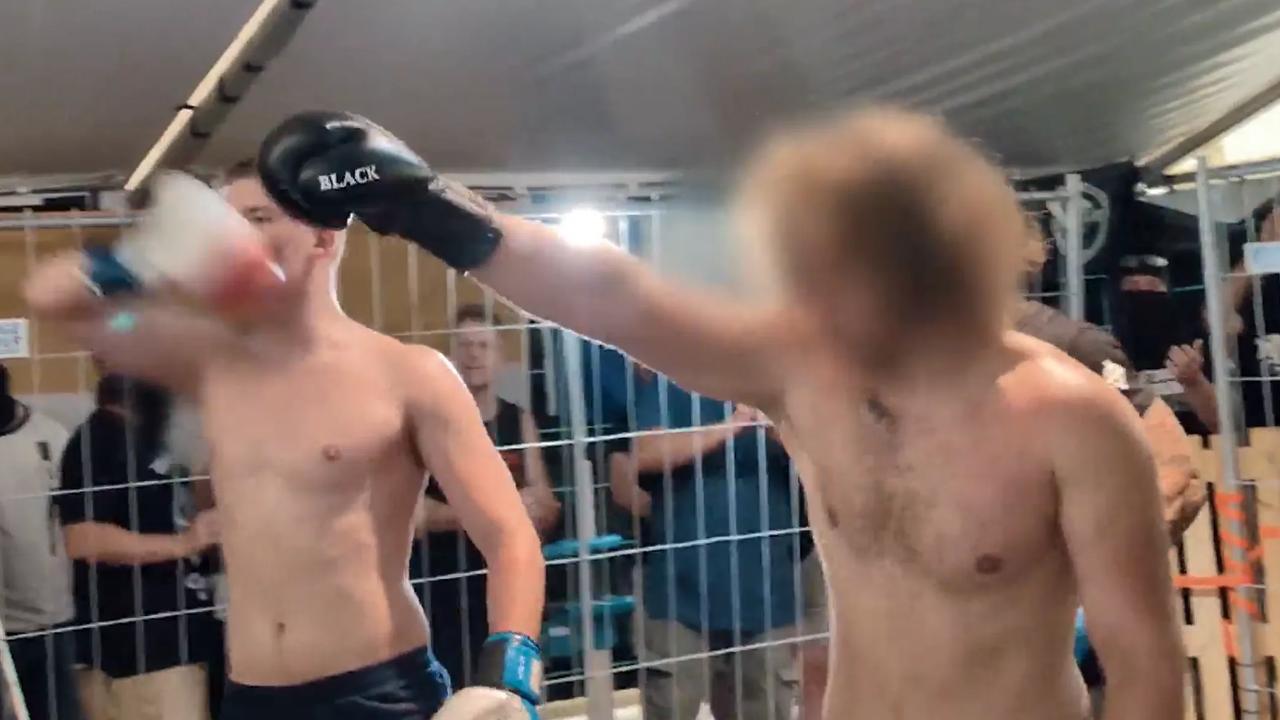
The broadcast featured footage of individuals performing Hitler salutes, reciting Nazi slogans, and participating in combat sports events.
The documentary detailed instances of party members attending secret gatherings where participants celebrated Hitler’s birthday and burned Jewish literature, according to reporting by NOS. While some FvD figures initially described the attendance as a personal choice, the party leadership later condemned the actions as unacceptable, De Telegraaf reported.
Zembla revealed extensive connections between party members and neonazi groups, a situation historian Robin te Slaa described as “heel uitzonderlijk dat er een verbinding is met een grote Nederlandse politieke partij.”
Legal complexities of extremism
Legal experts note that while certain neonazi behaviors are prohibited, enforcement remains complex. “A Hitler salute is not always punishable in the Netherlands due to a loophole in the law,” Marloes van Noorloos, professor of criminal law, told NOS.
She explained that while physical gestures can fall into a legal gray area, verbal statements like “Sieg Heil” qualify as group insult or incitement to hatred when made in public. “Geschreven en mondelinge uitlatingen en afbeeldingen kunnen wél worden verboden via het strafrecht, maar gebaren op zichzelf niet,” she said.
Regarding clandestine gatherings, Van Noorloos said that prosecution is challenging. “Dat vergoelijken van neonazisme is in principe strafbaar,” she explained, but said that because events were held in private, the legal threshold for conviction is high.
Similarly, threats involving weapons are difficult to prosecute if there is no proof of intent to reach the target. “Als je heel erg je best doet om de beelden geheim en in eigen kring te houden, dan kan het moeilijk worden om dat te bewijzen,” she added.
Laat #FvD maar eens bewijzen dat alle persoonlijke banden met Ramon van Asch zijn verbroken. #kuch https://t.co/tL3B0rVCuM
The documentary’s findings have sparked a debate regarding the potential for a political party ban. Although the Netherlands has previously dissolved parties such as the Volks-Unie in 1978 and CP’86 in 1998, such measures are considered extreme, NOS reported. “Een partij moet dan wel echt een zware bedreiging vormen voor de democratische rechtsstaat,” Van Noorloos said.
Normalisation and media criticism
Critics argue that the party’s internal culture facilitates the normalization of extremist ideology. “Niet alle FvD’ers zijn neonazi’s, maar alle neonazi’s stemmen wel FvD,” wrote columnist Afshin Ellian in de Volkskrant.
Politioloog Sarah de Lange warned that media coverage often fails to address the underlying patterns of extremism. “Mensen die de documentaire niet hebben gezien, krijgen alleen dat beeld mee,” she said. “Het is goed om te benadrukken dat het hier om gewone Nederlanders gaat.”

Journalists involved in the documentary have defended their investigation against criticism from those featured in the film. “Wij hebben de berichtgeving gezien en zijn met name verbaasd over Omroep Brabant en de Gelderlander die de tandarts kritiekloos laten leeglopen, zonder de feiten te kennen of contact met ons op te nemen over diezelfde feiten,” said Zembla editor-in-chief Roelof Bosma, as reported by NU.nl.
Bosma emphasized that the team approached the subject with care, noting, “Wij hebben dit alles zeer zorgvuldig aangepakt en onze verantwoordelijkheid ruim genomen.”
Internal party tensions persist following the broadcast. Temporary FvD faction leader Ralf Dekker initially responded by suggesting “iedereen moet gaan waar hij wil.” Meanwhile, former Telegraaf editor-in-chief Sjuul Paradijs commented on the lack of accountability displayed by those featured, stating, “Deze mevrouw doet alsof er niets aan de hand is.” As the fallout continues, Laura Gulickx (82) observed that “de pers dramatisch is afgegleden.”
The Zembla revelations represent the most severe extremism controversy to engulf Forum voor Democratie since November 2020, when Het Parool exposed JFVD members’ social-media chats glorifying Nazi Germany and endorsing terrorists Anders Breivik and Brenton Tarrant, prompting the removal of several youth-wing coordinators.
That followed an April 2020 HP/De Tijd investigation into the same Jongerenorganisatie Forum voor Democratie (JFVD) WhatsApp groups, which uncovered antisemitic, racist, and homophobic messages alongside Breivik and Tarrant glorification, leading the party’s executive board to discharge three individuals and suspend three others in 2020.
FVD voedt de neonazi’s met antiwesterse, antidemocratische en raciale ideeën De FVD’ers die bij het kooigevecht van neonazi’s waren, dachten dat ze volgens de FVD-idealen handelden. FVD kan tegenwerpen dat de sympathie van neonazi’s voor de genoemde uitgangspunten niet aan FVD…
“That is like asking the SP to distance itself from socialism.”
More on Hitler
Het is heel fijn dat we nu hele nare filmpjes hebben van mensen die elkaar aftuigen, want dat heeft dus iets met Lidewij de Vos te maken. #FvD https://t.co/APzcvV63HU