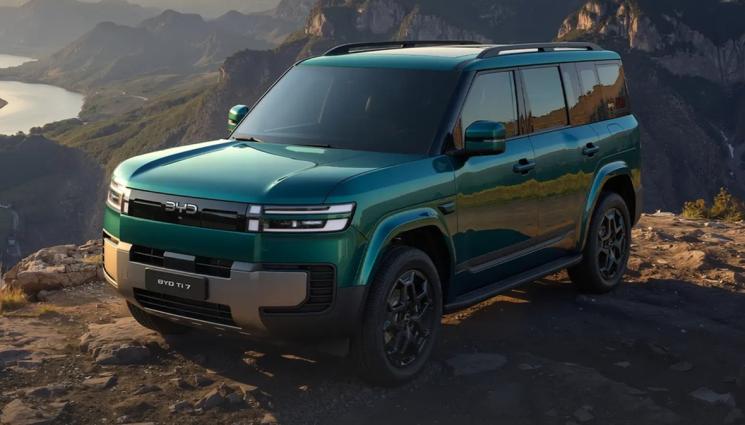
Dutch Court Bans BYD Ti7 Sales in EU Over JLR Defender Design Infringement
A Dutch court has banned BYD from selling its Ti7 SUV across the European Union, ruling the Chinese carmaker copied the design of the Jaguar Land Rover Defender, according to Carmarket.
The decision, issued November 20, marks a significant legal setback for BYD as it attempts to scale its European operations, carmarket.bg reported. The court found the Ti7 infringes on JLR’s industrial design rights, noting the SUV mirrors the Defender’s distinctive silhouette, flat roof and square wheel arches.
JLR filed the case earlier this year after BYD announced on its UK website that the seven-seat Ti7 was available to order with customer deliveries planned to start in January 2027. The model launched in China in 2025.
“In these preliminary proceedings, the judge ruled that the Ti7 infringes on Jaguar Land Rover’s industrial design rights in the EU,” the court said in its decision.
The ruling also prohibits BYD from manufacturing the model at its new plant in Hungary, where series production was scheduled to begin early next year. “We protect our intellectual property and take legal action when necessary,” JLR said. “Legal proceedings are ongoing and at this stage we will not make further comments.”
BYD, which entered the European market in late 2022, has seen its regional sales more than double to over 280,000 vehicles through September compared to the same period last year, according to ACEA data.
The Ti7 was intended to be a major part of the company’s 2027 European expansion, with prices in the UK starting at £47,995 — more than £20,000 cheaper than a comparable plug-in hybrid Defender 110. Design cases between major carmakers are rare in Europe, especially at such an early stage of legal proceedings.
“The BYD Ti7 model is the result of BYD’s own independent design work and does not infringe on any JLR rights,” the company said, adding that it “categorically disagrees” with the ruling and intends to appeal. “We will use all legal avenues to prove that this decision is wrong.”
The court has yet to issue a final verdict on the broader intellectual property dispute, with proceedings expected to continue for some time.