
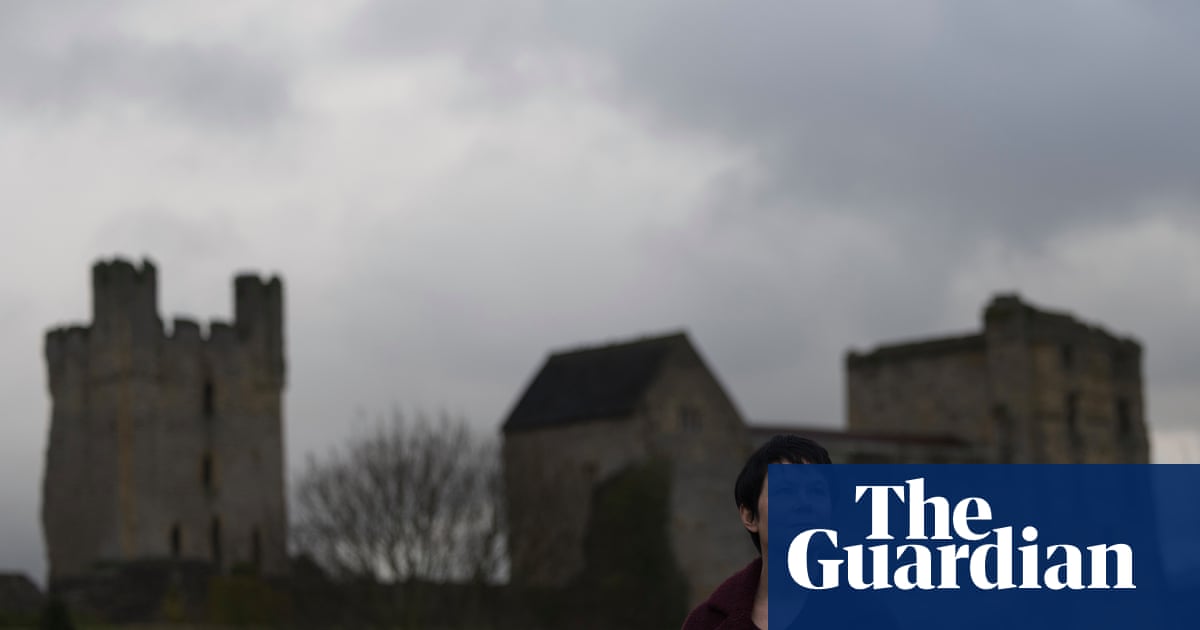
The darkening sky over Helmsley Walled Garden in North Yorkshire was faintly illuminated by a crescent moon as a small group gathered to practice “dusking” – a deliberate slowing down to observe the transition from day to night. The event, part of the North York Moors Dark Skies Festival, offered a respite from artificial light and a chance to reconnect with the natural world.
Dusking, or schemeren as it’s known in the Netherlands, was once a common ritual, with families observing the end of the day before lighting lamps. The practice largely disappeared until Dutch poet and author Marjolijn van Heemstra revived it a few years ago. Now, she is encouraging its adoption in other countries, including the UK.
“It’s strange that something so common can be forgotten,” van Heemstra said during the event, guiding participants to focus on a single point – a distant tree – as darkness descended. “What else have we forgotten?”
Van Heemstra discovered the tradition through an elderly Dutch woman who recalled dusking with her parents. Research revealed newspaper records dating back to the 18th century, even including a how-to manual. She began writing about it, and memories resurfaced. “It had disappeared, but now memories are coming back,” she explained.
The practice has grown in popularity, with gatherings attracting hundreds in the Netherlands, including 150 people by the Amstel River in Amsterdam and 400 at a music festival. The Park theatre in Eindhoven now holds regular dusking sessions, and expansion is planned through regional partnerships. Van Heemstra even reported some initial skepticism from teenagers, which eventually gave way to engagement.
Van Heemstra describes dusking as a form of mindfulness, a focused meditation on the external world. “It’s not just about your own wellbeing; it’s a conversation with the world around you,” she said. She likewise emphasizes its Dutch roots, arguing for the value of finding rituals suited to specific latitudes.
The event took place near Ayton Castle, a ruined 14th-century pele tower located on the southeast edge of the North York Moors National Park, close to the A170 road. The castle, once known as the “Defender of the Dales,” fell into ruin in the late 17th century, though much of its structure remains intact below ground.
Van Heemstra’s advocacy extends beyond simply reviving a tradition. She is deeply concerned about the effects of light pollution, noting that the Netherlands is one of the most light-polluted countries in the world. She has even taken to switching off streetlights near her home in Amsterdam, though she admits this is no longer permitted.
Research supports her concerns. A 2023 study published in the journal Science found that the average night sky worldwide has become 9.6% brighter each year from 2011 to 2022. A separate study last year revealed that only 10% of people in the western hemisphere experience truly dark skies, free from artificial light. The North York Moors National Park was designated a “gold tier” dark sky reserve in 2020, one of only 25 globally, and is implementing measures to reduce light pollution, including dimming and directing lights, and using glare-reducing fittings.
The negative impacts of light pollution extend beyond aesthetic concerns. A 2023 review by University College London found that it disrupts melatonin production and circadian rhythms, potentially contributing to sleep disorders, mood disorders, obesity, cancer, cardiovascular disease, and reproductive issues. Van Heemstra argues that the most significant victims are wildlife, citing the impact on insects, bats, and other nocturnal fauna. Recent research indicates that LED lights can reduce moth activity – crucial for pollination – by as much as 85%.
The North York Moors and the Yorkshire Dales host an annual Dark Skies festival, with a fringe festival held in October. Research suggests that attendees become more comfortable with darkness and are more likely to adopt lifestyle changes, such as using low-impact lighting and advocating for reduced light pollution in their communities.
Following the dusking event, participants dispersed into the darkness, many resisting the urge to illuminate their path with phones. The practice, van Heemstra hopes, offers a small but significant step towards reclaiming the night and recognizing the value of darkness – a world increasingly obscured by artificial light.
