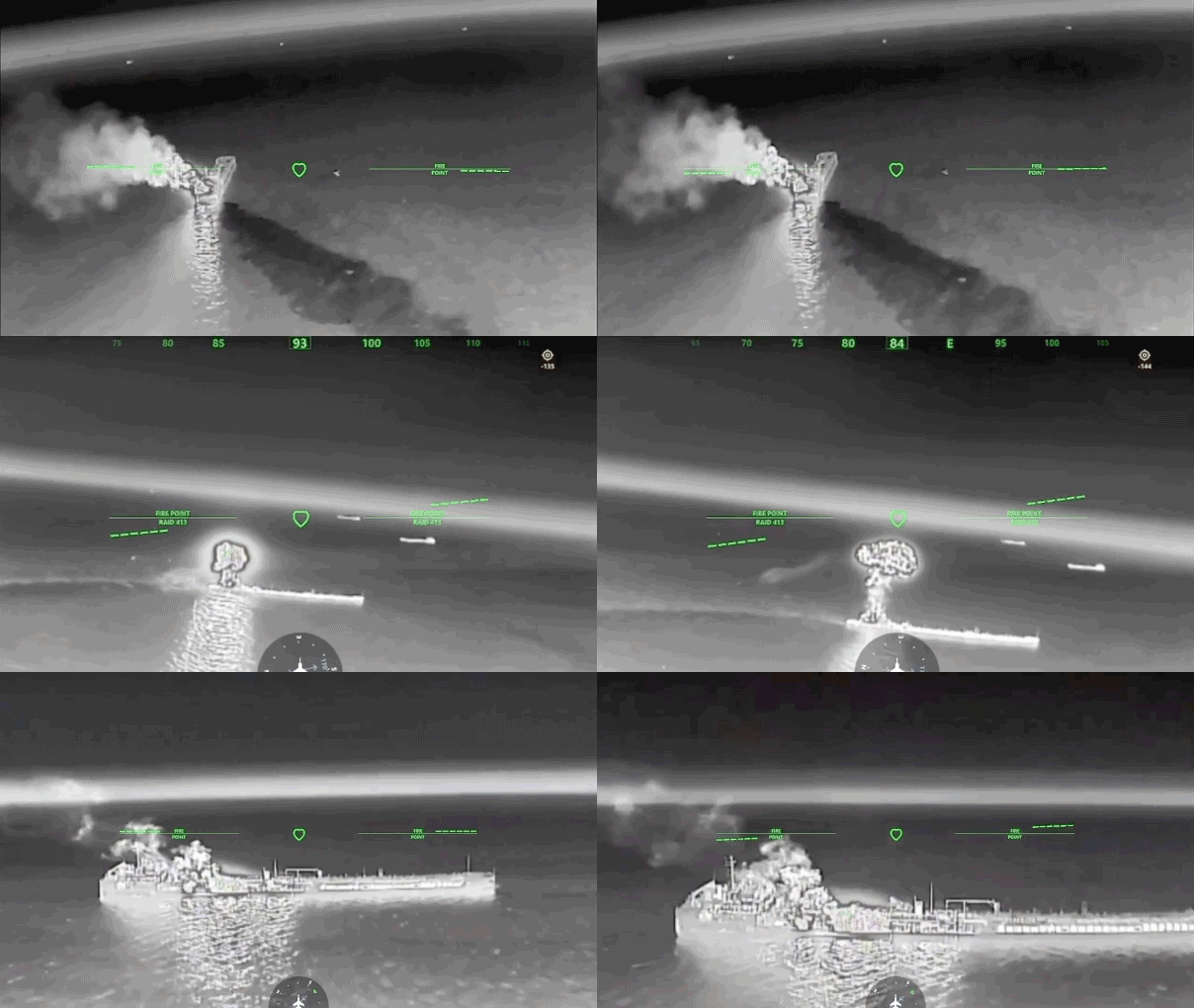
Drone Strikes Hit Russian Oil Refineries as Moscow Bans Diesel Exports
A sustained drone offensive targeting Russian oil refineries and tankers has reached an industrial scale, triggering significant supply chain disruptions and forcing Moscow to implement a temporary ban on diesel exports. The campaign, which has struck critical energy infrastructure deep within Russian territory, underscores a shift in regional conflict tactics that threatens global fuel price stability and domestic energy security.
Industrial-Scale Strikes on Refining Capacity
The recent wave of drone strikes has focused on high-capacity refining hubs, effectively reducing Russia’s ability to process crude oil into finished petroleum products. According to data tracked by the International Energy Agency, these facilities are not merely peripheral targets but the backbone of the nation’s export economy. The precision and frequency of the attacks suggest a sophisticated logistical effort aimed at neutralizing the infrastructure required to maintain both domestic fuel supplies and international trade obligations.
When critical infrastructure fails, the immediate impact is often felt in the secondary markets that rely on consistent delivery. For businesses operating in high-risk zones or those dependent on global energy commodities, the current volatility necessitates a reassessment of supply chain resilience. Engaging with a Risk Management Consultancy is often the first step for firms attempting to mitigate exposure to such sudden, macro-level disruptions.
Moscow’s Export Ban and Market Reaction
In response to the tightening supply, the Russian government has enacted a temporary ban on diesel exports. This move is designed to stabilize domestic prices and prevent shortages, but it has sent ripple effects through the global market. As noted by the U.S. Energy Information Administration, any restriction on Russian diesel—a key global commodity—inevitably forces international buyers to seek alternative sources, driving up premiums for European and Asian importers.
The economic pressure is compounding. As regional refining capacity dips, the cost of logistics rises in tandem. “The reliance on centralized, massive infrastructure creates a single point of failure that is becoming increasingly difficult to defend against modern aerial threats,” says a regional energy analyst monitoring the conflict. The shift toward decentralized power and fuel sourcing is no longer a theoretical debate; it is becoming a matter of operational survival for logistics-heavy enterprises.
The Infrastructure Security Gap
The vulnerability of these refineries highlights a broader problem: the difficulty of protecting sprawling, stationary industrial assets from low-cost, high-impact aerial incursions. While state-level defense systems are designed to counter traditional military threats, the proliferation of specialized drone technology has created a security vacuum.
For private sector entities managing critical infrastructure or cross-border assets, the legal and physical protection of these facilities is increasingly complex. Navigating the intersection of international sanctions, trade compliance, and physical security mandates requires specialized expertise. Many organizations are now turning to a Commercial Litigation and Regulatory Law Firm to manage the evolving legal liabilities associated with energy supply contracts that are being broken or delayed by these unforeseen events.
Long-Term Economic Consequences
The long-term outlook for the regional energy market remains tied to the duration of the conflict. If the drone offensive persists, the structural damage to refineries—which are notoriously difficult and expensive to repair—could lead to a permanent reduction in Russian export capacity. This would fundamentally alter the flow of energy in the Northern Hemisphere, favoring producers who can guarantee supply chain continuity.

Furthermore, the shift in trade routes increases the burden on maritime insurance and shipping logistics. As tankers are rerouted or held in port, the cost of insurance for energy carriers is expected to fluctuate wildly. Businesses that have not yet audited their exposure to these logistics bottlenecks are likely to face significant fiscal headwinds in the coming quarters.
Mitigating Operational Volatility
For those managing assets affected by these energy market swings, the priority must be the identification of redundant supply chains and the securing of stable, non-compromised energy contracts. The volatility seen in recent weeks is a indicator of a broader trend: the weaponization of energy infrastructure is the new norm in geopolitical maneuvering.
Building resilience requires a multi-layered approach that includes physical security, legal foresight, and financial hedging. Organizations requiring assistance in evaluating their current security posture or managing the legal fallout of broken supply contracts should consult with a Professional Business Continuity Advisor to ensure their operations remain insulated from the ongoing instability. As the situation evolves, the gap between those who prepared for infrastructure disruptions and those who ignored the warning signs will only continue to widen.