Drivers of Vaccine Myth Beliefs: Social Media, AI, and Healthcare Access
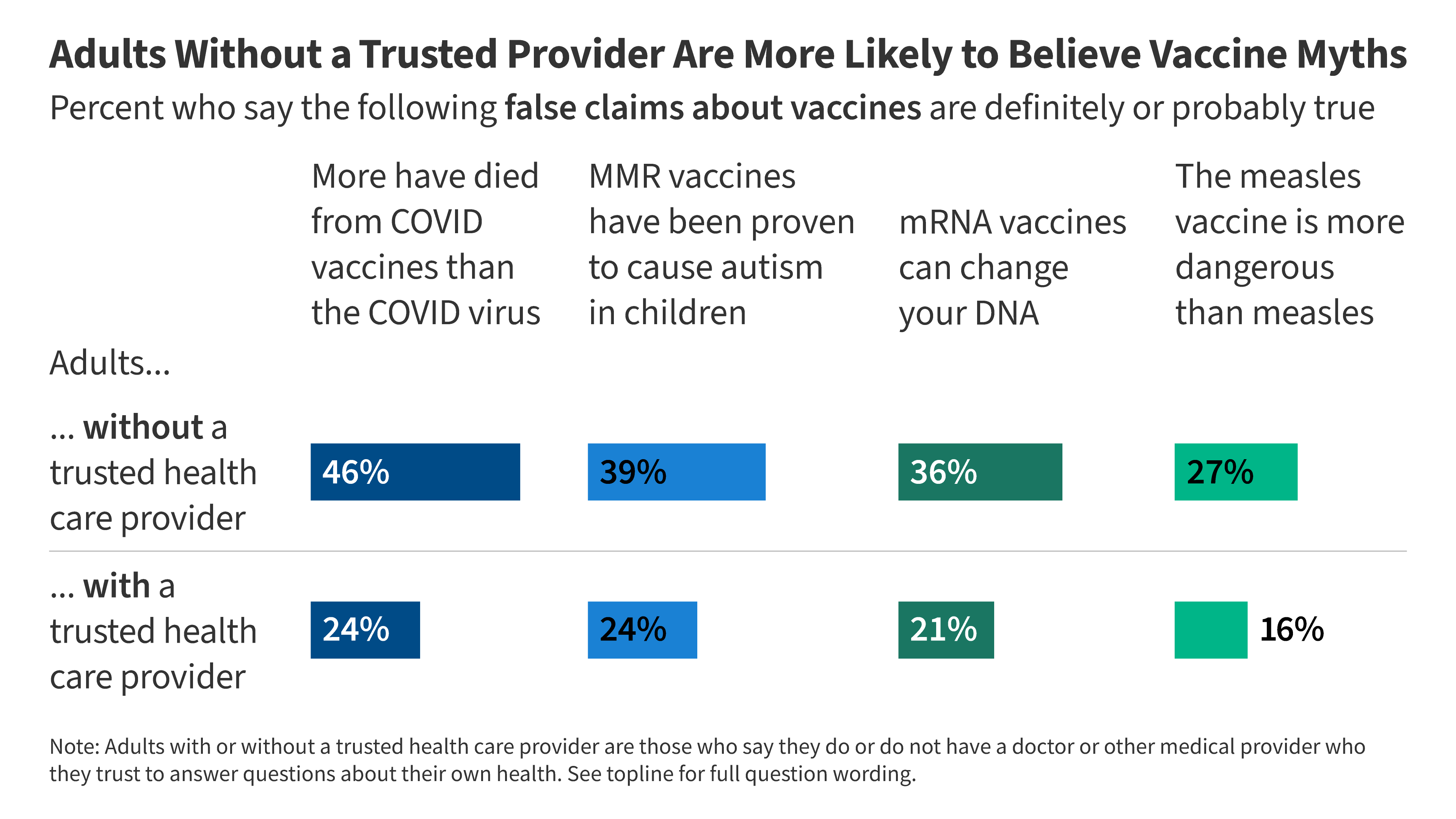
Individuals lacking a trusted healthcare provider and those relying on social media or artificial intelligence for health information are more likely to believe vaccine myths, according to a poll. The data indicates a “mixed middle” of the population.
- Trust Gap: Absence of a trusted health care provider correlates with higher susceptibility to believing false claims.
- Information Vectors: Regular use of AI and social media for health information increases the probability of believing false claims.
- Belief Patterns: The public is split into consistent myth believers, consistent deniers, and those in the “mixed middle.”
The erosion of trust in clinical institutions creates a critical vulnerability in population health. When patients bypass the standard of care—defined by evidence-based guidance from a licensed provider—they often encounter algorithmic misinformation that mimics scientific authority. This phenomenon increases the risk of vaccine hesitancy, which can lead to the resurgence of preventable morbidity from pathogens like measles or pertussis.
Why do social media and AI increase vaccine misinformation?
Algorithmic curation on social media platforms often creates “echo chambers” that reinforce confirmation bias, according to KFF. While AI tools offer rapid access to information, they can occasionally “hallucinate” or synthesize fragmented data, presenting myths as established medical consensus. This creates a clinical gap where the user perceives a level of scientific rigor that does not exist in the actual peer-reviewed literature.

This trend mirrors findings from the World Health Organization (WHO) regarding the “infodemic,” where an overabundance of information—some accurate and some not—makes it hard for people to find trustworthy sources. The poll highlights that the risk is not merely in the existence of myths, but in the lack of a professional medical filter to debunk them in real-time.
How does the “mixed middle” affect public health?
The analysis identifies a segment of the population that does not adhere to a strict “pro-vaccine” or “anti-vaccine” identity. These individuals may believe one myth, such as a claim about vaccine ingredients, while rejecting another, such as a claim about fertility. This cognitive dissonance makes them a high-priority target for public health interventions because their beliefs are more fluid and susceptible to the quality of the information they receive.

From an epidemiological perspective, this group represents a precarious tipping point for community immunity. If a significant portion of the “mixed middle” opts out of boosters or pediatric series due to a single misinterpreted data point, the effective reproduction number (Rt) of a virus can rise, potentially triggering localized outbreaks. To manage these risks, healthcare systems are increasingly integrating [Behavioral Health Specialists/Public Health Consultants] to develop communication strategies that address specific anxieties without alienating the patient.
What is the clinical impact of lacking a trusted provider?
The data confirms that the provider-patient relationship serves as a primary defense against medical quackery. Without a trusted clinician to explain the mechanism of action—such as how mRNA vaccines utilize lipid nanoparticles to deliver instructions to cells without altering DNA—patients are more likely to accept simplified, false narratives. This lack of guidance often leads to delayed screenings and missed vaccination windows, increasing the overall risk of acute illness.
The pathogenesis of vaccine-preventable diseases remains well-understood, yet the psychological barrier created by mistrust prevents the application of the PubMed-verified standard of care. This systemic failure in health literacy suggests that expanding access to vetted clinics is as vital as the development of the vaccines themselves.
Medical practices looking to improve patient trust and compliance are currently consulting with [Healthcare Compliance Attorneys/Patient Experience Consultants] to modernize their intake and education protocols, ensuring that misinformation is addressed clinically and ethically.
How does this compare to historical health trends?
Historically, vaccine hesitancy was often tied to specific adverse events or localized cultural distrust. However, the poll suggests a shift toward a decentralized, technology-driven distrust. Unlike previous eras where misinformation spread through physical communities, the current landscape allows myths to scale globally in seconds. This requires a shift from broad public service announcements to a targeted, one-on-one clinical approach.

According to the Centers for Disease Control and Prevention (CDC), the most effective way to move a patient from the “mixed middle” to a “denier” of myths is through “motivational interviewing”—a clinical communication style that validates the patient’s concern while gently introducing factual evidence. This reinforces the necessity of a stable, long-term relationship with a board-certified provider.
The trajectory of public health now depends on closing the gap between digital information consumption and clinical validation. As AI continues to evolve, the role of the physician as a “curator of truth” becomes the central pillar of preventative medicine. Those seeking to verify their immunization status or address specific vaccine concerns should engage with [Board-Certified Immunologists/Certified Vaccination Centers] to receive a comprehensive health audit based on their specific medical history and contraindications.
Disclaimer: The information provided in this article is for educational and scientific communication purposes only and does not constitute medical advice. Always consult with a qualified healthcare provider regarding any medical condition, diagnosis, or treatment plan.