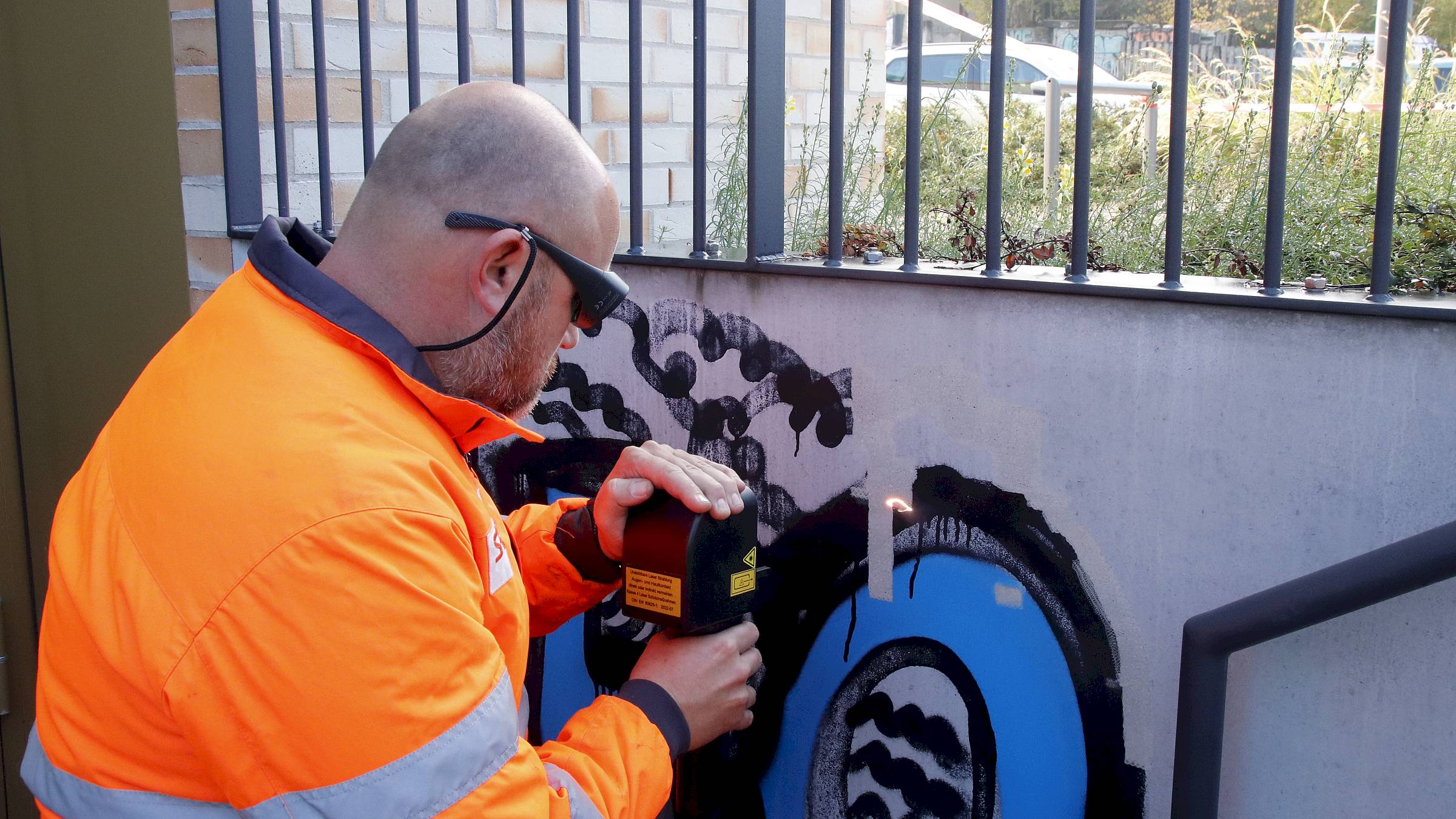
Dresden deploys laser technology to combat illegal graffiti
“We were primarily dissatisfied with the speed of removal,” Dresden’s Jan Donhauser said regarding municipal graffiti cleanup contracts previously outsourced to a Deutsche Bahn subsidiary.
Dresden is deploying a specialized laser cleaning system operated by municipal workers to combat illegal graffiti on public buildings more swiftly. The Stadtreinigung Dresden GmbH (SRD) invested approximately 200,000 euros into two class-4 laser devices and a mobile power supply to tackle stubborn paint on sensitive sandstone and other architectural surfaces without chemical detergents.
Laser Technology Replaces Chemical Pressure Washing
The municipal sanitation company purchased the equipment following trials of various cleaning methods that evaluated cleaning efficacy, surface preservation, and operating costs. The new laser units direct short, high-energy pulses onto paint layers, solving them from the substrate while preserving the natural patina of the underlying stone. Bisher kamen häufig Hochdruckreiniger mit chemischen Zusätzen zum Einsatz. While high-pressure water blasting and dry ice cleaning remain alternatives, the sanitation leadership found the laser technique particularly effective for delicate Klinker brick facades and wood surfaces.
SRD managing director Alf Schwaten noted that the laser approach operates more sustainably than chemical-heavy pressure washing. Five specially trained municipal employees handle the equipment, using the mobile power supply to operate independently of fixed electrical grids. Cleaning a roughly two-square-meter graffiti tag incurs a middle three-digit euro cost, which varies based on the surface material and paint composition.
Dresden Prioritizes Schools and Municipal Structures for Remediation
Under an in-house municipal agreement, Dresden can direct the Stadtreinigung to begin immediate remediation. The initial rollout focuses heavily on schools, including the Campus-Cordis-Gemeinschaftsschule on Stauffenbergallee, where Education Mayor Donhauser, school principal Miriam Bankert, and SRD managing directors Alf Schwaten and Michael Hamacher demonstrated the equipment on a Thursday presentation.
Beyond educational facilities, the sanitation crews will target bridges and other municipal structures. Donhauser emphasized that constitutional hate symbols receive immediate removal priority. Municipal leaders intend for rapid cleaning to deter copycat vandalism, noting that fresh tags often provoke secondary illegal spray-painting.

Limited Budgets Constrain Citywide Graffiti Removal Program
Financial allocations for the graffiti removal program remain constrained relative to the total volume of illegal tags across the city. Dresden allocated 80,000 euros for the year 2026, with subsequent annual budgets set at 100,000 euros. Donhauser estimated that a comprehensive citywide cleanup program would require between two and three million euros annually, making future funding dependent on broader municipal budget developments.
The city originally contracted a Deutsche Bahn subsidiary four years prior to manage the removal, a partnership that ended due to sluggish execution times. Alongside direct municipal enforcement, Dresden continues to support designated legal graffiti zones and works alongside the Kriminalpräventiver Rat to address the broader social issues surrounding property defacement.