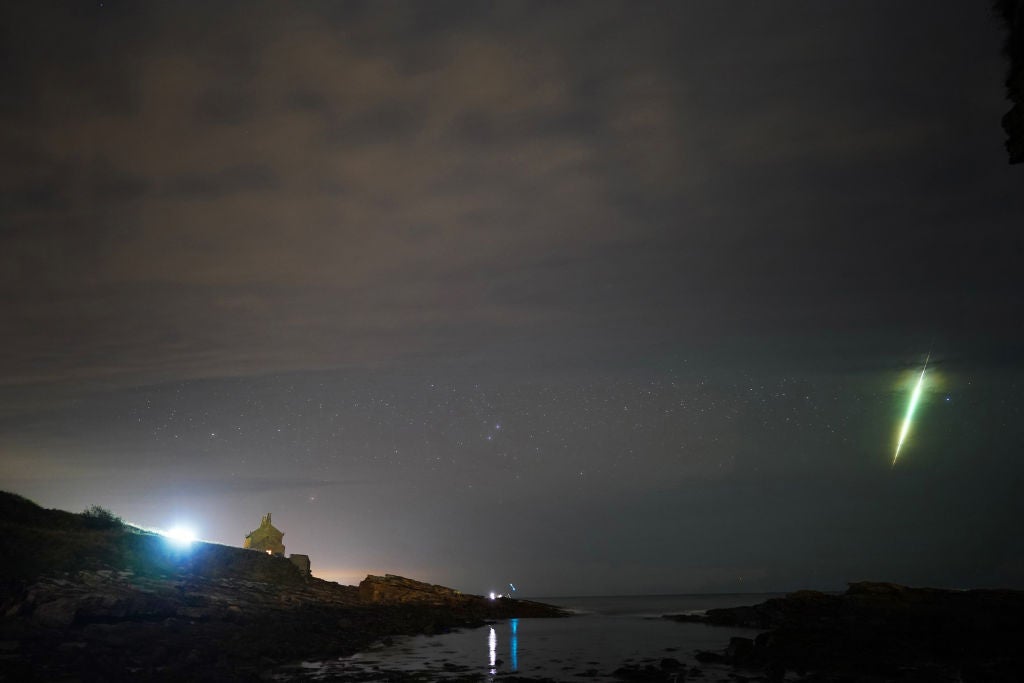
Draconid Meteor Shower 2026 Peak Time and Viewing Guide
The 2026 Draconid meteor shower breaks traditional nocturnal viewing patterns by peaking in the evening rather than the early morning hours, offering a moonless window for Northern Hemisphere observers according to data published by Live Science.
The Tech TL;DR:
- Peak Timing: The main maximum occurs at 9 p.m. on Thursday, October 8, 2026, avoiding the typical 2 a.m. wake-up call required for most meteor showers.
- Atmospheric Conditions: A new moon arriving on Saturday, October 10 ensures a dark, moonless sky to catch faint and fast-fading meteors, with clear weather forecasted across most of the Lower 48 states outside the Southeast, mid-Atlantic, and northern tier.
- Historical Volatility: While standard rates yield a modest 5 to 10 meteors per hour, the parent comet 21P/Giacobini-Zinner has previously triggered dramatic outbursts of hundreds to thousands of meteors per hour.
Evening Peak Timing Set by the Constellation Draco
Most meteor showers demand late-night vigils because their radiant points remain low until the pre-dawn hours. The Draconid meteor shower breaks that mold because its radiant point, positioned near the constellation Draco the Dragon, sits high in the sky during evening hours for Northern Hemisphere viewers. According to Live Science, the shower runs from October 6 through October 10, with the main maximum peak hitting just after dark on Thursday, October 8, at 9 p.m.
This timing coincides with favorable lunar phases. As noted by Secret Chicago, the 2026 event aligns with a nearly new moon occurring on Saturday, October 10. The absence of significant moonlight provides dark skies, maximizing contrast for faint and fast-fading meteors. Weather maps indicate that apart from the Southeast, mid-Atlantic, and parts of the Northern Tier, cloud cover will remain low enough across the Lower 48 states to permit visibility.
Historical Outbursts from Comet 21P/Giacobini-Zinner
Observers should not expect a massive meteor storm under standard baseline projections. The Draconids typically generate a modest five to 10 meteors an hour under dark skies, and no major outburst is forecast for the 2026 cycle. However, Live Science notes that the shower originates from Comet 21P/Giacobini-Zinner, which was discovered in 1900, orbits the sun every 6.6 years, last visited the inner solar system in 2025, and is scheduled to return in 2031.
This orbital path creates historical volatility. The Draconids possess a documented track record of defying baseline models through sudden outbursts. NASA records show that during the 1933 peak in Europe, observers witnessed 500 meteors per minute, while the 1946 peak produced 50 to 100 meteors per minute in the United States. Similar dramatic activity occurred during the 2011 and 2018 events, when rates reached hundreds of meteors per hour. The individual streaks remain slow and graceful compared to faster showers like the Perseids, allowing viewers more time to track them across the sky before fading.

Viewing Protocols for Observers
Stargazers attempting to view the event require no specialized optical hardware. Live Science states that binoculars and telescopes are unnecessary, as the shower is best observed with the naked eye. Observers should move away from urban light pollution, allow approximately 15 to 20 minutes for their eyes to dark-adapt, and look generally toward the northern sky after sunset. While Draco acts as the radiant point, meteors can appear across any section of the sky.
This event serves as the first of two meteor showers for regional observers. Secret Chicago reports that the Orionid meteor shower will follow later in the month, peaking between October 21 and 22 with an expected rate of around 20 meteors per hour under clear skies, though complicated by a bright waxing gibbous moon.