Dr. Alan Burgos uses superficial orbicularis oris nasalis flap stitch
Dr. Alan Burgos performed 226 consecutive primary open rhinoplasty procedures in Mazatlán, Sinaloa, Mexico, between February 2022 and November 2024 using the superficial orbicularis oris nasalis flap stitch technique. The surgical intervention addresses dead space and soft-tissue redraping during structural rhinoplasty across patients with thin, intermediate, and thick skin.
-
The Tech TL;DR:
- Dr. Alan Burgos utilized the superficial orbicularis oris nasalis flap stitch in 226 primary open rhinoplasty cases from February 2022 to November 2024.
- The technique preserves the superficial orbicularis oris nasalis muscle to occupy the intercrural space and reduce surgical dead space.
- Clinical follow-up ranging from eight months to three years showed favorable qualitative outcomes in soft-tissue redraping without major technique-related complications.
Anatomical Evolution and the Superficial Orbicularis Oris Nasalis Fusion Sling Concept
Rhinoplasty remains one of the most technically demanding procedures in facial plastic surgery due to anatomical variations in skin thickness and wound healing. Surgical dissection separates the skin-soft-tissue envelope from the underlying osseocartilaginous framework, creating potential dead space. This space interferes with soft-tissue redraping and contributes to fibrosis and contour irregularities. Historically, authors described supporting structures known as nasal retaining ligaments connecting the framework to the superficial musculoaponeurotic system. However, the nomenclature and anatomical interpretation of these structures generated controversy.
Landmark studies by Bruintjes et al. in 1996 demonstrated that fibrous condensations in the intercrural and scroll regions represent bilateral fusion connective tissue rather than independent midline structures. Subsequent analyses by Huizing in 2003 and Zhai et al. showed that structures like the interdomal and intercrural ligaments lack distinct histologic boundaries. In 2025, Neves et al. introduced the Fusion Sling concept, identifying the superficial orbicularis oris nasalis muscle within the intercrural compartment. This contemporary understanding established that nasal support relies on a continuous fascial network rather than isolated ligamentous points.
Surgical Implementation of the Superficial Orbicularis Oris Nasalis Flap Stitch Technique
Building upon the Fusion Sling framework, the superficial orbicularis oris nasalis flap stitch technique preserves and repositions the superficial musculoaponeurotic system layer over the columellar framework. Dr. Alan Burgos applied this method across 226 primary open rhinoplasty procedures between February 2022 and November 2024 in Mazatlán, Sinaloa, Mexico. The approach utilizes an inverted-V transcolumellar incision for skin-soft-tissue envelope elevation.
Procedure Steps:
1. Perform inverted-V transcolumellar incision.
2. Elevate skin-soft-tissue envelope carefully.
3. Identify and preserve superficial orbicularis oris nasalis muscle fibers in the infratip region.
4. Complete underlying structural framework reconstruction.
5. Reposition preserved superficial orbicularis oris nasalis flap over the columella.
6. Secure flap to the superficial plane using 5-0 polypropylene (Prolene) suture.
Securing the preserved flap to the superficial plane provides an autologous soft-tissue augmentation effect. It restores columellar volume, enhances infratip definition, and reduces dead space following framework reconstruction.
Postoperative Evaluations Show Stable Contours and Positive Results
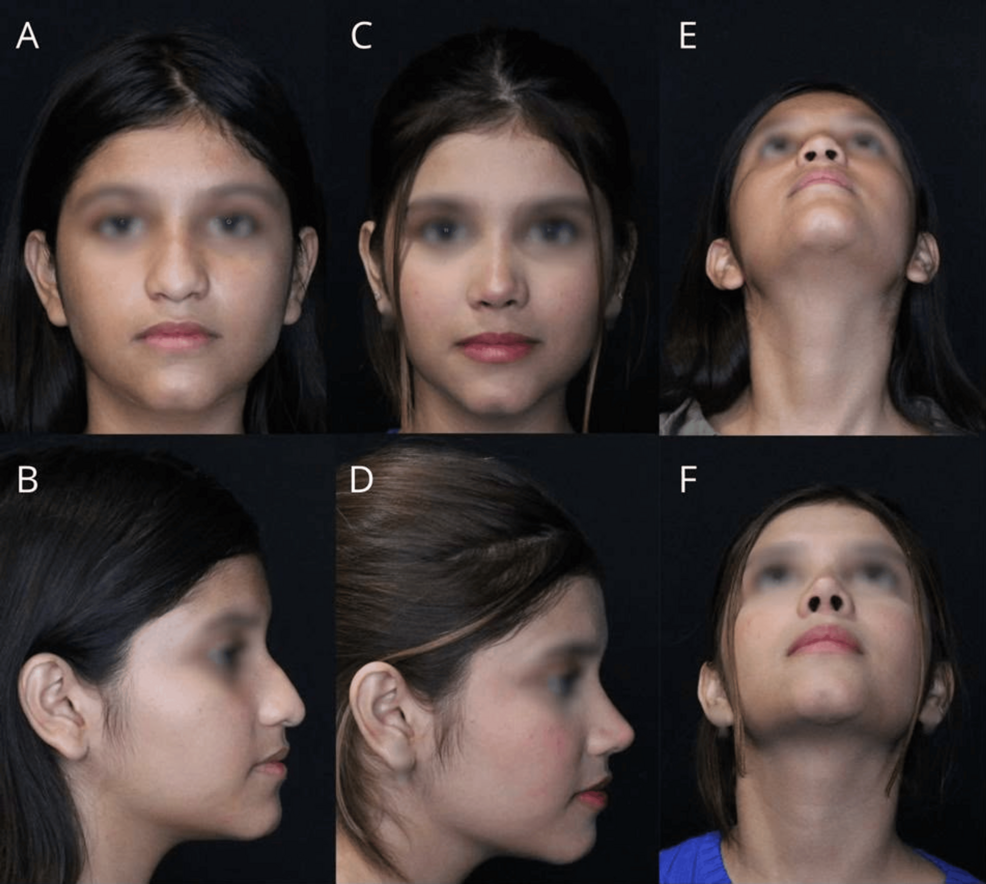
Postoperative evaluations across the 226 consecutive cases, with follow-up durations spanning eight months to three years, demonstrated positive qualitative results in soft-tissue redraping. Patients exhibiting thin, intermediate, and thick skin maintained stable columellar and infratip contours without major technique-related complications during the available follow-up windows. These observations relied on clinical assessment and two-dimensional photographic documentation, including basal views that captured the infratip-columellar relationship. Rohrich et al. previously emphasized that controlling the space between skin and framework remains vital in structural rhinoplasty, a principle addressed directly by incorporating this autologous vascularized soft-tissue coverage.