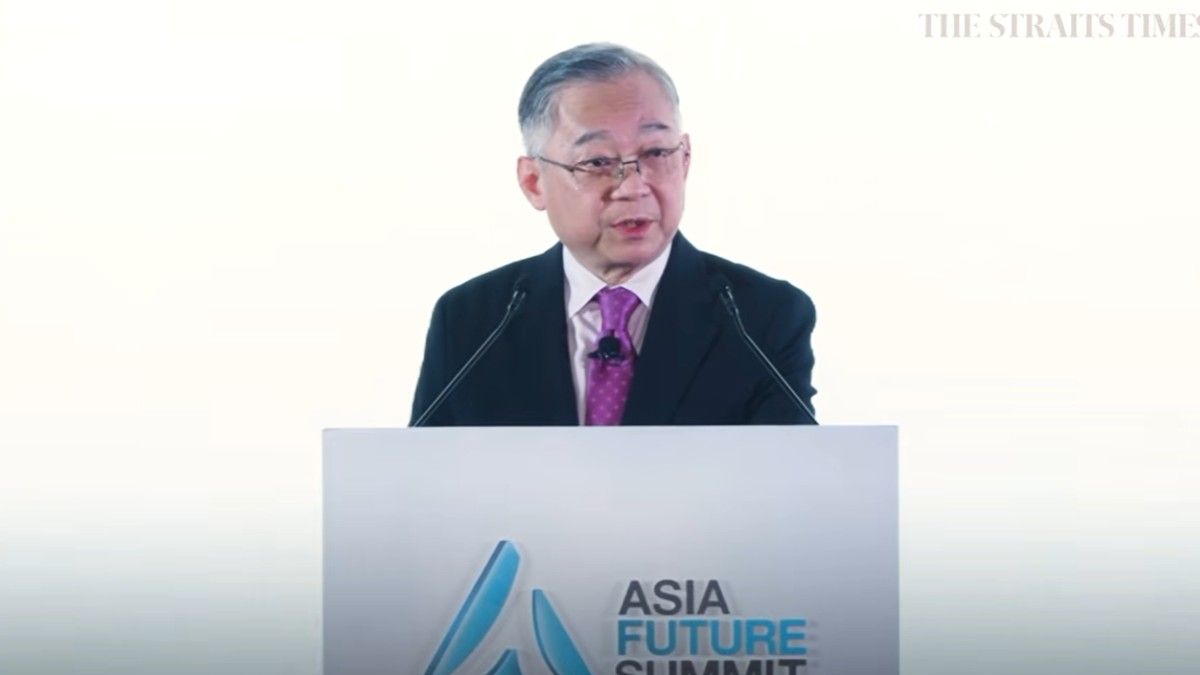
DPM Gan: ASEAN Must Counter Economic Nationalism With Deeper Integration, Wider Partnerships
“ASEAN must counter rising economic nationalism with deeper integration and wider partnerships,” said Deputy Prime Minister Gan Kim Yong on Friday. Speaking at the Asia Future Summit 2026, the Singaporean minister warned that regional economies must resist the urge to turn inward as global trade contends with rising tariffs and supply chain fractures, according to channelnewsasia.com.
While he acknowledged that governments worldwide are increasingly prioritizing self-sufficiency and control over critical industries, he cautioned that erecting barriers between member states would ultimately stifle collective development, 联合早报 reported. Gan pointed to artificial intelligence, geopolitical shocks, and geo-economic competition as the primary engines of modern protectionism. Despite these headwinds, he said that ASEAN economies demonstrated resilience with growth of nearly 5% last year. He argued the region must remain a functional bridge for trade and investment, even as the United States and China intensify their competition, The Online Citizen noted. Telkomsel executive Wong Soon Nam questioned whether Singapore risks being a “gentlemen playing the trust game” while other nations prioritize domestic interests above international commitments, Mothership reported. Wong suggested this dynamic creates frustration among citizens who perceive the nation as being overly deferential. Gan defended the government’s stance, drawing a line between maintaining diplomatic trust and safeguarding national priorities.
“We need to maintain our principles. We need to preserve our interests. At the same time, we mustn’t also become like the other side,” he said. He insisted that Singapore will not offer concessions at any price, nor will it mimic the behavior of nations that break their word. To stabilize the regional framework, an upgraded ASEAN Trade in Goods Agreement is scheduled for release at the end of 2026.
According to The Straits Times, the update aims to provide businesses with more predictable rules and streamlined procedures. Singapore will assume the rotating ASEAN chairmanship in 2027, a year that also marks the organization’s 60th anniversary.
The Prime Minister’s Office Singapore said that the 10 member nations remain highly diverse, a reality that necessitates significant trade-offs during negotiations. Gan reiterated that while ASEAN remains committed to building partnerships, it must remain prepared to walk away from agreements if the cost becomes too high.
Global Power Competition
During the summit, Gan noted that ASEAN countries have faced two years of energy supply disruptions and significant global trade uncertainty. He observed that governments are increasingly emphasizing control over critical capabilities to protect jobs and secure essential supplies. “ASEAN countries cannot determine how major powers manage their differences,” he added.
The Deputy Prime Minister, who also serves as Minister for Energy, Trade and Industry (Trade), emphasized that the United States and China remain vital to regional growth, and that Singapore must continue to develop relationships with both nations despite ongoing tariff pressures.
Principles of Negotiation
Addressing questions regarding diplomatic strategy, Gan remarked, “We are not going to kowtow to any country.” He explained that while he agreed with the need for trust, he disagreed with the suggestion that Singapore should abandon its principles simply because other nations might prioritize their own domestic needs above international agreements.
The minister highlighted that every negotiation requires trade-offs, stating, “What are you prepared to put on the table for negotiation?” He further emphasized the necessity of being ready to walk away when the price demanded is too high. Beyond the upcoming ASEAN Trade in Goods Agreement, negotiations to upgrade trade pacts with South Korea and Canada remain underway, providing the bloc with additional avenues to reduce exposure to external shocks.
The Association of Southeast Asian Nations (ASEAN) began with the signing of the ASEAN Declaration by five countries on 8 August 1967. While originally established to contain communism, the intergovernmental forum of 11 states has since reoriented toward economic development and peaceful coexistence. To manage regional commerce, the organization utilizes structures such as the ASEAN Free Trade Area.