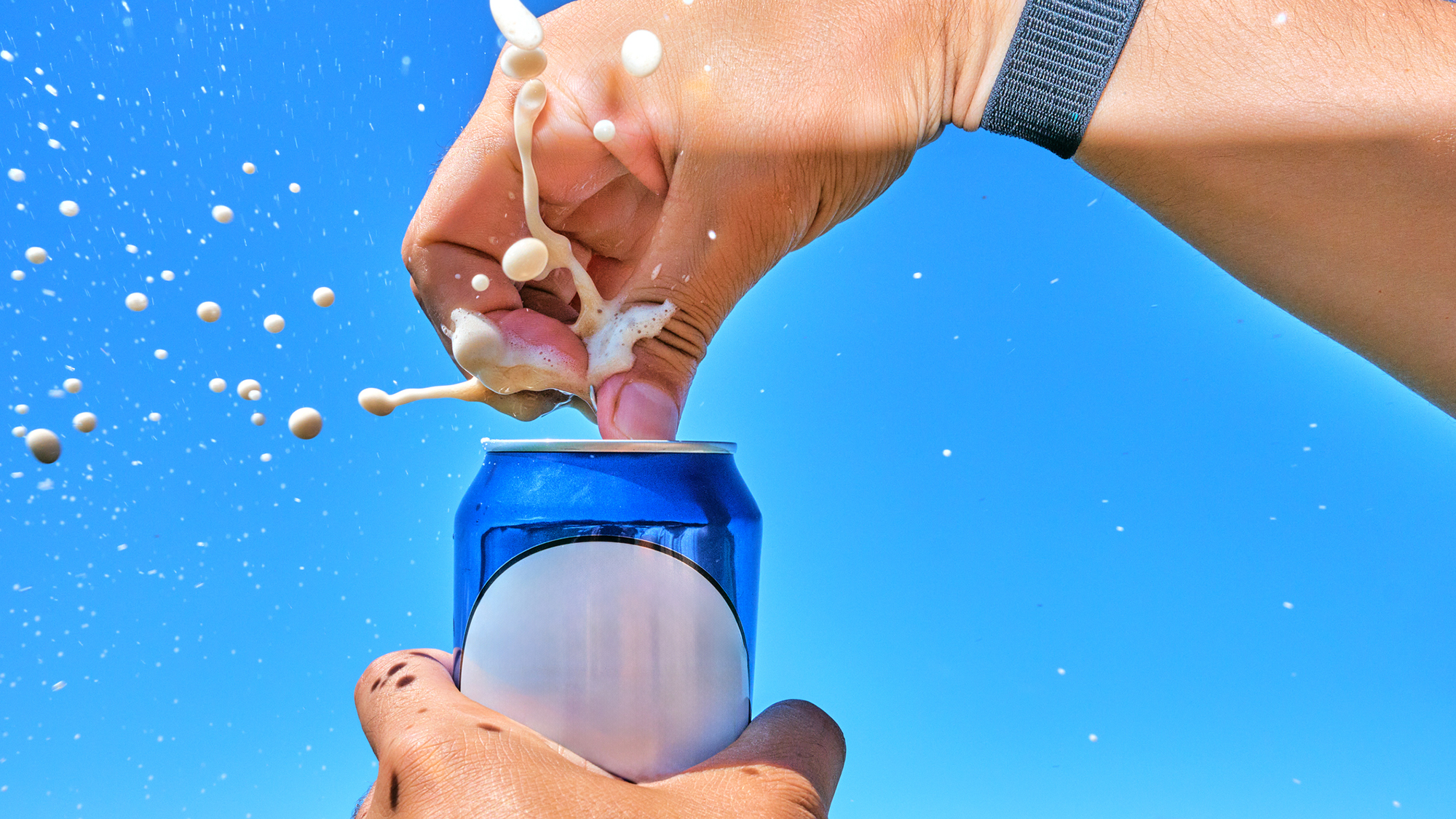
Does Tapping a Soda Can Actually Prevent It From Exploding?
Tapping a soda can before opening it is a widely practiced technique intended to prevent liquid from spraying upon depressurization. While the practice is common, scientific analysis of fluid mechanics suggests that the efficacy of this method is minimal at best, and that time remains the only verified factor in stabilizing carbonated beverages after physical agitation.
Key Takeaways:
- Tapping a can does not statistically reduce liquid loss after agitation, according to experimental data.
- Physical agitation creates nucleation sites where carbon dioxide bubbles rapidly expand upon opening.
- The most effective method for preventing spillover is allowing the container to rest for several minutes or opening the tab slowly to permit controlled gas release.
The Physics of Carbonation and Nucleation
Carbonated beverages are created through the process of supersaturation, where carbon dioxide is injected into liquid under high pressure and low temperature. Roberto Zenit, a professor of engineering at Brown University, explains that this state is inherently unstable. When a container is shaken, the mechanical force generates pressure waves that rebound off the interior walls, creating low-pressure zones that facilitate bubble formation.
These bubbles often form at nucleation sites—tiny imperfections such as dust particles or microscopic surface irregularities on the interior of the can. Javier Rodríguez Rodríguez, an associate professor of fluid mechanics at Carlos III University of Madrid, notes that these bubbles typically require minutes to dissolve back into the liquid. If a container is opened while these bubbles are suspended, the sudden drop in internal pressure causes rapid expansion, resulting in the “geyser” effect commonly observed.
Evaluating the Efficacy of Tapping
The theory behind tapping suggests that flicking the sides of a can dislodges bubbles clinging to nucleation sites, allowing them to rise into the headspace above the liquid. While this is physically plausible, empirical evidence casts doubt on its practical utility. A 2019 preprint study involving 1,031 beer cans compared four variables: shaken/tapped, shaken/untapped, unshaken/tapped, and unshaken/untapped. Researchers concluded there was no statistically significant difference in fluid loss between the tapped and untapped groups.

Kit Yam, a food scientist at Rutgers University, emphasizes that while beer and soda possess different compositions, the lack of significant variance in such a large sample size suggests that tapping is not a reliable solution. Furthermore, aggressive or repeated tapping may inadvertently introduce more agitation, potentially counteracting any benefit.
Practical Recommendations for Pressure Management
Rather than relying on mechanical percussion, experts recommend thermal and temporal management. Carbon dioxide remains more effectively dissolved in liquid at lower temperatures. Placing a disturbed container in a refrigerator for approximately 30 minutes allows the system to return to equilibrium.

If immediate consumption is required, the most effective approach is a controlled release of pressure. By opening the tab slowly, the gas can escape through a narrow aperture rather than forcing the liquid out in a rapid surge. Ensuring proper storage temperatures is the standard of care to mitigate product loss.