
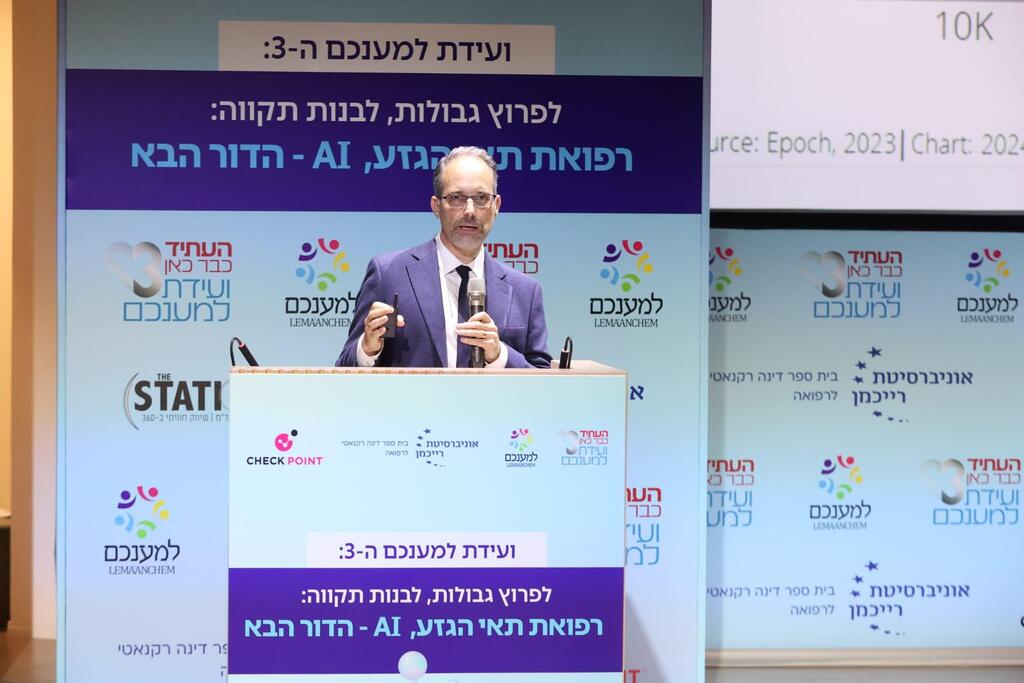
Doctors risk Malpractice by Ignoring AI in Imaging,Conference Warns
TEL AVIV – Physicians who fail to adopt artificial intelligence (AI) tools in medical imaging could increasingly face malpractice claims,a leading expert warned at a recent healthcare innovation conference. Dr. Michal Feinmesser, director of the radiology department at Rabin Medical Center, stated that AI’s integration into medical practice is rapidly approaching, with potential to considerably improve accuracy, efficiency, and patient outcomes. “Today it may still sound like science fiction,” she said, ”but within a decade at most, AI will become an integral part of medical practice.”
The shift towards AI-assisted diagnostics isn’t merely a technological upgrade; it’s a potential standard of care. As AI algorithms demonstrate superior performance in detecting subtle anomalies in scans, doctors who continue to rely solely on traditional methods may be held liable for missed diagnoses. This emerging landscape impacts all medical professionals utilizing imaging – radiologists, oncologists, cardiologists, and others – and underscores the urgent need for widespread AI adoption and training.
Beyond imaging, the conference highlighted AI’s expanding role in other areas of healthcare. Shahar Karny, co-founder and CEO of PhenoTA, and Prof. Yuval Ebenstein, professor of chemistry and biomedical engineering at Tel Aviv University and founder of Jaxbio, discussed AI’s contributions to enhancing the precision and success of blood test analysis.
The conference also featured praise for its chairman, Yossi Erblich, from Maj. Gen. (res.) Yohanan Locker, chairman of Clalit Health Services.”Anyone who knows Yossi Erblich wouldn’t be surprised that this conference has become so central and influential in such a short time,” Locker said. “I salute you for your scholarship contributions to students during the war.”
Dr. Gadi Neuman, vice president of Lema’anchem and head of its Research and Innovation division, noted the organization receives approximately 30,000 inquiries annually and recently expanded services to include a new mental health counseling department with in-person support. He expressed pride in Lema’anchem’s commitment to promoting medical innovation and anticipating future healthcare trends.
