
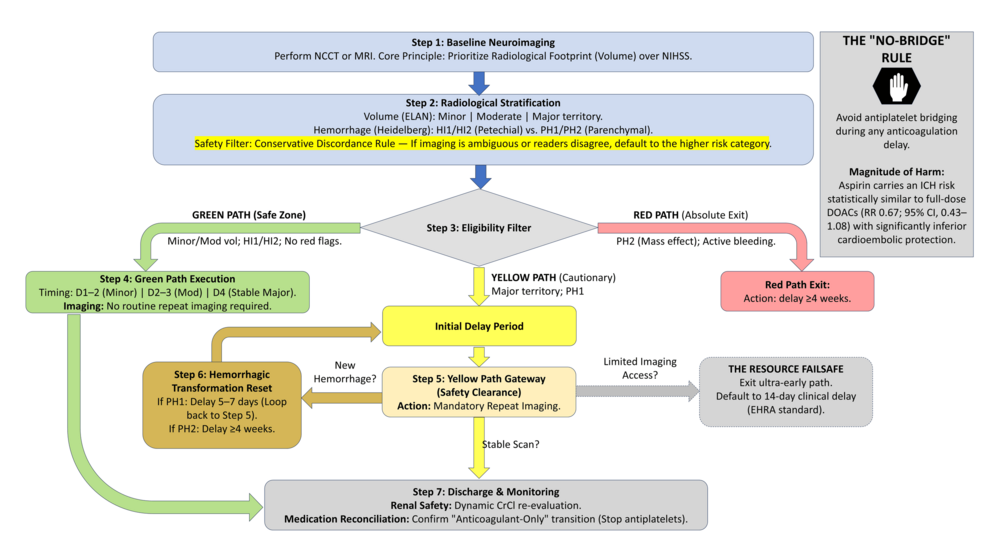
DOAC Timing After Stroke: Atrial Fibrillation Protocol & Safety
Early initiation of direct oral anticoagulants (DOACs) within four days of an ischemic stroke in patients with atrial fibrillation (AFib) significantly reduces the risk of subsequent stroke events, according to results from the CATALYST trial published in The Lancet. The meta-analysis, encompassing data from over 5,400 patients, demonstrated a 30% reduction in the composite outcome of recurrent ischemic stroke, symptomatic intracerebral hemorrhage, or unclassified stroke when DOACs were started within four days compared to those initiated five or more days after the stroke.
The CATALYST trial, a prospective individual participant data meta-analysis, pooled data from four randomized controlled trials – TIMING, ELAN, OPTIMAS, and START – examining the optimal timing of anticoagulation. Researchers found the primary composite outcome occurred in 2.1% of patients receiving early DOAC initiation versus 3.0% of those receiving later initiation (odds ratio 0.70, p=0.039). This translates to a number needed to treat of 108 to prevent one primary outcome event.
Specifically, the risk of recurrent ischemic stroke was lowered with early DOAC leverage, occurring in 1.7% of the early initiation group compared to 2.6% in the later initiation group (odds ratio 0.66, p=0.029). Importantly, the study found no statistically significant increase in symptomatic intracerebral hemorrhage with early DOAC treatment (0.4% vs. 0.4%, odds ratio 1.02, p=0.96), addressing a key safety concern.
The analysis included 2,691 patients who began DOACs within four days of their stroke and 2,750 who started them five or more days later. The majority of patients (75%) experienced mild-to-moderate stroke severity. The benefit of early initiation remained consistent across different stroke severities, reperfusion status, and prior anticoagulation use.
Even as the 30-day results are significant, the primary composite outcome at 90 days did not reach statistical significance (3.10% vs 3.51%, odds ratio 0.88, p=0.40). All-cause mortality at both 30 and 90 days also showed a trend towards lower rates with early DOAC initiation, but these differences were not statistically significant (3.68% vs 4.36% at 30 days, p=0.19; 7.41% vs 7.57% at 90 days, p=0.86).
The findings address a long-standing clinical dilemma regarding the optimal timing of anticoagulation after acute ischemic stroke in patients with AFib, a population at high risk for both stroke recurrence and bleeding complications. Previous pivotal DOAC trials had excluded patients with recent acute ischemic stroke, leaving a gap in evidence-based guidance. The CATALYST trial provides a robust dataset to inform clinical practice.
Researchers have not yet issued updated guidelines based on the CATALYST findings. Further investigation is planned to determine the long-term effects of early DOAC initiation and to identify patient subgroups who may benefit most from this approach.