
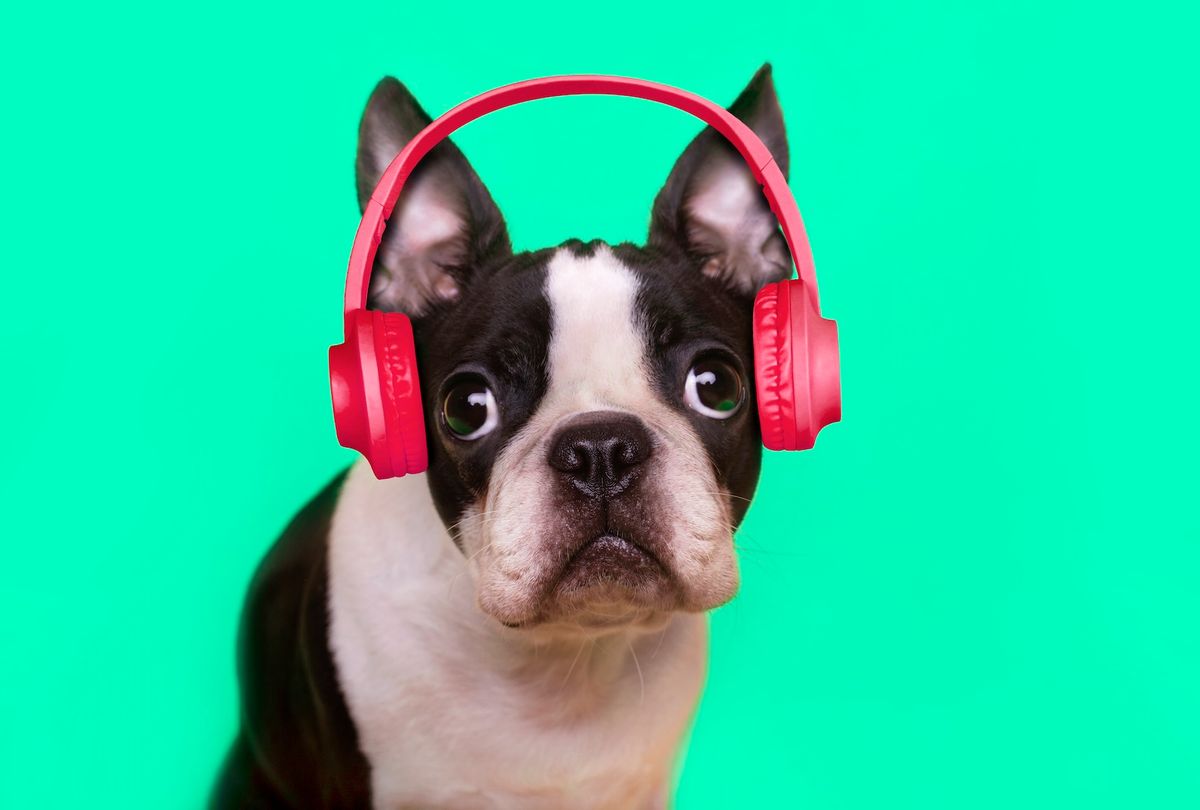
Do Animals appreciate Music? Exploring the Evolutionary Roots
New research suggests that the ability to appreciate and synchronize with music may not be unique to humans, offering insights into the origins of musicality.
A Dancing Sea Lion and the Mystery of Musicality
Ronan, a sea lion, has captured the attention of scientists with her ability to dance to various songs, particularly enjoying Boogie Wonderland
by earth, Wind and Fire.
Peter Cook, a marine mammal sciences professor at the New College of Florida, trained Ronan to bop her head to music using fish as a reward. Once that clicked,she could do it 60 times in a row within a couple of days,
Cook said.
Ronan’s ability extends beyond simple beats. She can synchronize with music recorded live, featuring natural fluctuations, complex instrumentation, and syncopation. She enjoys Earth, Wind and Fire, the Backstreet Boys, and other rock songs.
Once she understood the task, she seemed to be able to transfer that knowledge over to even complex musical types of stimuli, which do have things like meter. The thing is, we’re just not sure how she thinks about or understands things like meter, syncopation or anything like that.
Peter Cook, Marine Mammal Sciences Professor, New College of Florida
Challenging the Human-Centric View
Historically, it was believed that only humans could recognize and move to an external beat.Though, Snowball the cockatoo gained fame in 2007 for dancing to the rhythm of the Backstreet Boys, followed by Ronan the sea lion in 2013.
These cases contribute to a growing field of research exploring musicality in animals, seeking clues about the evolution of music in humans.
Darwin’s Hypothesis and the Fossilization Problem
In 1871, Charles Darwin proposed that the perception, if not the enjoyment, of musical cadences and of rhythm is probably common to all animals.
He suggested that if music provides pleasure, it likely serves an evolutionary purpose, potentially shared among animals with a common ancestor.
Henkjan Honing, a professor of Music Cognition at the University of amsterdam, highlights the challenge in studying the origins of musicality: Music doesn’t fossilize.
He suggests that cross-species work is a way of resolving that problem because the assumption is that if you share a certain trait with a genetically close species,then the common ancestor might also have had that particular skill.
Defining Music and animal Experience
All animals create rhythms, from fireflies flashing to birds chirping and tigers pacing. While some rhythms are physiological, like walking or heartbeats, defining music remains subjective. It is unclear whether animals experience music as music or if humans project their own experiences onto them.
We don’t know if animals experience music as music, or if that is our own human experience we are projecting onto them.
Chimpanzee drumming and Musicality
A study observed distinct drumming patterns in eastern and western chimpanzees, suggesting communication rather than music.Vesta Eleuteri, a researcher at the University of Vienna, noted that while some chimpanzees drum with isochrony [occurring simultaneously occurring], but we didn’t find evidence of other core musical rhythms that are present in humans.
Musicality generally implies control over rhythm and flexible use. Identifying pitch relationships and synchronizing to beats are key indicators of musical ability.
Human Children and Beat Synchronization
Human children can synchronize to beats before walking or talking, but it’s unclear if this ability is innate or learned. While synchronization improves with age, suggesting social learning, a 2009 study found rhythmic pattern detection in babies as young as seven months old,indicating potential innate functionality.
Ronan’s Superior Beat Synchronization
A study showed Ronan the sea lion outperforming adult humans in synchronizing to a beat. Despite training sessions providing fish nonetheless of synchronization, Cook believes Ronan voluntarily moves to the beat, possibly motivated by mastering a task.
I think she enjoys the cognitive challenge and the chance to sort of master something and then practice that mastery. I just don’t know if it’s about groove the way it is with humans.
Peter Cook, Marine Mammal Sciences Professor, New College of florida
Primates and Vocal Learning
Studies by Yuko Hattori at kyoto University’s Primate Research Institute show that chimpanzees can synchronize their movement to a variety of rhythms. Similar results were found in a study with a bonobo.
While primate movements are less precise than humans, the vocal learning hypothesis suggests that human beat synchronization stems from vocal learning. The monkeys are a more distant evolutionary distant species, and so perhaps that ther is some gradual progress in the course of primate evolution,
Hattori said.
Sea Lions, Seals, and Vocal Learning
The vocal learning hypothesis raises questions about Ronan’s ability, as sea lions don’t naturally adapt calls to external stimuli, unlike seals. Though, seals and sea lions share an evolutionary root more than 20 million years up the ancestral tree, suggesting a potential link to vocal learning.
Brain Scans and Zebra Finches
Ethical concerns limit brain scans of chimpanzees and sea lions. Studies on zebra finches, however, offer insights into why thay sing. Zebra finches learn songs from others, indicating learning and internalization related to music.
A 2017 study by Ofer Tchernichovski at Hunter College found that male zebra finches were willing to endure an unpleasant air puff to hear any song,while females only sought their mate’s song,which increased dopamine levels. What we think is that for females, the song is really about sex, whereas for male zebra finches, it’s more social,
Tchernichovski said.
Dopamine and Musicality
A study found increased dopamine activity in young zebra finches when singing songs closer to their adult versions. Male zebra finches also “self-evaluate” their songs, with better songs activating the dopamine system more. However, when singing for females, their dopamine system is activated by a social response based on cues from the female.
Studies show that the dopamine system in humans is also activated when listening to music. A study found dopamine system activation in anticipation of listening to favorite music.
Social Bonding and musicality
Musical training in adolescence increases empathy and prosocial behaviors. A 2014 study found infants were more likely to help someone if rocked synchronously.
One of the theories that is crucial for the origins of musicality is that it might very well be a way of social bonding, of increasing the social cohesion of the group,
Honing said. You see the same thing with Snowball: He likes to dance when his owner is there … She always dances with him,and that’s what the bird likes.
Enjoyment is the key,
Honing added. If you get pleasure out of something, that means it’s important biologically, so it might be an adaptation.
Frequently Asked Questions
- Q: Can animals recognize and move to a beat?
- A: Yes, research suggests that some animals, like sea lions and cockatoos, can recognize and synchronize with external beats.
- Q: What is the significance of animals enjoying music?
- A: If animals derive pleasure from music, it suggests a biological importance and potential evolutionary adaptation.
- Q: How do scientists study musicality in animals?
- A: Scientists use cross-species comparisons,behavioral observations,and neurological studies to understand musicality in animals.
- Q: What role does dopamine play in musicality?
- A: dopamine is activated in the brain when listening to or creating music, suggesting a link between pleasure and musicality.
- Q: Does musical training have any benefits?
- A: Yes, studies show that musical training can increase empathy and prosocial behaviors.
