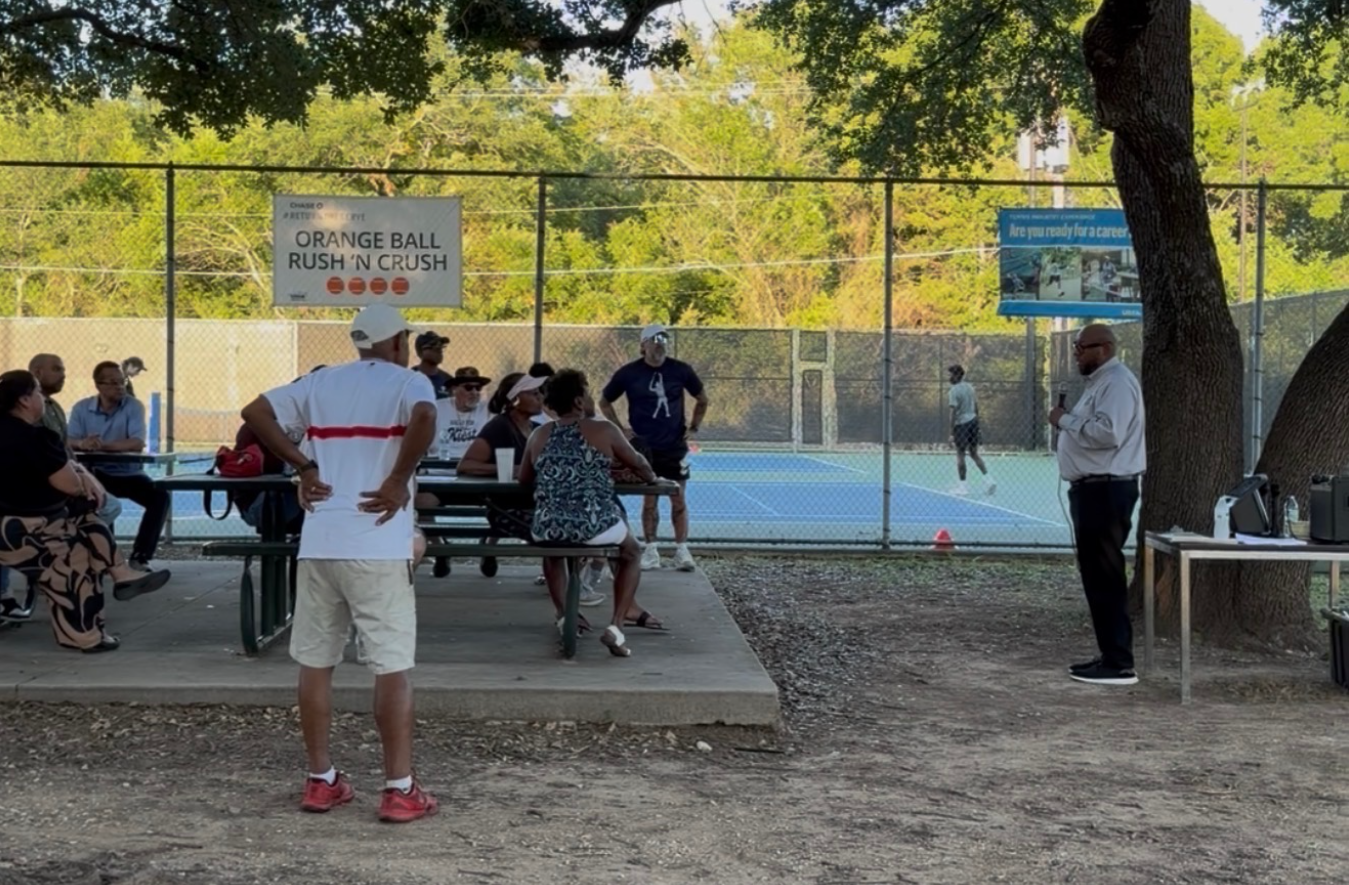
District 4 Council Member Maxie Johnson Addresses Community at Tennis Courts Meeting
District 4 council member Maxie Johnson met with community advocates on June 22, 2026, to address public opposition regarding the proposed commercial redevelopment of the Kiest Tennis Center in Dallas. Residents argue the privatization of the facility threatens affordable access, while city officials weigh the potential for increased tax revenue and infrastructure modernization.
The Financial Mechanics of Municipal Asset Liquidation
The push to redevelop the Kiest Tennis Center mirrors a broader trend in municipal sports administration where cities attempt to offset rising maintenance costs through private-public partnerships. According to the City of Dallas Office of Budget and Management, aging recreational facilities often carry significant deferred maintenance liabilities that strain the general fund. By shifting these assets to private developers, the city aims to eliminate these operational deficits.

However, the transition from public utility to commercial venue often triggers a shift in the local “cost of play.” When municipalities offload these assets, the resulting business model typically prioritizes high-yield membership fees over open-access programming. For local youth athletic programs, this creates a barrier to entry. Families and community coaches seeking to maintain competitive training environments must often look toward private youth athletic programs and facilities that operate independently of city-owned real estate to ensure consistent court time.
Evaluating the Return on Investment
The economic argument for redevelopment relies on projected increases in property tax assessments and the potential for ancillary revenue from hospitality and tournament-grade amenities. Analyzing the National Bureau of Economic Research data on stadium and arena financing, the “halo effect” of such developments frequently fails to materialize for the surrounding neighborhood unless specific community benefit agreements are strictly codified. Without these protections, the displacement of public space can lead to a net loss in social capital.

| Metric | Public Facility Model | Commercial Development Model |
|---|---|---|
| Operational Funding | Tax-subsidized | Private Equity / Debt |
| Access Priority | Open/Community | Membership/Tiered |
| Maintenance Responsibility | Municipal Parks Dept | Private Management Firm |
| Primary Objective | Public Health | ROI/Yield |
The financial risk for the city involves the potential for a “dead-cap” style scenario, where public money is tied up in infrastructure that no longer serves the public interest, yet fails to generate the promised commercial revenue. As seen in other major markets, once a facility is privatized, re-securing public access after a contract term ends is legally and logistically complex. Organizations navigating these transitions often rely on specialized sports contract lawyers to ensure that public access quotas are protected during the negotiation phase.
Tactical Impact on Local Athletic Ecosystems
The displacement of a hub like Kiest Tennis Center impacts more than just recreational play; it disrupts the regional pipeline for competitive tennis. High-level performance requires consistent access to specific court surfaces and training environments. When a facility undergoes a change in management or physical footprint, local athletes face a “load management” crisis—they are forced to travel longer distances, increasing the physical toll and financial burden on families.
“The value of a community tennis center isn’t found in the balance sheet of the developer, but in the recurring utilization rates of the youth programs. Once you raise the price floor to maximize revenue, you effectively prune the bottom 40% of the talent pool due to simple economic exclusion,” notes a regional athletic director familiar with municipal sports infrastructure.
For athletes who experience increased physical strain due to shifting training environments or suboptimal surfaces, the risk of injury rises. It is imperative for local clubs to partner with sports medicine and rehabilitation clinics that understand the specific biomechanical demands of tennis, particularly regarding lateral movement and repetitive stress injuries. Ensuring that these medical networks are accessible during the transition period is a critical oversight often missed by municipal planners.
The Path Forward for District 4
As the city council weighs the proposal, the primary tension remains the trade-off between fiscal efficiency and equitable access. The current data from the United States Tennis Association underscores that participation rates remain highest in areas with low-cost, high-frequency access points. If the city proceeds with the Kiest redevelopment, the challenge will be to integrate a “community-first” clause that mandates a percentage of hours reserved for public use at current rates.

Without such protections, the city risks alienating the very demographic that utilizes the facility most consistently. Stakeholders, including neighborhood associations and local business owners, are currently organizing to demand a transparent breakdown of the projected revenue versus the social cost of losing a central hub. Whether the city prioritizes long-term fiscal stability or the immediate needs of its tennis community will dictate the future of District 4’s recreational landscape.
Disclaimer: The insights provided in this article are for informational and entertainment purposes only and do not constitute medical advice or sports betting recommendations.