
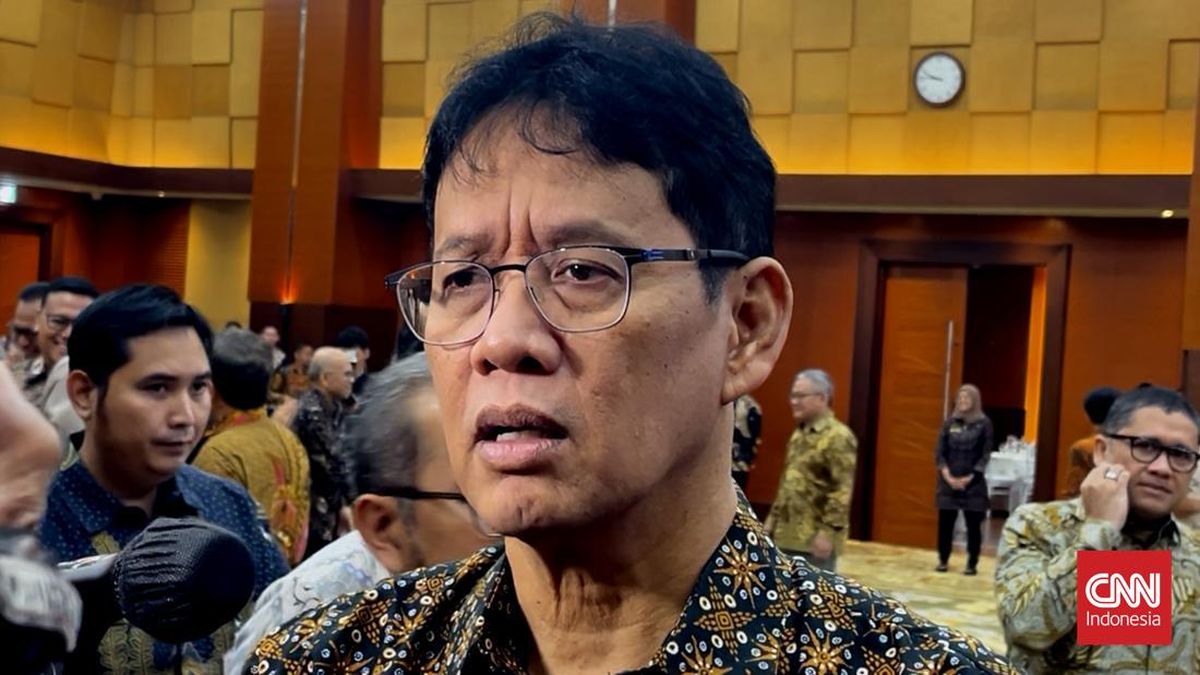
Direstui Prabowo, Purbaya Ungkap Bea Batu Bara Bisa Berlaku 1 April
Indonesia’s Finance Ministry has secured presidential endorsement from Prabowo Subianto to implement export duties on coal and nickel, targeting an April 1, 2026, effective date. Finance Minister Purbaya Yudhi Sadewa confirmed the fiscal measure aims to capture state revenue from elevated commodity prices, specifically citing thermal coal trading above US$135 per ton. While the tariff rate awaits final inter-ministerial technical ratification, the policy signals an aggressive shift in Jakarta’s resource nationalism strategy, forcing immediate recalibration of export margins and supply chain logistics for multinational mining conglomerates.
The fiscal landscape for Indonesia’s extractive industries is about to tighten. Minister Purbaya’s confirmation that President Prabowo has approved the specific tariff figures marks the end of speculation and the beginning of a complex compliance phase. This is not merely a tax adjustment; This proves a structural intervention designed to leverage current market highs for state coffers while potentially accelerating the domestic hilirisasi (downstreaming) agenda. For the C-suite of major miners, the immediate problem is margin compression. With thermal coal benchmarks hovering near multi-year highs, the government views the surplus profit as taxable windfall, yet for operators, every basis point of new duty erodes the bottom line.
Market participants must now pivot from lobbying to logistical restructuring. The window for operational adjustment is narrowing, with the technical finalization scheduled for late March. This creates an urgent demand for specialized international trade compliance and tax advisory firms capable of modeling the impact of the new levy on net realized prices. The complexity lies not just in the rate, but in the interaction with existing royalties and the potential revision of the Rencana Kerja dan Anggaran Biaya (RKAB), the annual work plan and budget that dictates production caps.
The Fiscal Mechanics of Resource Nationalism
Purbaya acknowledged that industry pushback is inevitable, noting bluntly that operators “certainly won’t agree” with the new costs. Yet, the government’s calculus relies on the inelasticity of demand in the short term and the sheer profitability of the sector at current price levels. By anchoring the policy to a price threshold—implicitly acknowledging the US$135 mark—the state is effectively installing a variable fiscal regime that activates when margins exceed a certain comfort zone. This mirrors similar mechanisms seen in Chile’s copper windfall taxes or Australia’s resource rent discussions, though Jakarta’s execution tends to be more abrupt.

The technical nuance here is critical. While the President has set the “number,” the Ministry of Energy and Mineral Resources (ESDM) retains the leverage on production quotas. Purbaya hinted that the RKAB for 2026 could be altered. For investors, this introduces a dual-risk scenario: higher costs per ton and potentially lower volume ceilings. Navigating this regulatory matrix requires more than general counsel; it demands specialized government relations and regulatory affairs consultants who understand the friction between the Finance Ministry’s revenue targets and ESDM’s production mandates.
“The imposition of export duties on thermal coal at this price point is a direct transfer of value from shareholder returns to state revenue. We are seeing a classic resource nationalist play where the fiscal regime becomes variable based on commodity cycles. Companies without hedged positions or diversified downstream assets will notice immediate EBITDA pressure.”
Industry sentiment reflects this anxiety. While specific reactions to the April 1 announcement are still forming, institutional analysts note that Indonesia’s coal sector has already priced in significant regulatory risk. The move to formalize the duty removes ambiguity but solidifies the cost burden. According to data from the Ministry of Energy and Mineral Resources, Indonesia remains the world’s largest thermal coal exporter. Any friction in this flow ripples through the Asian energy grid, affecting utilities in India, China, and Japan that rely on Indonesian calorific value specifications.
Three Structural Shifts for Q2 2026
The implementation of these duties will not happen in a vacuum. It coincides with a broader global tightening of carbon constraints and shifting energy security paradigms. Based on the trajectory outlined by the Finance Ministry, three distinct market adjustments are imminent for the upcoming fiscal quarter:
- Supply Chain Re-routing: Exporters may accelerate shipments prior to the April 1 deadline to lock in pre-duty pricing, creating a temporary glut in Q1 followed by a supply shock in Q2. Logistics providers specializing in maritime freight and bulk cargo optimization will be critical in managing this inventory spike.
- Contract Renegotiation: Long-term offtake agreements priced on FOB (Free on Board) Indonesia terms will need immediate review. Buyers will attempt to pass the duty cost back to miners, while miners will cite force majeure or regulatory change clauses. This legal friction will drive demand for contract arbitration services.
- Downstream Investment Acceleration: To avoid export duties entirely, miners may fast-track domestic smelting or processing projects. The fiscal penalty on raw exports serves as a blunt instrument to force capital expenditure into domestic infrastructure, aligning with President Prabowo’s broader economic sovereignty goals.
The technical finalization meeting scheduled for late March is the linchpin. If the government misses the April 1 target due to bureaucratic inertia, market uncertainty will spike, potentially freezing spot market activity. However, Purbaya’s confidence suggests the political will is solidified. The “number” is decided; only the mechanics remain. For the private sector, the era of passive extraction is ending. The new fiscal reality requires active management of regulatory risk.
As the April deadline approaches, the divergence between compliant, diversified majors and smaller, export-dependent miners will widen. The former will absorb the cost through hedging and downstream integration; the latter will face existential margin threats. This environment favors consolidation and strategic advisory. Companies seeking to maintain liquidity and navigate the new RKAB constraints should engage with M&A and corporate restructuring specialists to evaluate defensive positions. The World Today News Directory tracks the vetted partners capable of steering capital through these fiscal storms, ensuring that when the tax man comes, the balance sheet remains intact.