
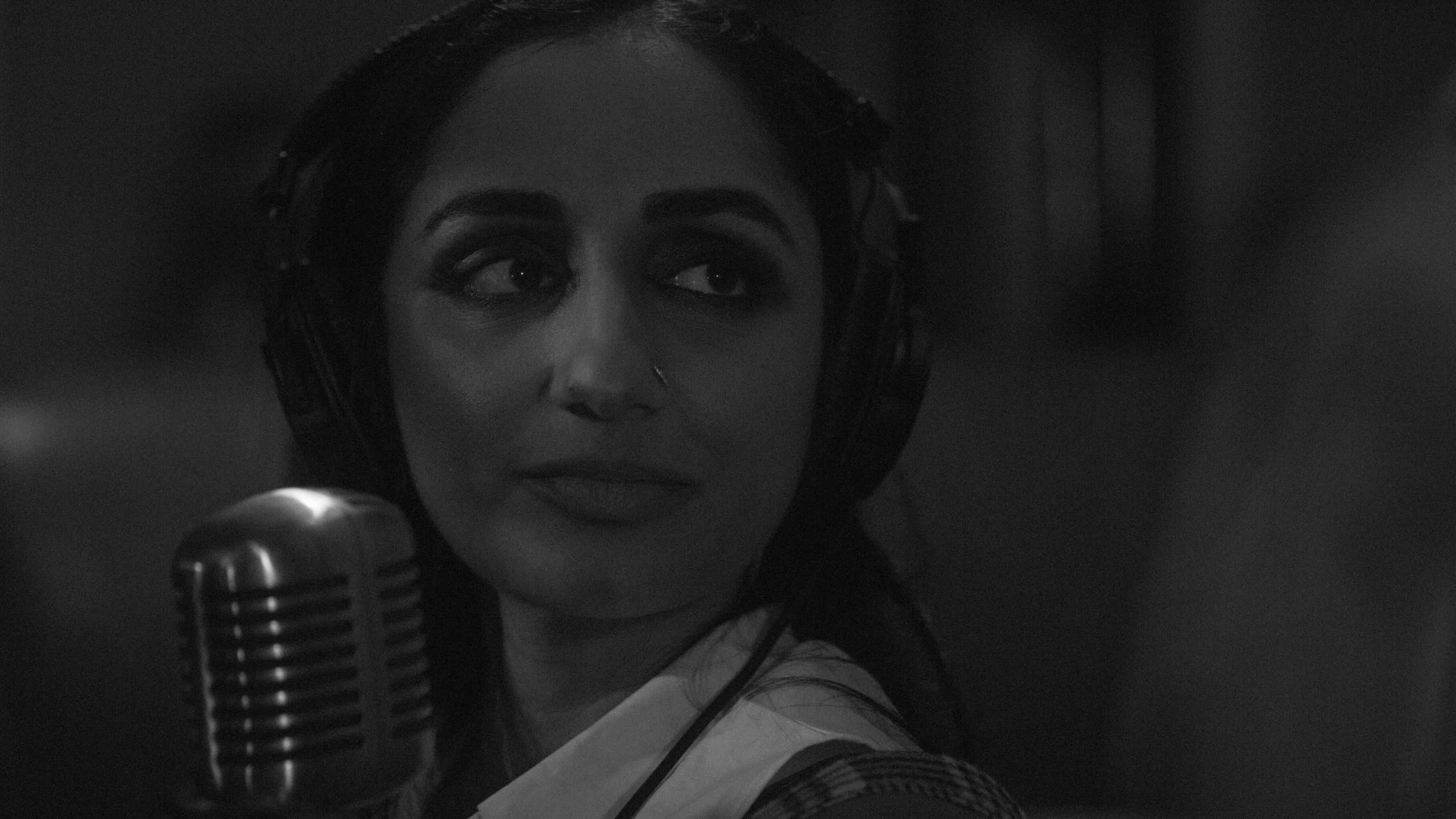
Director Meera Menon Discusses Didn’t Die at 2025 Sundance Film Festival
Meera Menon premieres her guerrilla-produced zombie drama Didn’t Die at the 2025 Sundance Film Festival, contrasting sharp industry consolidation with intimate storytelling. While Disney reshuffles executive suites, Menon leverages family networks and micro-budget tactics to navigate a volatile acquisition market, proving independent IP remains viable despite streaming volatility.
The Guerrilla Economics of Grief
The industry calendar is rarely kind to the independent creator. As Dana Walden unveils a restructured Disney Entertainment leadership team spanning film, TV, and games, the message from the top is clear: consolidation is king. According to recent reporting on Walden’s new leadership structure, the major studios are circling the wagons, prioritizing established franchises over risky original IP. Yet, here stands Meera Menon, operating outside that fortress wall. Her latest feature, Didn’t Die, arrived at Sundance not with a marketing war chest, but with a text message chain. Menon cast collaborators directly, bypassing agents and reps, turning a residential home into a production studio. This isn’t just artistic purity. It’s a financial necessity. In a landscape where arts and media occupations face increasing precariousness, Menon’s model cuts out the middleman to preserve creative control.
The production budget was bare minimum, relying on favors and backyard shots. This approach solves a specific liquidity problem for indie producers: cash flow. By eliminating standard overhead, Menon retained equity that would otherwise vanish into guild minimums and agency fees. However, this lean methodology introduces significant liability. When a production operates without traditional buffers, every accident becomes a potential lawsuit. Menon revealed that during filming, a drunk driver crashed into the fence of their location hours after a scene was shot there. In the studio system, this triggers an immediate call to entertainment liability attorneys and risk management firms. For Menon, it was a spiritual omen. The distinction matters. One protects the balance sheet; the other protects the soul of the film.
Intellectual Property and the Family Trust
Menon’s process blurs the line between personal legacy and commercial product. She notes that filmmaking is about family, citing her father’s history of organizing screenings for Kerala immigrants in the 1970s. Now, she casts her own daughter. While emotionally resonant, this creates a complex chain of title. When family members perform in a feature intended for commercial distribution, standard employment contracts often fail to cover future syndication or SVOD residuals.
“The indie market is hungry for content, but buyers are terrified of unclear rights. If you mix family and finance without proper legal scaffolding, you kill the deal before it starts.”
This insight from a senior acquisition executive highlights the hidden friction in Menon’s model. To monetize Didn’t Die beyond the festival circuit, the production requires rigorous intellectual property legal counsel to ensure that familial goodwill doesn’t transform into contractual ambiguity during backend negotiations.
The film’s thematic core draws from Viktor E. Frankl’s Man’s Search for Meaning, grappling with loss amidst global catastrophe. This positions the film squarely in the prestige horror niche, a sector that consistently outperforms broader drama in the streaming marketplace. However, positioning is only half the battle. Distribution requires a narrative that sells. Menon’s anecdote about the “haunting” of their attic location—footsteps heard at night, coinciding with real-world tragedies among the cast—is gold for publicity. But it walks a fine line. Exploiting personal trauma for box office gain can backfire if not managed with precision.
Managing the Narrative of Trauma
Public perception is a currency as volatile as any stock. Menon mentions that 2023 was tough for the cast, citing assaults and accidents. Bringing this pain into the press cycle requires a deft hand. A misstep here turns a poignant backstory into a exploitation scandal. This is where the independent creator often lacks the armor of a major studio. When a brand deals with this level of public fallout or sensitive personal storytelling, standard statements don’t work. The production’s immediate move should be to deploy elite crisis communication firms and reputation managers to frame the narrative correctly. The goal is to ensure the “haunting” remains a metaphor for resilience rather than a story about unsafe working conditions.
the festival circuit itself is a logistical leviathan. Sundance is not merely a screening; it is a marketplace. Menon’s history with the Sundance Institute, dating back to Equity in 2016, provides her with institutional capital. She knows the terrain. Yet, the physical demands of a festival premiere—transporting cast, managing press junkets, securing hospitality—require infrastructure. A tour of this magnitude isn’t just a cultural moment; it’s a logistical operation. The production is already sourcing massive contracts with regional event security and A/V production vendors, while local luxury hospitality sectors brace for the influx. Menon’s guerrilla style works for production, but distribution demands professionalization.
The Verdict on Independent Viability
As the summer box office cools and streaming services tighten their acquisition budgets, the window for films like Didn’t Die narrows. Dana Walden’s new leadership at Disney suggests a focus on high-value IP across games and streaming, potentially leaving mid-budget indie dramas orphaned. Menon’s success depends on converting festival buzz into a sustainable distribution deal that respects the film’s micro-budget origins. She cites patience as her key characteristic. In an industry obsessed with opening weekend metrics, patience is a radical act. The film asks whether we can find meaning in a pulverized world. The business of film asks whether we can find profit in a pulverized market.
Menon’s journey from her father’s community screenings to Sundance’s main stage illustrates the enduring power of localized storytelling. Yet, the transition from artist to entrepreneur requires more than charisma. It requires a team capable of navigating the legal and PR minefields that await post-premiere. The World Today News Directory connects creators with the vetted professionals necessary to bridge that gap. Whether securing chain of title clarity or managing the press narrative around a haunted production, the infrastructure behind the art determines its longevity. Menon has made the film. Now, the business begins.
Disclaimer: The views and cultural analyses presented in this article are for informational and entertainment purposes only. Information regarding legal disputes or financial data is based on available public records.